Wildfire Insurance Coverage: What a Standard Policy Includes
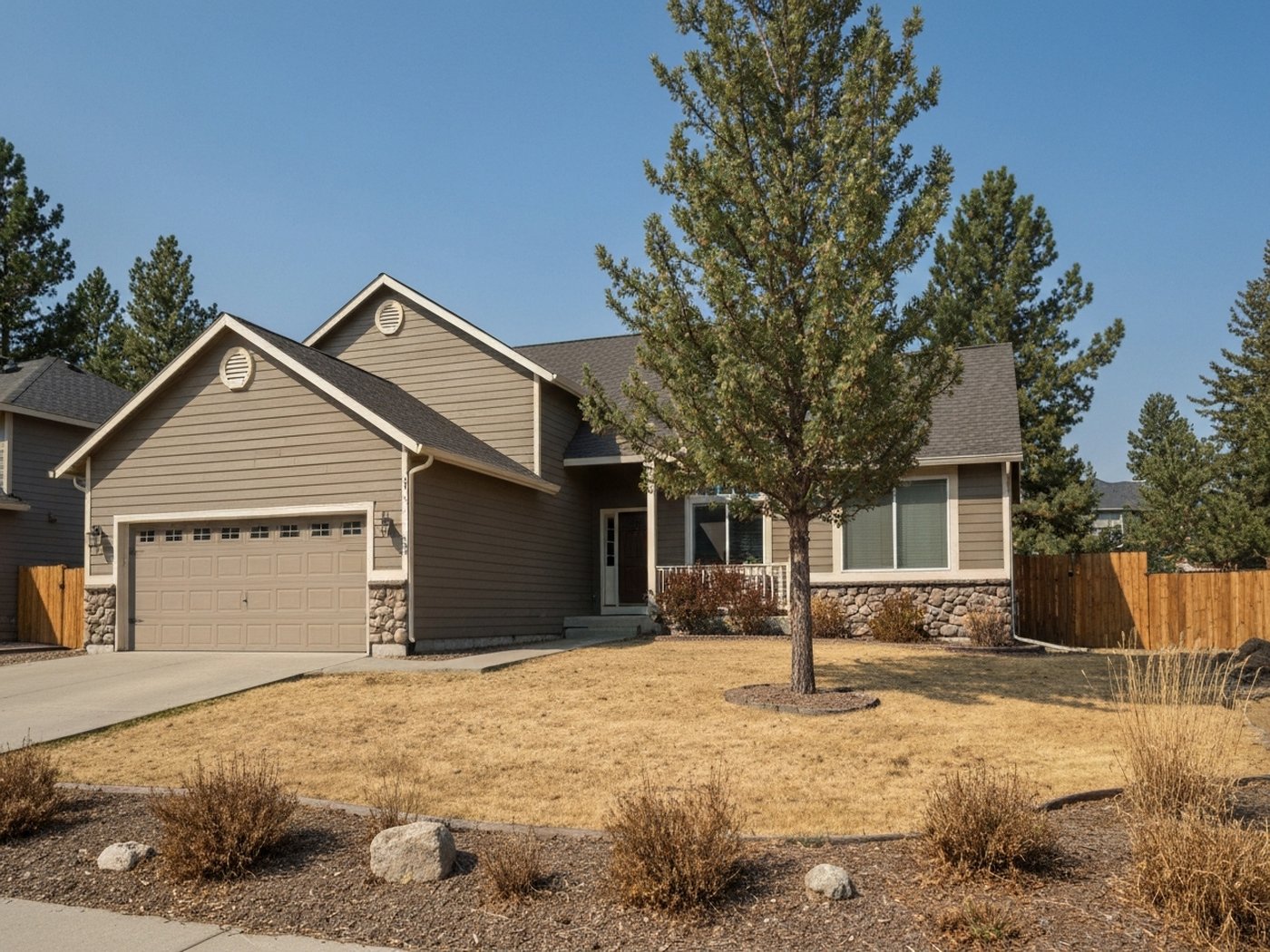
Most homeowners in a wildfire-prone area already know that homeowners insurance covers fire. That’s the easy part. What trips people up is the gap between “covered” and “fully made whole.” Since I do in-home exterior assessments as a gutter and water-management consultant, I spend time helping homeowners see how their physical home connects to what the insurance company will actually pay. Understanding the coverage structure matters before you need it.
The four coverage types in a standard HO-3 policy
The HO-3 is the policy form most US homeowners carry. Fire is a covered peril, and the Insurance Information Institute (III) describes four coverage components that all activate in a wildfire.
Coverage A: Dwelling. The house itself: the walls, the roof, the foundation, attached features like an attached garage or a deck. When a wildfire destroys a home, Coverage A is the section that funds the rebuild. Your dwelling limit is the ceiling. If your limit is $500,000 and rebuilding costs $650,000, you absorb the difference out of pocket unless you have an endorsement that extends the cap.
Coverage B: Other structures. Detached buildings and structures on the property: a standalone garage, a shed, fencing, a gazebo. This is typically capped at 10 percent of your dwelling limit, though some policies go higher. After a wildfire, fencing often burns when the house survives, and a lot of homeowners are surprised when they add up 300 feet of wooden fence plus a shed and find the 10 percent cap is already gone.
Coverage C: Personal property. Your belongings inside the home: furniture, electronics, clothing, appliances. Typically set at 50 to 70 percent of the dwelling coverage, but the percentage varies by policy and can be adjusted. Within that overall limit, watch for sub-limits. Most HO-3 policies cap categories like jewelry (often $1,500 to $2,500), fine art, firearms, and collectibles well below their actual replacement value. If you own anything significant in one of those categories, a scheduled personal property endorsement closes a real gap.
Coverage D: Loss of use, also called additional living expenses. If the home is uninhabitable while it’s being repaired or rebuilt, this pays the extra costs of living elsewhere: rent for a comparable place, restaurant meals above your normal grocery budget, laundry costs. After a major wildfire that displaces a household for 12 to 18 months, this coverage can easily reach $40,000 to $80,000 or more in high-cost markets. Most policies set a percentage cap (often 20 to 30 percent of dwelling) or a time limit, and high-cost areas can exhaust both. Know your limit before fire season, not after.
Replacement cost vs. actual cash value
This distinction shows up across all four coverage types and changes the math significantly.
Replacement cost value (RCV) pays what it actually costs to replace or rebuild, without subtracting depreciation. A 15-year-old roof gets replaced with a new roof. Actual cash value (ACV) pays replacement cost minus depreciation. That same 15-year-old roof might be reimbursed at 30 to 40 percent of its replacement cost, leaving you to fund the rest yourself.
Standard HO-3 policies typically cover the dwelling at replacement cost. Personal property is where to check carefully: some policies default to ACV for contents, which means a depreciated payout on everything you own. An RCV endorsement for personal property covers the gap but adds to your premium. Confirm your basis for both dwelling and personal property before assuming you’re fully covered.

Pull your declarations page and find "ACV" or "replacement cost" next to both Coverage A and Coverage C. If Coverage C says ACV, ask your insurer what an RCV endorsement costs. It's usually modest, and the difference after a total loss is significant.
Endorsements worth knowing in fire country
A base HO-3 is designed for average risk in average markets. In a wildfire-prone area, several endorsements come up again and again as the difference between recovering fully and running short.
Extended replacement cost. Adds a buffer above your dwelling limit, typically 25 to 50 percent depending on the insurer. If rebuilding runs over, you’re covered to that extended ceiling. This is partly designed to handle demand surge: after a major wildfire, labor and material costs in the affected area spike as everyone rebuilds simultaneously. Local reconstruction pricing can run well above what the policy’s estimating tool predicted at renewal.
Guaranteed replacement cost. Pays whatever rebuilding actually costs, with no hard dollar ceiling, as long as you’ve maintained appropriate coverage. Not every insurer offers this, and those that do have underwriting requirements. But it’s the most complete protection against the underinsurance problem. Ask your carrier directly whether it’s available and what you’d need to qualify.
Scheduled personal property. For items that exceed the sub-limits in Coverage C: jewelry, musical instruments, fine art, gun collections, coin collections. The endorsement schedules each item individually at appraised value. If you own anything significant in a sub-limited category, this is worth pricing out.
Flood coverage (separate policy). This is not technically a homeowners endorsement, but it belongs in the conversation. Water used to fight a fire, post-fire mudslides, and debris flows on burned slopes are typically classified as flood damage and excluded from a standard policy. Burn scar flooding has become a documented hazard after major California and Colorado fires. If your property is downslope from burn-affected terrain, a separate flood policy through the National Flood Insurance Program (NFIP) or a private flood insurer is the only thing that covers it.
What a standard policy typically does not cover
Earthquake-triggered fires are usually covered; earthquake damage is not. A wildfire that spreads to your property is standard fire coverage. An earthquake that cracks your foundation is a separate matter, requiring its own policy or endorsement.
Vacant home exclusions. If a home has been vacant or unoccupied for an extended period (30 to 60 days is a common threshold, though it varies by insurer), fire coverage can be suspended or reduced. Seasonal homes and properties under renovation are the usual casualties. If a property will sit empty for a stretch, ask specifically about a vacancy endorsement.
Debris removal caps. Clearing and hauling off a burned structure is expensive, and many policies cap debris removal at a percentage of your dwelling coverage. After a total loss, that cap can fall short of actual removal costs. Worth finding the number before you need it.

Post-fire flooding and debris flows from burned slopes are classified as flood damage, not fire damage, and are excluded from a standard homeowners policy. A separate flood policy is the only coverage that addresses this risk.
How to read your declarations page
Your declarations page (the “dec page”) is the one-to-two-page summary at the front of your policy. It lists your coverage limits, your deductible, and your endorsements. Before fire season each year, pull it out and check four things.
First, the dwelling limit under Coverage A. Is it close to current construction costs in your area? A local contractor or your insurer’s estimating tool can give you a rough rebuild figure. If the limit is well below that number, call your insurer and ask about a limit adjustment or an extended replacement cost endorsement.
Second, the personal property basis. Does it say “replacement cost” or “actual cash value”? If ACV, price an RCV endorsement.
Third, your loss of use limit. Given current rental rates in your market, would the listed amount cover 12 to 18 months of comparable housing?
Fourth, your listed endorsements. Are extended replacement cost, scheduled items, or other add-ons you remember purchasing actually listed? Policies get reissued at renewal, and endorsements have been known to fall off in the reissue. Confirm what you actually have, not what you think you have.
State insurance regulators publish plain-language guides to reading a homeowners policy. The California Department of Insurance, the Colorado Division of Insurance, and the Oregon Insurance Division all have free consumer guides worth the 20 minutes.
Mitigation, documentation, and your policy
The physical state of your home is not just a fire-risk question. Carriers and underwriters are paying closer attention to specific risk factors at renewal: roof age and material, ember-resistant vent covers, vegetation clearance in the first five feet around the foundation (Zone 0 in Cal Fire’s defensible space framework). IBHS runs the Wildfire Prepared Home designation program, and Firewise USA, an NFPA initiative, certifies communities that complete systematic mitigation work.
In California, admitted insurers operating under the Safer from Wildfires framework must offer mitigation discounts to qualifying homeowners. Other states are moving in the same direction, though the specifics vary by insurer and state. If you’ve made improvements, ask your carrier directly: do you offer a mitigation discount, what documentation do you need, and does an IBHS designation affect my premium or renewal eligibility?
Practically, this means documenting what you’ve done. Dated photos of your roof, vent covers, cleared Zone 0 vegetation, and clean gutters, plus receipts for any professional work, give you something tangible to present when asking for a discount or fighting a non-renewal. That same file speeds up any future claim. One thing I see on exterior assessments that’s easy to miss: the gutters. A gutter packed with dry pine needles is a strip of ember fuel running the perimeter of your roofline, right at the seam where the roof, fascia, and eave meet. Keeping that clear matters for both ignition risk and for what an underwriter sees when evaluating your home.
For the full picture on coverage availability and FAIR plans, the wildfire home insurance guide goes deeper. If you’ve already filed or are expecting to file, the wildfire insurance claims guide walks through the process step by step. And if you’re still working out whether your existing policy covers wildfire at all, does homeowners insurance cover wildfire is the cleaner starting point before getting into the limit and endorsement details here.
FAQ
What does loss of use coverage actually pay for? Additional living expenses above what you’d normally spend. If your mortgage is $2,000 a month and a comparable rental in your area costs $3,500, Coverage D picks up the $1,500 difference. It also covers restaurant meals above your typical grocery spend while you’re without a kitchen, hotel nights during immediate evacuation, laundry, and storage. What it does not do is pay your mortgage while you’re displaced; that obligation continues. Most policies set a percentage cap or a time limit, and in high-cost markets those limits can be exhausted before a rebuild is done. Know your limit now.
Is there a separate wildfire deductible on some policies? Sometimes. A few states with concentrated wildfire exposure have seen carriers introduce a separate wildfire or catastrophe deductible, similar to hurricane deductibles common on Gulf Coast policies. Whether you have one depends on your insurer, your state, and your specific policy language. Check your dec page for any named-peril deductibles listed separately from your standard deductible.
Can an insurer drop me after a wildfire claim? State rules vary significantly on this. Some states have enacted post-disaster non-renewal moratoriums that prevent carriers from dropping policyholders in declared disaster areas for a set period after a major event. California’s Department of Insurance has implemented these protections tied to declared disasters. But moratoriums are temporary and the rules differ by state. Contact your state Department of Insurance to understand your specific protections. Underwriting appetite in fire-prone areas has tightened broadly, so staying informed about your options is worth the effort regardless of claim history.
Does the IBHS Wildfire Prepared Home designation help with insurance? It can, though there is no guarantee and the effect varies by carrier and state. The designation signals that a qualified third party has evaluated and verified your home’s mitigation measures, which some underwriters weigh favorably. In California, admitted insurers operating under the Safer from Wildfires framework must offer certain mitigation-related discounts. In other states, a designation’s weight in the underwriting process depends entirely on the carrier. Ask your insurer directly whether an IBHS designation or a Firewise USA community certification affects your premium or renewal eligibility; the answer will vary, and you want it in writing.
Related guides
Indiana FAIR Plan Insurance: Coverage of Last Resort
What Indiana homeowners need to know about the Indiana FAIR Plan: what it covers, what it leaves out, and how to fill the gaps if the standard market won't write you.
Read the guide →Minnesota FAIR Plan Insurance: A Homeowner's Guide
How Minnesota's FAIR Plan works for homeowners in fire-risk areas: coverage specifics, typical costs, and the gaps you need to fill with a separate policy.
Read the guide →Wildfire Insurance Claims: How to File and What to Expect
Step-by-step guide to filing a wildfire insurance claim: what to document, how adjusters work, and how to push back when the settlement offer is wrong.
Read the guide →Keep ignitable debris out of your roofline
Get a free, no-obligation LeafFilter gutter-protection assessment. Fine micro-mesh keeps leaves and pine needles out of the gutters, the spot where wind-blown embers love to land. Booking through us supports this site.
Get a free LeafFilter assessment →