Indiana FAIR Plan Insurance: Coverage of Last Resort
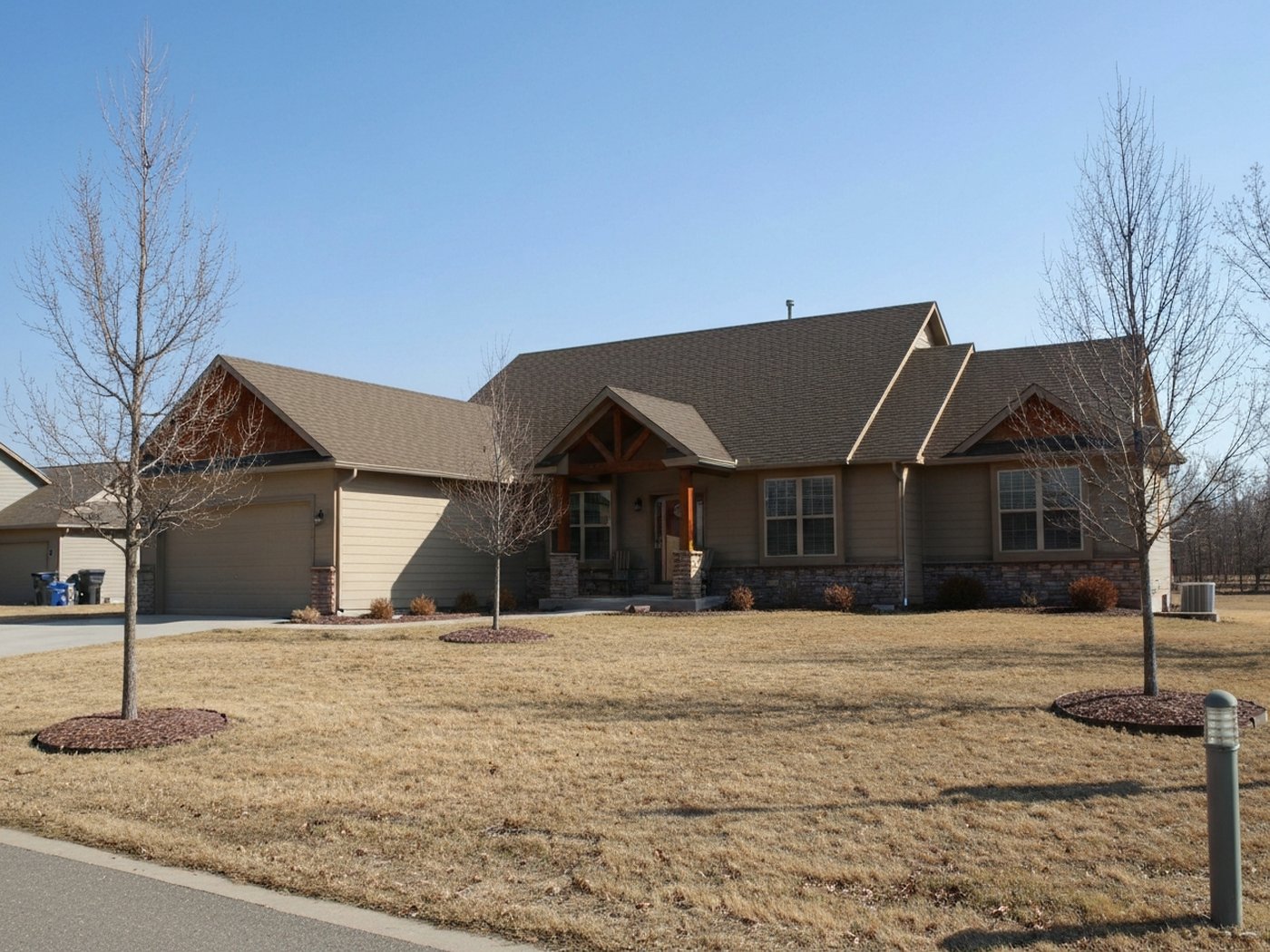
Indiana rarely appears on national wildfire maps, but the southern third of the state and a narrow corridor in the northwest tell a different story. Portions of the Hoosier National Forest in Crawford, Lawrence, Orange, and Martin counties carry real fire risk: steep hardwood and mixed-pine terrain, dry ridge tops with accumulated leaf litter and pine needle duff, and a spring fire season that arrives each year when vegetation is still cured and humidity drops before green-up. In the northwest, the Lake Michigan dune country, including the pine and black oak savannas around Indiana Dunes National Park, burns regularly under prescribed and escaped fire conditions. The state’s fire managers at the Indiana Division of Forestry document thousands of wildfires annually, most of them small, but with occasional runs in dry spring weather that threaten homes on the wildland-urban interface.
For homeowners in those areas who have been declined or non-renewed by a standard insurer, the Indiana FAIR Plan is what the state provides.
What is the Indiana FAIR Plan Association?
FAIR stands for Fair Access to Insurance Requirements, and Indiana’s plan operates as a residual market association. Every admitted property insurer licensed to write homeowners coverage in Indiana is required to participate in and support the pool. The Indiana Department of Insurance (IDOI) oversees the plan and sets the regulatory framework. If you have a dispute about a claim denial, a billing issue, or how a non-renewal was processed, the IDOI’s consumer affairs division is the right starting point. Their resources are accessible at in.gov/idoi.
You do not apply to the Indiana FAIR Plan directly. Applications go through a licensed Indiana insurance agent who documents that coverage was unavailable through the standard market and submits the application on your behalf. That intermediary role is genuinely useful: a good agent can confirm you’ve met the eligibility threshold, help you set an accurate dwelling limit based on current local rebuild costs, and pair a Difference in Conditions policy at the same time. For a plain-English explanation of how FAIR plans work nationally, including the named-perils structure and the DIC mechanic, the hub guide on what a FAIR plan is covers the shared framework. This page stays on Indiana specifics.
Eligibility rules and property condition requirements are subject to change by the IDOI. Verify current details directly with a licensed agent or the department before assuming what qualifies.
What the Indiana FAIR Plan covers
The Indiana FAIR Plan writes a dwelling fire policy. That is structurally narrower than a standard HO-3, and understanding the difference before a loss is what matters.
Fire and lightning. These are the foundation of any FAIR plan contract. If a wildfire damages or destroys your home, the policy pays to rebuild up to your stated dwelling limit. This is the core coverage and the reason displaced Indiana homeowners come to the plan when private carriers pull back.
Extended coverage. Most Indiana FAIR Plan policies include an extended coverage endorsement, expanding covered perils to include windstorm, hail, explosion, riot, civil commotion, aircraft damage, vehicle impact, and smoke. For a home in Lawrence County near the Hoosier National Forest or in Porter County’s dune corridor near Lake Michigan, fire plus extended coverage addresses the perils most likely to cause a significant loss.
Additional endorsements. The plan’s available endorsements can shift over time. Ask your agent what is currently on offer, since a fixed list in any article will eventually lag the plan’s actual filed products.
One thing to pin down before you bind: whether your policy settles losses at replacement cost or actual cash value. Actual cash value deducts depreciation before the check is written. A roof that’s twenty years old will not pay out what a new roof costs if the settlement basis is ACV. On a total loss, that difference can run into tens of thousands of dollars. Ask specifically whether a replacement cost endorsement is available and what it adds to your annual premium.

Actual cash value settlement deducts depreciation. On an older roof or aging contents, the payout can fall well short of what replacement actually costs. Nail down replacement cost versus ACV before you bind.
What the Indiana FAIR Plan does not cover
This is where the gap becomes real. A FAIR Plan dwelling fire policy is not a full homeowners policy, and three absences matter most.
Personal liability is not included. A standard HO-3 typically includes $100,000 to $300,000 or more in personal liability protection. If a visitor is injured on your property, if a tree from your yard damages a neighbor’s roof, or if something goes wrong during an evacuation, a dwelling fire policy doesn’t defend you and doesn’t pay a judgment. That exposure doesn’t pause because you’re living in a wildfire zone.
Theft is not covered. Burglary or theft of personal property falls outside the dwelling fire form. This matters more than people expect after a wildfire evacuation, when a home can sit empty for weeks.
Additional living expenses are generally not included. After a serious fire, the displacement period while your home is rebuilt can run a year or longer. Rebuild timelines after a major wildfire event are typically well beyond what people assume, especially when contractors and materials are strained by demand across the same geographic area simultaneously. A standard HO-3 pays the incremental cost of living elsewhere during that stretch. The base FAIR Plan policy typically does not.
Internal water damage, pipe freeze, and sewer backup are also generally outside the scope of a dwelling fire form, though these perils show up on standard HO-3 policies as a matter of course.
Filling the gap with a DIC policy
The standard answer to these gaps is a Difference in Conditions policy, universally called a DIC. A DIC wraps around the FAIR Plan fire policy and fills what the fire policy omits: liability, theft, additional living expenses, and usually internal water damage. It is purchased separately from an admitted or surplus-lines carrier and billed independently.
In practice, most Indiana homeowners on the FAIR Plan are carrying two policies at once. The combined annual premium is the number you need to evaluate against alternatives, not the FAIR Plan line alone. Get quotes on both from the same agent at the same time so the real total is visible before you commit. The seam between the two contracts is where problems show up during a claim: a gap in effective dates, a perils overlap handled differently than you assumed, a DIC exclusion buried in a declarations page. An independent agent who regularly places FAIR Plan accounts and their DIC companions is the right person to review both together.
If you carry a mortgage, your lender almost certainly requires personal liability coverage as a loan condition. The FAIR Plan policy alone will not satisfy it. The lender needs to see the DIC in place and named as an additional interested party.
Who qualifies and how to apply
Indiana FAIR Plan eligibility follows the standard last-resort threshold: the voluntary market has declined or non-renewed you and you cannot obtain coverage elsewhere. Your agent documents the attempt and submits the application on your behalf.
The property must also meet basic insurability standards. A home declined because it sits on the edge of the Hoosier National Forest in a fire-prone Crawford County hollow is a typical FAIR Plan candidate. A home with a failing roof, open penetrations in the building envelope, or unresolved structural hazards is a different situation. Those problems need to be corrected before coverage can be written anywhere, FAIR Plan included. The plan is a backstop for insurers, not a rescue for properties in obvious disrepair.
If you receive a non-renewal notice, move quickly. Apply through a licensed agent before your current policy lapses. Request the reason for non-renewal in writing from the outgoing carrier. The Indiana Department of Insurance has consumer protections around the non-renewal process, and the documented reason tells you whether to challenge the decision or take corrective steps.
Before defaulting to the FAIR Plan, ask your agent to also run a surplus-lines search. Surplus-lines carriers operate outside the admitted market with more flexible underwriting, and some Indiana properties with elevated fire exposure may qualify for surplus-lines coverage at competitive rates with broader terms. It is worth comparing before you commit to the FAIR Plan path.
What it costs
More than the standard market, usually by a meaningful margin. FAIR plans nationally price higher than comparable voluntary-market coverage, and Indiana follows that pattern.
Rates are filed with and regulated by the Indiana Department of Insurance, but there is no carrier competition within the pool. The levers you control are the dwelling limit (set this to current rebuild cost, not your purchase price or market value) and your deductible.
For rough orientation: Indiana homeowners in the standard market commonly pay somewhere in the range of $1,000 to $2,000 per year for a typical HO-3 policy, depending on region, construction type, and limits. In higher-risk areas with fire exposure, FAIR Plan coverage paired with a DIC policy can run 40% to 100% or more above what a comparable standard-market policy would cost in a lower-risk part of the state. These are illustrative ranges only, not quotes. Your actual premium is set by the plan’s current rate filings and your specific property details. A licensed agent is the only source for an accurate number.
Where Indiana wildfire risk actually concentrates
Indiana is predominantly agricultural, and most of the state carries minimal wildfire exposure. Two corridors stand out.
The southern hills and forest country, specifically the Hoosier National Forest and the surrounding wildland-urban interface in Brown, Crawford, Lawrence, Martin, Monroe, and Orange counties, are the primary concern. The terrain here is unusual for the Midwest: steep sandstone ridges, oak-hickory and mixed-pine woodland, dry upland glades. The Indiana Division of Forestry and the U.S. Forest Service manage prescribed fire programs throughout the Hoosier National Forest, and that activity is itself a signal about the fuel conditions. A dry April in this terrain, low humidity and wind before the canopy leafs out, can push fire across ridgelines fast. Homes and cabins on the WUI edge of the national forest, particularly on elevated and south-facing slopes where vegetation cures earliest, carry genuine risk.
The second corridor runs along the Lake Michigan shore in Lake, Porter, and LaPorte counties. The dune and savanna complex here, including the ecosystems surrounding Indiana Dunes National Park, supports black oak savannas and pine plantations that are fire-adapted and historically burned regularly. The National Park Service and the Indiana DNR both conduct active prescribed fire in this system. Under dry spring conditions with northwest winds off the lake, this terrain can carry fire quickly. Residential neighborhoods that have grown up adjacent to or within the dune and savanna mosaic face real exposure.
Central and northern Indiana, agricultural flatlands and the Greater Indianapolis suburbs, carry essentially no wildfire risk. Insurance challenges in those areas come from hail, wind, and severe thunderstorm weather, not fire.
Getting back to the standard market
The FAIR Plan is a bridge. Standard-market coverage is broader, more competitive on price, and more manageable over time. The path back runs through making your specific property more underwritable, not just waiting for the market to change.
Admitted carriers look at the property level now more than they used to. What Firewise USA (the NFPA’s community resilience recognition program), IBHS (the Insurance Institute for Business and Home Safety), and Indiana’s fire management professionals consistently point to is a short list: a fire-rated Class A roof, ember-resistant vent covers, a cleared Zone 0 (the five-foot perimeter immediately around the foundation), and a roofline free of ignitable debris.
The roofline is where I pay professional attention. In southern Indiana’s oak-hickory country, gutters load up with leaf litter through fall, and the sandstone ridge terrain means trees stay dense right to the house line on many properties. In the dune corridor, black oak leaf litter and pine needle duff from adjacent plantations can pack a gutter channel solid by early spring. By the time fire conditions arrive, typically April and May when the woodland is still dry before green-up, that gutter can be holding a trough of compressed dry fuel running the full perimeter of the roof, pressed against the fascia and the edge of the roof deck. An ember dropping into that channel has everything it needs: fine dry fuel, airflow along the roofline, and structural wood within inches.
IBHS ember testing and post-fire survey data from fire events across multiple states document this repeatedly: the gutter-fascia-soffit seam is one of the most reliable ignition pathways on a residential structure. Cleaning gutters on a set schedule before fire season, or installing a fine stainless micro-mesh guard that keeps debris from accumulating in the first place, removes one of the most controllable ignition risks on the property. For a full discussion of what actually works in a fire zone, including why micro-mesh outperforms coarser screens and why foam inserts actively make things worse, the guide to gutter guards for pine needles and fire debris covers the specifics.

When building a hardening file to show the standard market, photograph your clean gutters, cleared Zone 0, and ember-resistant vents with dates visible. An underwriter needs documented evidence, not your word that it is maintained.
Indiana has not adopted a statewide wildfire mitigation discount mandate comparable to California’s “Safer from Wildfires” framework. Individual admitted carriers may weigh documented hardening work when deciding whether to write or renew a property, but this varies by carrier and is not guaranteed. Ask every carrier you quote whether they offer a mitigation discount and what documentation they require. IBHS’s Wildfire Prepared Home evaluation produces a formal inspection report you can present to underwriters. Firewise USA recognition at the community level through NFPA is another form of documentation that some carriers consider. Neither guarantees a specific outcome, but both give an underwriter something concrete to evaluate rather than just a high-risk address.
For the full hardening priority list and how those steps connect to your insurance options, the wildfire home hardening guide is where to start. For a broader look at how standard policies handle wildfire and how to keep coverage in a tightening market, the wildfire home insurance guide is the companion article.
FAQ
Does the Indiana FAIR Plan cover wildfire damage?
Yes. Fire is the core covered peril in an Indiana FAIR Plan dwelling fire policy. If a wildfire damages or destroys your home, the policy pays toward rebuilding it up to your coverage limit. Before you bind, confirm whether your specific policy settles at replacement cost or actual cash value. ACV settlement deducts depreciation, and on an older structure that gap between payout and actual rebuild cost can be substantial. Ask your agent about a replacement cost endorsement.
Do I need a second policy alongside the Indiana FAIR Plan?
For most homeowners, yes. The standard Indiana FAIR Plan dwelling fire policy does not include personal liability, theft, or additional living expenses after a displacement. Most homeowners pair the FAIR Plan policy with a Difference in Conditions policy from a separate carrier to cover those gaps. If you carry a mortgage, your lender likely requires personal liability coverage as a loan condition, and the FAIR Plan alone will not satisfy it. Get quotes on both together so you know the actual combined cost before you commit.
Who do I contact if I have a problem with the Indiana FAIR Plan?
For disputes about claims, billing, or non-renewals, start with the Indiana Department of Insurance consumer affairs division at in.gov/idoi. A licensed independent agent who regularly places FAIR Plan accounts is also a practical resource for navigating a coverage dispute or understanding your rights under the policy.
Will hardening my home help me get back to the standard market?
It can, though no specific outcome is guaranteed. Documented improvements, a Class A fire-rated roof, ember-resistant vents, a cleared Zone 0 around the foundation, and a clean roofline free of combustible debris, give admitted carriers something specific to evaluate at the property level rather than just a high-risk address. IBHS’s Wildfire Prepared Home evaluation and Firewise USA community recognition through NFPA produce documentation in a form underwriters can act on. Work with an independent agent who regularly places high-risk Indiana properties; they know which admitted carriers are writing in the Hoosier National Forest corridor and the dune country, and what those carriers actually want to see.
Related guides
Wildfire Insurance Coverage: What a Standard Policy Includes
A standard HO-3 policy covers wildfire, but the four coverage types, your limits, and key endorsements determine how much protection you actually have.
Read the guide →Minnesota FAIR Plan Insurance: A Homeowner's Guide
How Minnesota's FAIR Plan works for homeowners in fire-risk areas: coverage specifics, typical costs, and the gaps you need to fill with a separate policy.
Read the guide →Wildfire Insurance Claims: How to File and What to Expect
Step-by-step guide to filing a wildfire insurance claim: what to document, how adjusters work, and how to push back when the settlement offer is wrong.
Read the guide →Keep ignitable debris out of your roofline
Get a free, no-obligation LeafFilter gutter-protection assessment. Fine micro-mesh keeps leaves and pine needles out of the gutters, the spot where wind-blown embers love to land. Booking through us supports this site.
Get a free LeafFilter assessment →