Best Gutter Guards for Pine Needles and Fire Debris
Why your gutters matter in a fire zone
I’ve spent the last couple of years doing in-home exterior assessments as a gutter and water-management consultant, and gutters are where I live. Here’s the thing most homeowners don’t connect: in a wildfire, your gutter is one of the most dangerous spots on the house, and it has nothing to do with how close the flames get.
Homes in a wildfire mostly don’t burn because a wall of fire rolls over them. They burn because wind-blown embers travel out ahead of the fire, sometimes a mile or more, and land in something dry. The Insurance Institute for Business & Home Safety (IBHS) has documented this for years: embers are the leading cause of home loss in wildfire. They drift down like glowing snow and look for fuel.
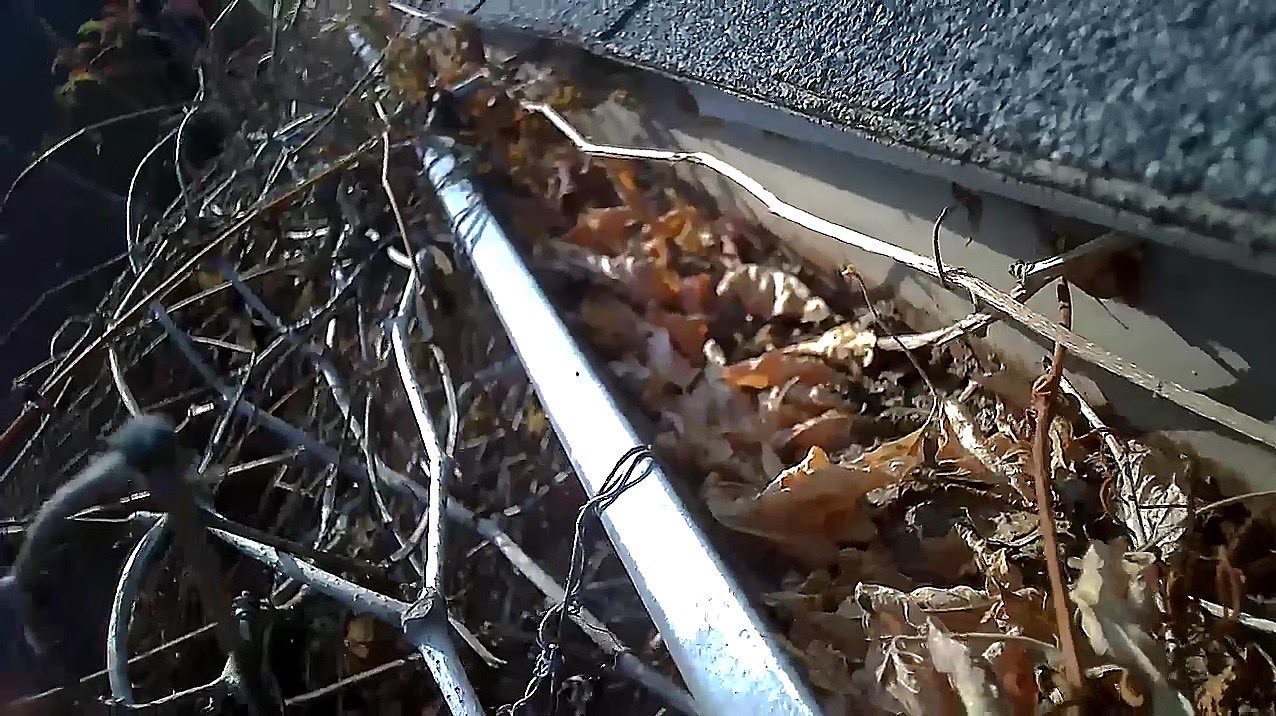
Now picture a gutter packed with a summer’s worth of pine needles and leaf litter. It’s dry. It’s fine. It runs the entire perimeter of your house. And it sits directly against the fascia and the edge of the roof sheathing. That, right there, is the wedge I keep coming back to: the debris that collects in your gutters is concentrated ember fuel parked at the single most vulnerable seam of the building. An ember landing in a loaded gutter has everything it wants: fuel, airflow, and a wooden structural surface to ignite. I’ve pulled what amounts to kindling out of gutters in late August, the worst possible time. Keeping that gutter empty is real fire work, which is why it shows up in our broader wildfire home hardening checklist right alongside the roof and Zone 0.
What actually stops pine needles
Pine needles are the hard case. Leaves are big and flat and most guards handle them fine. Needles are thin, stiff, and they fall point-first. They’ll thread through anything with a gap bigger than the needle is wide, and once a few wedge in, they bridge across and build a mat that catches everything else.
So pore size is the whole game. To reliably stop conifer needles you need genuinely fine openings, the kind you get from a woven or perforated stainless micro-mesh, not a stamped screen. A standard gutter screen with quarter-inch holes is basically a sieve for needles. Reverse-curve guards have their own failure mode with needles: they’re designed to let water wrap around a nose and into the gutter while debris flies past, but needles are light enough to ride the water around the curve and drop right in, and they pile up on the lip.
Foam and brush inserts fail differently, and worse for fire. A foam wedge or a bottle-brush sitting inside the trough doesn’t keep debris out of the gutter at all. It catches it. Needles and grit work down into the foam pores and tangle in the bristles, and now you’ve got a wet, rotting, debris-loaded sponge sitting in your gutter that’s harder to clean than bare metal would have been. In a fire zone that’s a double problem, because the open-cell foam ones are combustible. You’ve installed fuel where you were trying to remove it. Skip them.

If pine needles are your problem, obsess over one spec: pore size. A fine stainless micro-mesh stops needles. Coarse screens and reverse-curve hoods let them right through.
The four main types, compared
Here’s how the common categories actually shake out for pine needles and fire, best to worst.
Micro-mesh on a solid frame (best). Fine stainless-steel mesh laminated or bonded to a rigid frame. The mesh is the part that does the work: it stops needles and even fine grit while letting water through. The frame’s only job is to hold that mesh taut and keep the panel from sagging into the gutter. The fine stainless mesh is noncombustible, which is what you want sitting over the gutter in fire country. This is the type I recommend, with one caveat: quality varies a lot. Look for surgical-grade stainless mesh held rigid and flat, not flimsy mesh stapled to a thin flexible rail.
Surface-tension / reverse-curve. Solid metal hoods that use water’s surface tension to pull rain into the gutter while debris sheds off the nose. They handle leaves decently and they’re noncombustible if they’re metal. But as noted, pine needles and shingle grit defeat the surface-tension trick more often than the marketing admits, and in heavy rain they can overshoot. Middle of the pack.
Screens (perforated metal or mesh-on-frame, coarse). Cheap, easy, and they’ll keep tennis balls and big leaves out. For needles they’re nearly useless: the holes are too big. If the screen itself is metal, at least it isn’t adding fuel, but it isn’t solving your needle problem either.
Foam and brush inserts (worst). Covered above. They trap debris instead of excluding it, they’re miserable to maintain, and the foam versions burn. In a fire-prone home these are the ones I’d actively steer you away from.

Open-cell foam inserts are combustible. In a fire zone you would be placing burnable material in the exact spot where embers collect. Go noncombustible metal mesh instead.
What to look for in a fire zone
When the goal is keeping ember fuel out of the gutter, the spec list is short and specific:
- A noncombustible mesh surface. The mesh that covers the gutter is the part that matters most here: it should be fine stainless steel, not a plastic mesh that can melt, and definitely not combustible foam sitting down in the trough. Keeping metal mesh over the gutter and ignitable debris out of it is the point. This lines up with how NFPA’s Firewise USA and Cal Fire talk about the roofline: keep ignitable material off it.
- Fine stainless micro-mesh. Stainless resists corrosion and holds up to UV and heat far better than aluminum-only or coated steel. Fine openings are what stop needles.
- A rigid frame and proper pitch. A panel that sags becomes a debris shelf. It needs to sit flat and shed.
- A real fit to your roof and gutter. This is the part people underestimate. A guard installed at the wrong angle, or that lifts shingles, or that leaves gaps at the seams, will let needles back in and can void your roof warranty.
The whole reason you’re buying a guard is to remove a maintenance chore you won’t keep up with at exactly the moment it matters most. So the install has to be right.
Professional install vs. DIY
You can buy mesh guards at the hardware store and snap them on yourself. For a single-story house with simple straight runs, that’s a reasonable weekend project. I won’t pretend otherwise.
But the failures I see in the field are almost always install failures, not product failures: panels cut short, gaps at the corners and downspout outlets, guards that don’t match the roof pitch so needles ride right under them, and shingles damaged by someone wedging panels under them. On a two-story house, on steep pitch, or with a lot of valleys (the spots where needles pile worst), this is height-and-precision work I’d hand to a pro. A professional system is also typically backed by a workmanship and clog warranty, which a DIY job is not. If you go DIY, take the corners and downspout transitions seriously, because those are where it leaks back in.
The water-management bonus
Fire is the reason this article exists, but I’d push gutter guards even if you lived where it never burns, because the other half of my job is keeping water off your house. A gutter clogged with needles overflows, and overflow water sheets down the fascia and dumps straight at the base of your wall, the same first 5 feet (Zone 0) you want kept clear and dry. Over time that’s rotted fascia, a soggy foundation, and basement moisture. Keeping the gutter clear keeps it doing its actual job: catching roof water and routing it away from the foundation through the downspouts.
So a good micro-mesh system pays off twice. Less ember fuel at the roofline during fire season, and proper water management the other ten months of the year. That overlap between fire safety and water control is exactly why the gutter line shows up in our wildfire home hardening priorities, and why it’s worth doing once and doing right.
A note on LeafFilter
When people ask me what to actually buy, I point them toward a professional stainless-steel micro-mesh system like LeafFilter, because it hits the spec that matters in a fire zone: a fine surgical-grade stainless mesh, held rigid and properly pitched, professionally fitted so the corners and downspouts don’t leak needles. The mesh is the part keeping ember fuel out of the gutter. To be clear about how we work: we refer and book homeowners through LeafFilter; we don’t install it ourselves. If a free in-home assessment is useful to you, that’s the path. If you’d rather DIY a metal mesh guard, that’s a legitimate choice too, just hold it to the same standard: stainless, fine, rigid, and noncombustible.
FAQ
Do gutter guards actually work on pine needles? The fine ones do. Stainless micro-mesh has openings small enough to keep needles out while letting water through. Coarse screens, reverse-curve hoods, and foam/brush inserts all struggle with needles specifically, because needles are thin enough to thread through gaps, ride water around a curve, or burrow into foam and bristles. If pine needles are your main problem, pore size is the spec to obsess over.
Are foam gutter guards safe in a fire zone? I wouldn’t use them. Open-cell foam is combustible, so you’d be placing burnable material in the exact spot where embers concentrate. On top of that, foam traps needles and grit inside the gutter instead of excluding them, so it doesn’t even solve the debris problem. In a fire-prone home, go with noncombustible metal mesh.
Do I still need to clean gutter guards? You’ll do far less, but “zero maintenance forever” is a stretch. A good micro-mesh system keeps the inside of the gutter clear, but fine grit and pollen can build a film on top of the mesh over years. Plan on an occasional rinse or brush of the mesh surface, not the dig-it-out-by-hand routine you had before. That’s a big drop in effort, especially at the dry end of summer when you least want to be on a ladder.
Are gutter guards worth it? In a fire zone with pine trees, yes, in my opinion. You’re removing a maintenance task most people skip, eliminating a band of ember fuel at the roofline, and protecting your foundation from overflow water. Document the upgrade, too. Roofline and debris-mitigation work can factor into your coverage; see our wildfire home insurance guide, and if you’re sorting out what your policy actually covers, our piece on whether homeowners insurance covers wildfire is the place to start.
Related guides
Best Ember-Resistant Vents for Wildfire Defense
Ember-resistant vents protect soffit, attic, and foundation openings from the burning brands that cause most wildfire home losses.
Read the guide →Are Gutter Guards Worth It in a Fire Zone?
In a wildfire zone, gutter guards are worth it if you get the right kind: noncombustible metal micro-mesh that keeps ignitable debris out of your gutters for good.
Read the guide →LeafFilter Cost: What You'll Pay and Whether It's Worth It in a Fire Zone
What LeafFilter actually costs per linear foot and why a fire-prone home changes the worth-it math on professional micro-mesh installation.
Read the guide →Keep ignitable debris out of your roofline
Get a free, no-obligation LeafFilter gutter-protection assessment. Fine micro-mesh keeps leaves and pine needles out of the gutters, the spot where wind-blown embers love to land. Booking through us supports this site.
Get a free LeafFilter assessment →