LeafFilter Cost: What You'll Pay and Whether It's Worth It in a Fire Zone
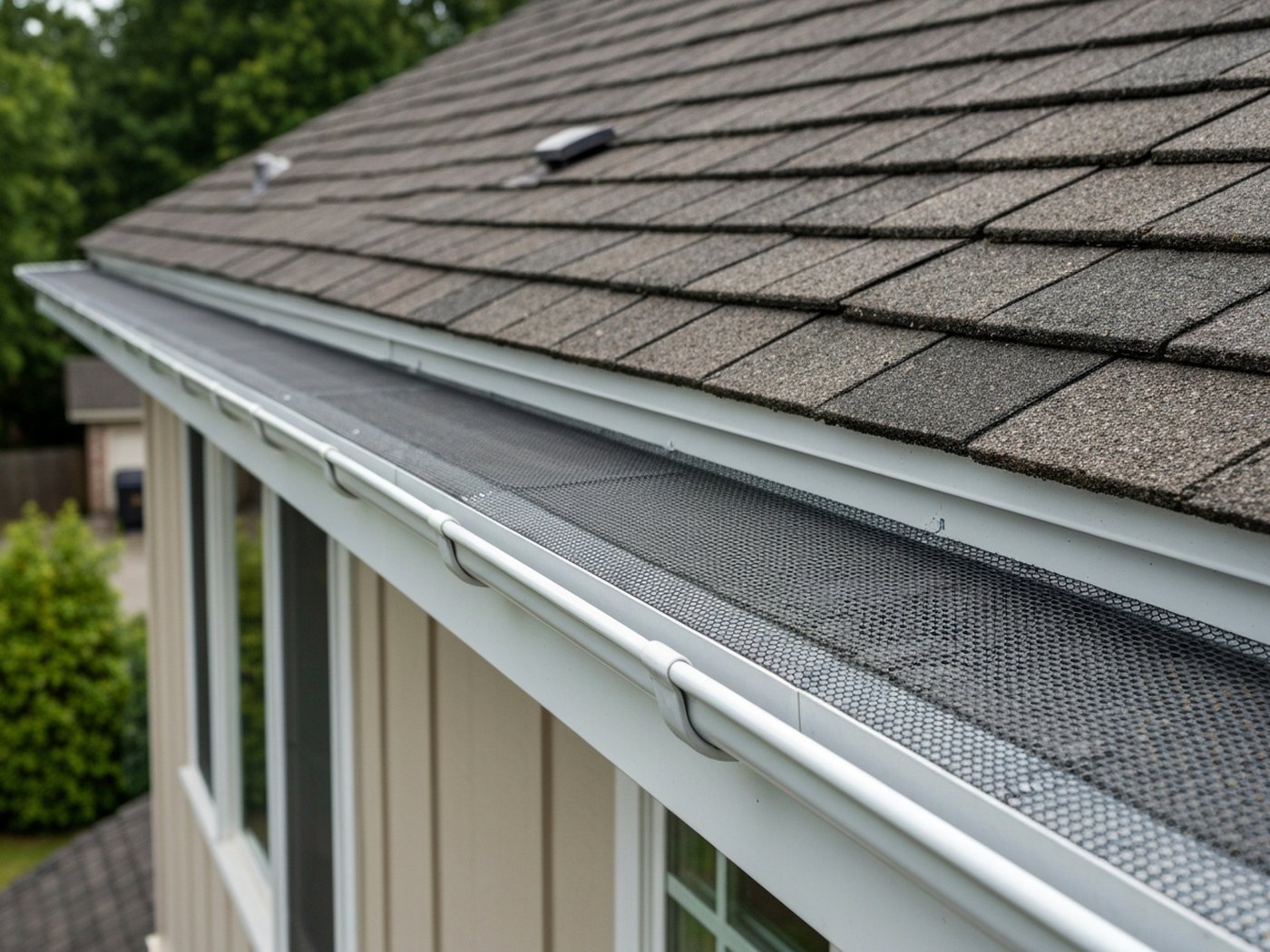
Most people find LeafFilter by typing something into Google in late summer, after they’ve finally climbed the ladder and seen what’s been sitting in their gutters for the past year. The price surprises some of them. I want to walk through what that cost actually covers, what drives it up or down on a specific house, and why the worth-it question lands differently if you live in a fire-prone area.
What LeafFilter installs
LeafFilter is a professional micro-mesh gutter guard system. A trained installer comes to your home, cleans and re-pitches your existing gutters where needed, then fits a panel system over the top: a fine surgical-grade stainless steel mesh bonded to a rigid uPVC frame that sits at the lip of the gutter. Water passes through the mesh and drops into the gutter. Debris stays on top and sheds off the nose.
The mesh is the part that matters, not the frame. The frame is just rigid support to keep the mesh taut and properly angled. Stainless micro-mesh with very small openings stops pine needles, roof grit, and most small seed debris that threads right through coarser screens. It’s also noncombustible, which is a meaningful spec in a fire zone. The system comes with a lifetime transferable warranty covering product and workmanship, so if it develops a clog, LeafFilter comes back to fix it. That warranty is a real part of what you’re paying for when you compare it against cheaper options.
What drives the cost up or down
Linear footage is the main variable. Your gutters run the perimeter of your roofline, minus the walls that don’t have guttering. A smaller single-story ranch might have 120 feet total. A two-story colonial can have 200 to 300 feet, sometimes more if the design has a lot of hip sections or multiple roof planes.
Several things push the per-foot price higher on a specific job:
Second-story gutters. Height requires more equipment and more time. Upper-story runs typically cost more per foot than the same footage on a ground-level gutter. This is the single biggest cost driver for two-story homes.
Steep pitch and complex geometry. A steeply pitched roof, lots of dormers, multiple hip-and-valley sections, or gutters near skylights all take more time and custom fitting per linear foot. Straight runs on a shallow slope are the cheapest version of the same job.
Gutter condition. The quote typically includes a basic cleaning and pitch adjustment before the guards go on. If your gutters have significant sag, separated joints, or spike-and-ferrule hangers that have pulled loose, repairs beyond that baseline can add to the bill. Ask upfront whether any gutter repair is included or separate.
Regional labor market. A quote in a high cost-of-living metro will often run higher than the same footage in a rural market. This is normal and not specific to LeafFilter.
Get the quote itemized: total footage, per-foot rate, and any added charges listed separately. That’s what you need to compare it against other options without guessing.

When you get a quote, ask them to tell you your total linear footage. It's useful to know regardless, and it gives you an apples-to-apples number if you want to compare a DIY metal mesh option on materials cost alone.
The fire-zone case
I’ve done exterior assessments on a lot of houses in tree-surrounded neighborhoods, and the gutter conversation keeps coming back to the same thing: a clogged gutter isn’t just a maintenance headache. In a fire-prone area, it’s a fuel-management problem. And that distinction matters when you’re deciding how much to spend on it.
IBHS has documented for years that most homes lost in a wildfire go down from embers, not from direct flame contact. Wind carries embers well ahead of the fire front, sometimes a mile or more. They drift down and look for something dry to land in. A gutter packed with pine needles, leaf litter, and dried shingle grit is about as good a target as embers can find: dry, fine-grained, and sitting directly against the fascia at the edge of the roof sheathing. Light that debris and you’ve got fire at the exact seam where the roof deck meets the wall framing.
Cal Fire’s home hardening guides and NFPA’s Firewise USA program both flag the roofline as a priority ignition zone. The reason they emphasize Zone 0 (the first five feet around the structure) is the same logic applied to the ground plane. Your gutters are attached to the house, they run its entire perimeter, and dry debris accumulates in them faster than most homeowners realize. I’ve pulled gutters in late August that had an inch of packed pine needle tinder running their whole length. That’s the worst possible time to discover it.
A fine stainless micro-mesh system addresses the problem structurally rather than by adding one more item to a seasonal maintenance list. The mesh is noncombustible. The debris can’t get in to accumulate. You’re not relying on getting the timing right with a ladder in September when conditions are already dry and the smoke is sometimes already in the air.
This is why the fire-zone math differs from the ordinary gutter-guard math. On a home in a low-risk area, a guard is a convenience upgrade. On a home in or near a wildfire-risk zone, keeping the gutter clear of dry debris is a specific ignition-reduction measure. That puts it in the same category as your roof material, your vents, and your Zone 0 clearance. The wildfire home hardening guide covers how all of those pieces fit together, if you want to see the full roofline-to-perimeter picture.
How it compares to other options
Professional stainless micro-mesh is the right category for a fire-prone home. Whether you get there through LeafFilter, a competitor, or a hardware-store DIY product is the secondary question.
DIY fine stainless micro-mesh. Hardware stores and online retailers carry snap-in micro-mesh panels (stainless or aluminum) for roughly $1 to $3 per linear foot in materials. On a single-story home with simple straight runs and a gentle pitch, a careful DIY install is a real option. The failure mode is almost always installation quality, not the product: gaps at corners and downspout transitions, guards not matching the roof pitch, panels that sag into the gutter over time. A professional install carries a workmanship warranty. A DIY install doesn’t.
Reverse-curve and surface-tension hoods. These handle large leaves reasonably well. Pine needles defeat them regularly. Needles are light enough to ride the water around the nose and drop into the gutter, and they pile up on the lip. Not the call for a conifer-heavy or fire-prone lot.
Foam and brush inserts. Worst option in a fire zone, period. They trap debris inside the gutter instead of excluding it, and open-cell foam is combustible. I went deeper on why these fail in the gutter guard comparison for pine needles and fire debris if you want the full breakdown.
Coarse metal screens. Noncombustible if metal, but the openings are too large for pine needles. They’ll stop tennis balls and big leaves. They’re not solving the needle or fine-debris problem.
The spec that matters for fire-zone homes is short: fine stainless mesh, noncombustible, properly installed so corners and downspout outlets don’t leak debris back in. LeafFilter hits that spec. So do a few other professional systems.

Foam inserts trap debris inside the gutter and the open-cell kind is combustible. In a fire-prone home, you'd be placing burnable material in the exact spot where embers concentrate.
The insurance angle
Home hardening work can affect your insurance situation, but expectations need to match reality here. There’s no national standard for wildfire-mitigation discounts, and what any particular carrier will or won’t give you credit for requires a direct conversation with them.
California is the most defined example. Under the state’s “Safer from Wildfires” regulatory framework, admitted carriers must offer mitigation discounts for specific qualifying actions, including Class A roofing, ember-resistant vents, and cleared defensible space. Roofline debris management is in the spirit of that framework, though exactly how individual carriers apply it varies. Your insurer is required to provide a mitigation discount checklist on request. The California Department of Insurance also publishes guidance on what qualifies. Outside California, a handful of states have moved in a similar direction, but there’s no uniform requirement. IBHS’s “Wildfire Prepared Home” designation has been accepted by some carriers as an underwriting factor, but availability differs widely.
So the honest framing is: don’t buy a gutter guard system expecting a guaranteed insurance discount. Buy it because it removes ignitable fuel from your roofline and eliminates a maintenance task most homeowners skip at exactly the wrong time of year. Then photograph the completed job, keep the invoice, and ask your carrier whether the work qualifies for anything. Some homeowners get a premium reduction. Some get nothing but a cleaner gutter. Both made a sound fire-hardening decision.
For the full picture on coverage, what standard policies actually pay out, and strategies for keeping coverage in a high-risk market, start with the wildfire home insurance guide. The post on whether homeowners insurance covers wildfire has the coverage-by-coverage breakdown if that’s the specific question you’re trying to answer.
This is educational context, not professional insurance advice. Confirm your specifics with your own insurer and your state Department of Insurance.
Getting a quote and what to ask
LeafFilter offers free in-home estimates. A rep measures your gutters, inspects their condition, and gives you a written quote the same visit. You’re under no obligation to commit on the spot.
A few things worth asking during that visit:
- What is my total linear footage?
- Is cleaning and re-pitching included, or is that additional?
- What is covered under the lifetime warranty and what’s the process if I believe it’s not working correctly?
- Are there any separate charges for fascia repairs or damaged hangers?
The installation itself is typically completed in a single visit over a few hours for most homes. Installers clean first, adjust pitch where needed, then fit the panels section by section, paying attention to the corners and downspout transitions where guards most often leak.
To be clear about how we work: we refer and book homeowners through LeafFilter. We don’t install. If a free in-home assessment is useful, that’s the path. If you’d rather install a fine metal mesh yourself on a single-story home, that’s a legitimate choice. Hold it to the same spec: fine stainless mesh, noncombustible, and careful with the transitions and corners.
FAQ
Is LeafFilter worth the cost for a home in a high-fire-risk area?
In most cases, yes. The base argument for gutter guards (less maintenance, no overflow water at the foundation) is already decent. In a fire zone, keeping ignitable debris out of the gutter is also a specific fire-hardening step at the roofline, which puts the product in a different value category than it occupies on a low-risk home. The cost is real, $2,000 to $5,000 for most homes, and it’s not for every budget. But weighed against the ongoing labor of cleaning gutters twice a year in the hottest, driest part of summer, plus the fire-risk angle, many homeowners in fire country find it pencils out.
Does LeafFilter completely prevent debris from entering the gutter?
Very nearly. The fine micro-mesh stops pine needles, leaves, and most roof grit. Over time, very fine pollen and shingle granules can build a film on the mesh surface that benefits from an occasional rinse, but the interior of the gutter stays clear. That interior is the part that matters for both fire risk and water management: the gutter can actually do its job of routing roof water to the downspouts when it isn’t packed with debris.
Will my insurance company give me a discount for installing LeafFilter?
Maybe. California law requires admitted carriers to offer wildfire-mitigation discounts, and roofline work is part of that conversation, but discount amounts and qualifying conditions vary by company. In other states, some carriers offer voluntary discounts and others don’t. Document your install with dated photos and the invoice regardless. That file is useful whether the answer is a discount now or a coverage dispute later. This is educational context only. Confirm discount eligibility with your own insurer and your state Department of Insurance directly.
Should I compare LeafFilter to other professional systems?
Yes, especially on a large or complex home where the quote is significant. LeafFilter is the largest professional micro-mesh installer in the US and the one I refer homeowners to, but there are competing professional systems in the same fine-stainless-mesh category. Get at least two written quotes if you have time, and compare total footage, per-foot rate, and warranty terms side by side. The spec to hold them both to: fine stainless mesh, noncombustible, professionally installed with proper transitions at corners and downspout outlets. On that spec, the companies in this category are closer to each other than they’d like you to think.
Related guides
Best Ember-Resistant Vents for Wildfire Defense
Ember-resistant vents protect soffit, attic, and foundation openings from the burning brands that cause most wildfire home losses.
Read the guide →Are Gutter Guards Worth It in a Fire Zone?
In a wildfire zone, gutter guards are worth it if you get the right kind: noncombustible metal micro-mesh that keeps ignitable debris out of your gutters for good.
Read the guide →Brush and Wildfire Gutter Guards: Keeping Embers Out of the Roofline
Fine stainless micro-mesh gutter guards keep brush debris and embers out of your roofline: what to look for and why it matters in fire country.
Read the guide →Keep ignitable debris out of your roofline
Get a free, no-obligation LeafFilter gutter-protection assessment. Fine micro-mesh keeps leaves and pine needles out of the gutters, the spot where wind-blown embers love to land. Booking through us supports this site.
Get a free LeafFilter assessment →