Georgia FAIR Plan Insurance: Coverage of Last Resort, Explained
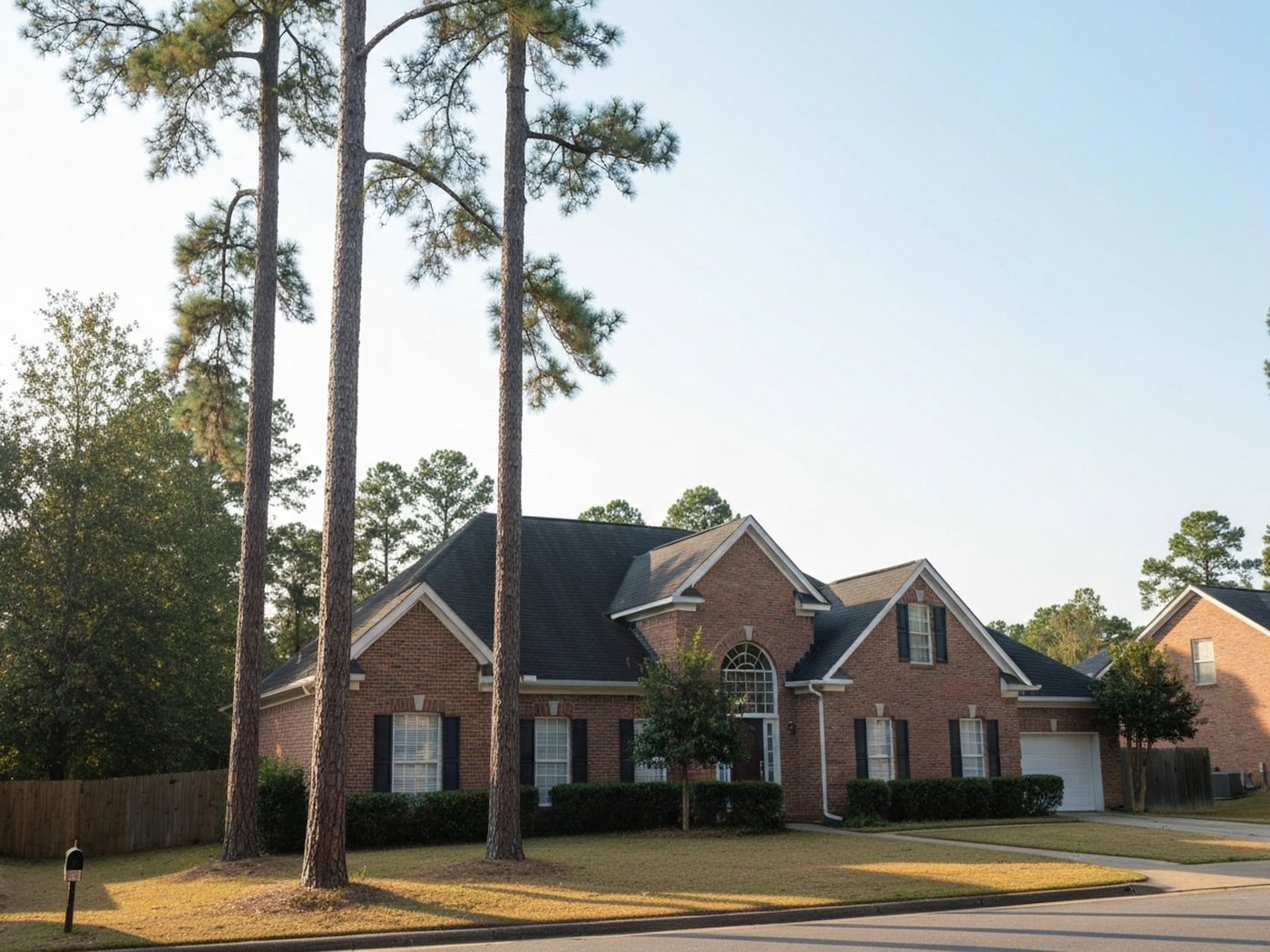
Georgia doesn’t get the same wildfire headlines as California or Colorado, and for most of the state that’s fair. But the picture splits sharply by region. Up in the Blue Ridge, from Towns and Rabun counties west across Fannin, Gilmer, and Union into Cherokee and Pickens, the Chattahoochee National Forest borders and sometimes surrounds private timber and residential land on dry slopes where a wind shift in March or April can move fire faster than people expect. Down in the flatlands, south Georgia’s longleaf and slash pine flatwoods from Brantley and Charlton counties through Ware, Pierce, and Bacon carry a continuous ground fuel layer of pine straw, wire grass, and palmetto that supports extensive prescribed burn programs for a reason: without active management, that accumulation becomes serious fire fuel. The Georgia Forestry Commission responds to several thousand wildfires statewide each year. For homeowners in those zones, the standard insurance market has grown cautious, and some have been declined or non-renewed without having filed a claim. If that’s where you are, the GUA is the backstop.
What is the Georgia Underwriting Association?
The Georgia Underwriting Association is Georgia’s FAIR Plan, a residual-market pool established under state law to ensure property insurance remains available to homeowners the voluntary market won’t cover. Every licensed property insurer doing business in Georgia is required to participate in and support the GUA, which spreads the exposure of hard-to-insure properties across the industry rather than leaving a homeowner uninsured.
The GUA is not a state agency and receives no public funding. It is a private entity operating under a statutory mandate, with oversight from the Georgia Office of Insurance and Safety Fire Commissioner. That office is the relevant regulator: if you have a dispute about GUA billing or claims handling, or want to understand your rights as a policyholder, the Commissioner’s consumer services division is where to start.
Applications go through a licensed Georgia insurance agent. The GUA does not sell directly to homeowners. Eligibility follows the last-resort standard common to FAIR plans nationally: you have been declined coverage by at least one admitted carrier in Georgia and cannot find voluntary-market placement. The precise current eligibility rules and any property condition requirements should be confirmed with a licensed agent or directly with the GUA and the Commissioner’s office, since plan rules are subject to revision.
What the GUA covers
The GUA writes a dwelling fire policy. That is narrower than a standard HO-3, and knowing what’s in the box before a loss matters.
Fire and lightning. These are the core perils. If a wildfire damages or destroys your home, a GUA policy pays to rebuild it up to your coverage limit.
Extended coverage endorsement. Added to most policies, this expands covered perils to include windstorm, hail, explosion, riot, civil commotion, aircraft damage, vehicle impact, smoke, and volcanic action. For a Georgia home in a fire-risk corridor, the fire and extended coverage package addresses the perils most likely to cause a major loss.
Additional endorsements. The GUA may offer optional add-ons depending on the property and current plan offerings. Ask your agent what is available, since policy forms change and any specific list in an article may lag behind the current product.
One detail that catches people off guard: loss settlement basis. The default on a dwelling fire policy may be actual cash value rather than replacement cost. Actual cash value means depreciation is subtracted before the check is written. A roof settled at actual cash value after fifteen years of service will not pay out enough to put a new roof on. Ask specifically whether your GUA policy settles losses at replacement cost, and if not, what a replacement cost endorsement adds to the annual premium.
What the GUA doesn’t cover: the DIC gap
This is the part that matters most in practice, and it surprises a lot of homeowners who haven’t dealt with a dwelling fire policy before.
Personal liability is not included in a standard GUA policy. If a visitor trips on your steps and sues, or a tree from your yard falls on a neighbor’s car, a GUA policy does not defend you and does not pay a judgment. A standard HO-3 typically includes $100,000 to $300,000 or more in personal liability protection. The GUA’s base policy includes none.
Theft is not covered. Additional living expenses (the coverage that pays the incremental cost of a rental while your home is being rebuilt) are generally absent from a basic GUA policy. Internal water damage from pipe freezes, sewer backup, or appliance failures is typically excluded as well. These are perils a standard policy addresses automatically; a dwelling fire form simply does not go there.

A GUA policy without a companion DIC leaves you exposed on liability. If you carry a mortgage, your lender almost certainly requires liability coverage as a loan condition, and the GUA policy alone won't satisfy it.
The standard solution is a Difference in Conditions policy, called a DIC. A DIC wraps around the GUA fire policy and fills in what it doesn’t cover: personal liability, theft, additional living expenses, and sometimes internal water damage. The DIC is purchased from a separate admitted or surplus-lines carrier and billed separately from the GUA policy.
The practical result is that most homeowners on the GUA need two policies running together. Get quotes on both at the same time, from the same agent if possible, so you understand the real combined annual cost before you commit. Coverage gaps between the GUA fire policy and the DIC, mismatched effective dates, or a DIC that has a hole in its terms are exactly what you don’t want to discover during a claim. An independent agent licensed in Georgia who regularly places FAIR Plan accounts is the right person for this; not every agent handles the pairing cleanly, and the seam between the two policies is where experience shows.
Who qualifies and how to apply
Eligibility for the GUA is the last-resort standard: you have been declined or non-renewed by the standard market and cannot secure voluntary coverage. In practice, a licensed agent documents that standard-market placement was attempted and unsuccessful, then submits your application to the GUA.
The property has to meet basic insurability conditions. The GUA is not a fallback for homes with serious unresolved structural problems or active safety hazards. A home declined because of its location in a fire-risk area is a typical GUA candidate. A home declined because the roof is actively failing and there are open penetrations in the building envelope is a different situation; those problems need to be corrected before coverage can be written anywhere.
If you receive a non-renewal from your current carrier, move quickly. File a GUA application through a licensed agent promptly, and simultaneously ask your current carrier for the reason for non-renewal in writing. The Georgia Office of Insurance and Safety Fire Commissioner has consumer protections around non-renewal notices. Knowing the reason helps you either challenge the decision or take the right corrective steps before coverage lapses. A lapse in coverage can affect mortgage escrow arrangements and may work against you when you later try to return to the standard market.
What does it cost?
More than a comparable standard policy in most cases. That is the consistent experience with FAIR plans across the country, and Georgia follows the same pattern.
GUA rates are not competitively underwritten the way voluntary-market rates are. There is one pool, one rate schedule regulated by the Georgia Office of Insurance and Safety Fire Commissioner, and no ability to shop between providers within the GUA itself. What you control is the dwelling limit (set to current rebuild cost, not your market value or purchase price) and the deductible.
For rough orientation: Georgia homeowners in standard markets commonly pay $1,200 to $2,500 per year for HO-3 coverage, depending on region, construction type, and limits. GUA fire-and-EC coverage in elevated-risk areas often runs higher, with combined premiums sometimes 40% to 100% above what a comparable property in the voluntary market would cost in a lower-risk area. Add the DIC companion policy and the total outlay climbs further. These are illustrative ranges only, not quotes. Your actual premium is set by the GUA’s current rate filings and your property specifics; a licensed agent is the only source for an accurate number.
Before accepting the GUA as your only option, ask your agent to run a surplus-lines search. Surplus-lines carriers operate outside the standard admitted market with more flexible underwriting, and some Georgia properties with elevated fire or storm exposure may qualify for surplus-lines coverage at rates competitive with or better than the GUA, sometimes with broader coverage terms. It is not a universal solution, but comparing the two before committing is worth the extra step.
Where Georgia wildfire risk concentrates
The GUA serves the entire state, but fire-driven demand clusters in two distinct regions with different fuel types and different fire behavior.
North Georgia carries the most dramatic terrain. The Blue Ridge counties, Towns, Rabun, Union, Fannin, Gilmer, Pickens, and their neighbors, hold dry ridges above 3,000 feet where southwesterly winds in late winter and spring can push fire across a slope quickly. The Chattahoochee National Forest borders and in some cases entirely surrounds private land in these areas. The 2016 fire season brought significant fires to north Georgia, including the Rock Mountain fire in Cherokee County, which burned thousands of acres and focused renewed attention on the region’s exposure. Homes set into hollows with long driveways and limited fire apparatus access are the properties underwriters price most cautiously in this corridor.
South Georgia presents a different fuel type and a different fire season. The longleaf and slash pine flatwoods from Brantley and Charlton counties through Ware, Pierce, and Bacon carry a ground fuel layer of pine straw, wire grass, and palmetto that burns regularly under managed conditions and can run aggressively in drought years without active management. The Okefenokee Swamp and its surrounding upland buffer are major fire landscapes; large fire years push smoke and in some cases fire onto private property adjacent to public land. Georgia Forestry Commission data shows a consistent wildfire count in south Georgia each spring, spiking in drought years when the duff layer dries fully.
The piedmont and middle Georgia carry lower baseline fire risk, though drought conditions combined with adjacent timberland can elevate it locally.
Getting back to the standard market
The GUA is a bridge. Standard-market coverage is broader, more competitively priced, and easier to manage over time. The path back to it runs through making your specific home more underwritable at the property level, not just by changing its ZIP code on an application.
IBHS research and Firewise USA (the NFPA community recognition program) point consistently to the same priority list: a fire-rated Class A roof, ember-resistant vents (meeting the IBHS 2022 standard or equivalent), a cleared Zone 0 (the five-foot perimeter immediately around the foundation), and a roofline free of ignitable debris. These are the specifics that shift an underwriter’s view of an individual property.
The roofline fuel load is where I pay professional attention. In north Georgia’s oak-hickory-pine country, gutters accumulate a dense mat of leaf and needle debris through fall and into winter. In south Georgia, pine straw is relentless and packs fast. Either way, what you end up with in March or April is a trough of dry, fine material running the full perimeter of your house, pressed against the fascia and the edge of the roof deck. One ember doesn’t need much. It lands in that trough and finds exactly what it’s looking for: fine dry fuel, airflow along the roofline, and wood inches away. I’ve cleaned gutters in fire-risk areas that held what amounted to a compressed mat of dry tinder from the previous season. That material is the problem, and it is one of the most controllable risk factors on the property.
Keeping it out is straightforward: clean gutters before fire season on a set schedule, or install a stainless micro-mesh guard that keeps debris from accumulating in the first place. The fire angle is the reason this shows up in the wildfire home hardening guide right alongside roofing and vent work, not in the landscaping section.

If you're building a hardening file to take back to the standard market, include dated photos of clean gutters and a cleared Zone 0, not just your roof. Evaluators want documented evidence they can put in the file.
Georgia has not adopted a statewide mitigation discount mandate comparable to California’s “Safer from Wildfires” framework. Individual admitted carriers may consider documented hardening when deciding whether to write or renew a policy, but this varies by insurer and is not guaranteed. The approach is the same regardless: ask every carrier you shop whether they offer a mitigation discount and what documentation they require. IBHS’s Wildfire Prepared Home designation and Firewise USA community recognition through NFPA both produce paperwork in a form carriers can evaluate. Neither guarantees coverage or a specific discount, but both give you something concrete to hand an underwriter instead of just a high-risk address.
For a broader look at how FAIR plans work across states and what they share in common, the what is a FAIR plan guide covers the common structure. The wildfire home insurance guide covers keeping coverage in a challenging market and what to do when you’re working back toward the voluntary market after a non-renewal.
FAQ
Does the Georgia Underwriting Association cover wildfire damage?
Yes. Fire is the core covered peril in a GUA dwelling policy. If a wildfire damages or destroys your home, the GUA policy pays to rebuild it up to your coverage limit. Confirm whether your specific policy settles at replacement cost or actual cash value: actual cash value deducts depreciation and can leave you well short of what a full rebuild costs. Ask your agent about a replacement cost endorsement if the base policy doesn’t include it.
Do I need a separate policy alongside the GUA?
Almost certainly. A standard GUA dwelling fire policy does not include personal liability, theft, or additional living expenses. Most homeowners pair the GUA policy with a Difference in Conditions (DIC) policy from a private carrier to fill those gaps. If you carry a mortgage, your lender likely requires liability coverage as a loan condition, and the GUA policy alone won’t satisfy that requirement. Get quotes on both together so you understand the real combined annual cost before binding.
Can the GUA non-renew my policy?
Yes. The GUA is required to accept eligible applicants under state rules, but non-renewal is possible if the property no longer meets eligibility standards, including maintenance issues flagged at a prior inspection that weren’t corrected. If you receive a non-renewal notice, contact the Georgia Office of Insurance and Safety Fire Commissioner and a licensed agent promptly to understand your options and rights.
Will home hardening help me return to the standard market?
It can, though no specific outcome is guaranteed. Documented fire-resilience improvements, a Class A fire-rated roof, ember-resistant vent covers, a cleared Zone 0, and a clean roofline free of ignitable debris give admitted carriers something specific to evaluate rather than a high-risk location as the only data point. IBHS’s Wildfire Prepared Home evaluation produces a formal report you can present to carriers. Firewise USA community recognition through NFPA can factor in as well. Work with an independent agent who regularly places high-risk Georgia properties; they know which admitted carriers are currently writing in your area and what documentation those carriers want to see.
Related guides
Indiana FAIR Plan Insurance: Coverage of Last Resort
What Indiana homeowners need to know about the Indiana FAIR Plan: what it covers, what it leaves out, and how to fill the gaps if the standard market won't write you.
Read the guide →Wildfire Insurance Coverage: What a Standard Policy Includes
A standard HO-3 policy covers wildfire, but the four coverage types, your limits, and key endorsements determine how much protection you actually have.
Read the guide →Minnesota FAIR Plan Insurance: A Homeowner's Guide
How Minnesota's FAIR Plan works for homeowners in fire-risk areas: coverage specifics, typical costs, and the gaps you need to fill with a separate policy.
Read the guide →Keep ignitable debris out of your roofline
Get a free, no-obligation LeafFilter gutter-protection assessment. Fine micro-mesh keeps leaves and pine needles out of the gutters, the spot where wind-blown embers love to land. Booking through us supports this site.
Get a free LeafFilter assessment →