Massachusetts FAIR Plan Insurance: A Homeowner's Guide
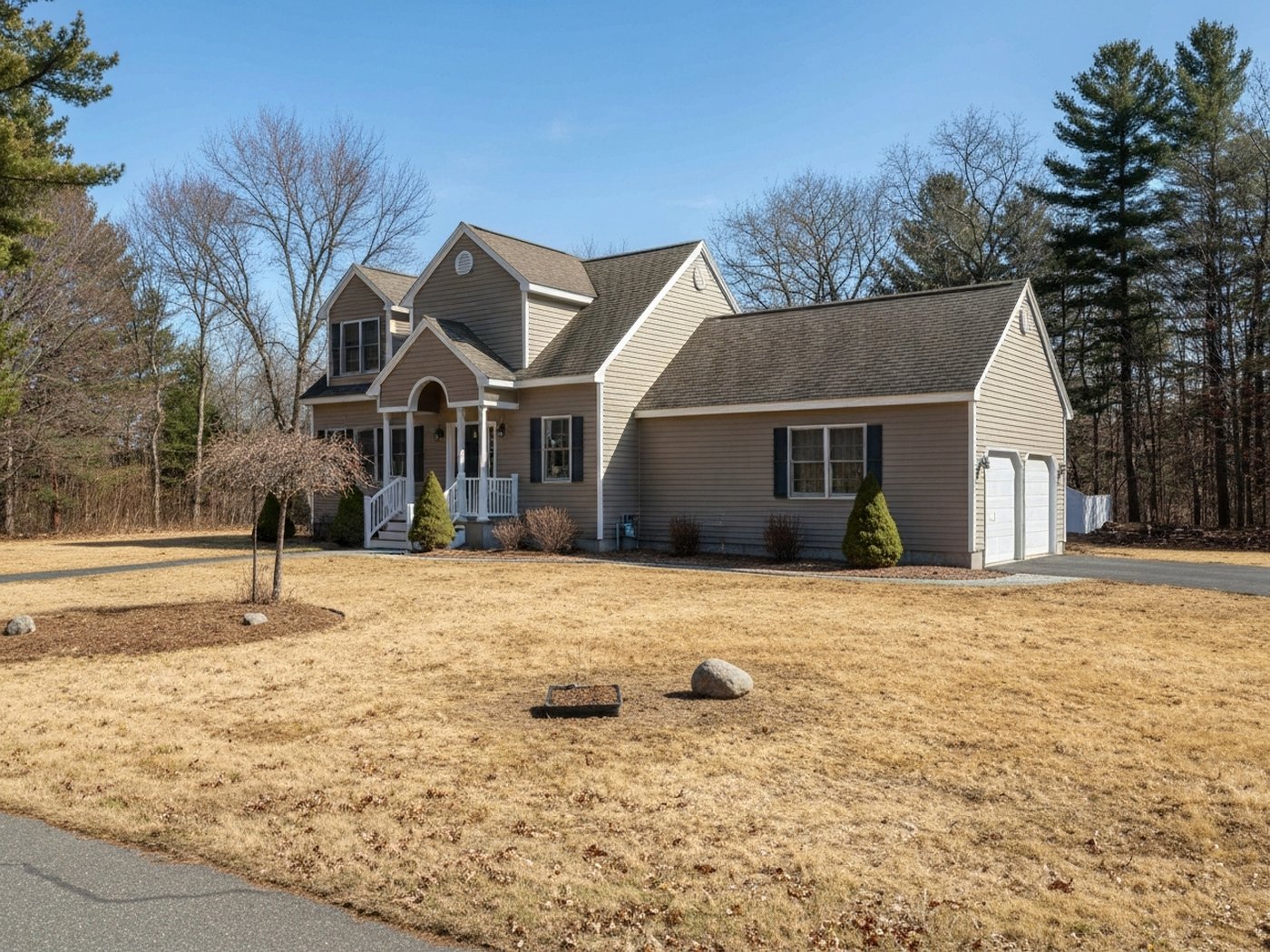
When insurers talk about wildfire exposure, people picture California, Colorado, or Texas. Massachusetts doesn’t make that list in the popular imagination, and for most of the state, that’s accurate. But drive through Plymouth County in late August, when the pitch pines and scrub oaks have gone dry and the Cape Cod Canal wind is up, and that picture changes fast. The Plymouth, Carver, and Wareham pine barrens are among the highest fire-risk landscapes in the Northeast. The region’s fire weather isn’t what you see on the West Coast, but the ignition physics are the same: dry fine fuel plus wind plus an ember source. Wildfire has burned thousands of acres there in recent years, and the risk is real.
For homeowners in those areas and other parts of the state where standard insurers have grown reluctant, the Massachusetts FAIR Plan is often the only option standing between them and going uninsured.
What is the Massachusetts FAIR Plan?
The Massachusetts FAIR Plan is administered by the Massachusetts Property Insurance Underwriting Association (MPIUA), a private nonprofit that every licensed property insurer in the state is required to participate in and support. It was established under state law to ensure that homeowners who cannot get coverage in the voluntary market have some access to it.
MPIUA is not a government agency and receives no public funding. It functions as a residual market: a shared pool that licensed carriers are required to back, taking on the policies the standard market won’t write. The Massachusetts Division of Insurance sets the rules under which MPIUA operates and is the consumer’s point of contact if problems arise.
You qualify for the MA FAIR Plan if the voluntary market has left you without coverage options. In practice, if a licensed agent has been unable to place your home on the standard market, you are eligible. The plan covers a range of situations: homes in high fire-risk areas, older structures, homes with prior loss history, and properties in neighborhoods where standard carriers have pulled back across the board.
Massachusetts has had a FAIR plan since 1968. It started as a response to urban redlining, where insurers refused to write coverage based on neighborhood demographics rather than actual risk. Today the plan’s growth in coastal and fire-prone inland areas reflects something different: a voluntary-market retreat from climate-exposed properties. The purpose is the same as it was in 1968, making sure a property can be insured at all, but the reasons homeowners end up there have shifted.
What the MA FAIR Plan covers
MPIUA offers a dwelling fire policy. It is narrower than a full homeowners policy, and knowing exactly what it includes (and doesn’t) upfront saves real surprises after a loss.
Fire and lightning. The core coverage. If your home burns in a wildfire, a FAIR Plan policy covers the cost to rebuild it up to your coverage limit.
Extended coverage endorsement. Adds windstorm, hail, explosion, riot, smoke, aircraft, vehicles, and volcanic action to the base fire policy. Most homeowners add this automatically.
Vandalism and malicious mischief. An optional add-on for damage from intentional acts or break-ins.
MPIUA does offer additional endorsements depending on the property, but the base product is genuinely narrower than what a standard HO-3 provides. The policy form and current options are documented on MPIUA’s website, and the Massachusetts Division of Insurance’s consumer section is a solid check if you want to understand the precise current terms before buying.
One detail that catches people off guard: the MA FAIR Plan does not automatically include replacement cost settlement. Default loss settlement may be actual cash value, which means depreciation is deducted before the check is written. If your 18-year-old roof burns and actual cash value terms apply, you will not receive a check large enough to replace it. Ask specifically about replacement cost endorsements and what they add to the premium.
What it doesn’t cover: the DIC wrap
This is the gap that matters most, and most homeowners don’t realize it until they are already on the plan.
A basic MPIUA policy does not include liability coverage. If someone is injured on your property, you are personally exposed. A standard HO-3 typically includes $100,000 to $300,000 or more in personal liability; the FAIR Plan dwelling fire policy includes none. Add theft, medical payments to others, and in some configurations personal property, and the list of missing coverage gets long quickly. Flood, earthquake, and other excluded perils are separate regardless of policy type, so those aren’t unique to the FAIR Plan, but liability is.
The standard fix is a Difference in Conditions policy, called a DIC. A DIC wraps around the MPIUA fire policy and fills in what the FAIR Plan doesn’t cover: liability, personal property, theft, and in some cases additional living expenses if you are displaced after a loss. It is purchased from a separate insurer, usually an admitted or surplus-lines carrier, and priced separately from the MPIUA policy.
Most homeowners who land on the MA FAIR Plan need both pieces: the MPIUA fire policy and a DIC wrap. The right move is to get quotes on both together so you know the real total annual cost before committing. An independent agent licensed in Massachusetts who works regularly with FAIR Plan placements is the right person for this: not every agent has experience putting the two pieces together cleanly, and a mismatch in coverage dates or a gap in the DIC terms is exactly what you don’t want to discover at claim time.

Skipping the DIC wrap leaves you with fire coverage and essentially nothing else. One visitor slip-and-fall and you are personally exposed. The DIC is not optional.
What does it cost?
Rates vary by location, construction type, property age, square footage, and coverage limit chosen. MPIUA rates are set by the association and are not competitively underwritten the way voluntary-market rates are, which removes price competition and, in most cases, results in higher premiums than standard policies.
As a rough frame: homeowners on the MA FAIR Plan often pay noticeably more for the fire-only component than a comparable property in the standard market, with premiums sometimes running 30% to 80% above what a voluntary-market policy would cost in a lower-risk area. The actual spread varies widely by property and location, so treat that as context, not a quote. Add the DIC policy on top and the combined annual cost can feel steep, but it reflects the genuine risk underwriters are pricing.
Coverage limits are a separate question. MPIUA has maximum limits on dwelling coverage, and whether those limits match your actual rebuild cost is something to work out with your agent. After years of construction cost inflation, many homeowners are meaningfully underinsured relative to what a full rebuild would cost today. Ask your agent to run a replacement cost estimate for your area based on current labor and material rates, not your original purchase price or your assessed value.
Applying and what to expect
You apply through a licensed Massachusetts property insurance agent. MPIUA does not sell directly to homeowners. Your agent submits the application, and MPIUA is required to provide coverage to eligible properties under state rules. Read the policy form carefully when it arrives: confirm your coverage selections, the settlement basis (replacement cost vs. actual cash value), and the effective and expiration dates.
A few practical notes on the process:
MPIUA typically inspects properties, particularly higher-value or higher-risk homes. Deferred maintenance issues found at inspection (a deteriorating roof, damaged fascia, significant overgrown vegetation pressing against the structure) can result in required repairs before or after binding. Addressing visible maintenance items before application is worth doing, both for the inspection and because those same items can show up as exclusions or conditions.
The policy renews annually. Non-renewal from MPIUA is possible if the property fails to meet eligibility standards or if required repairs from a prior inspection aren’t completed. The Massachusetts Division of Insurance governs the rules around non-renewal, so if you receive a notice, that is the first call to make.
Keep your documentation current regardless of which policy you carry. A current home inventory, photos of your property’s condition and any mitigation work you have done, and receipts for major improvements all serve you at claim time.
Home hardening and the path back to the standard market
The MA FAIR Plan is a backstop. The goal for most homeowners should be getting off it when possible. Standard market coverage is typically broader, more competitively priced, and easier to manage over time.
The path back to the voluntary market runs through the same work that makes a house harder to ignite. Standard-market insurers who have pulled back from fire-risk areas are starting to distinguish between individual properties rather than painting entire ZIP codes with the same brush. A home that has been genuinely hardened has a better shot at a standard-market quote than one that hasn’t been touched.
The upgrades that matter most start at the top of the house. IBHS research consistently shows the roof as the first priority: a fire-rated Class A roof gives embers landing on the surface less to work with. From there: ember-resistant vents (IBHS 2022 standard or equivalent) to keep ignition points out of the attic, sealed soffits and eave gaps, and a cleared Zone 0 (the five feet immediately around the structure). Cal Fire’s Defensible Space guidance and NFPA’s Firewise USA program both use this same priority order, and it holds in Massachusetts as well as it does anywhere.
The roofline fuel load is where I work as a gutter and water-management consultant. A gutter packed with dry pitch-pine needles is a strip of ignitable debris running the length of your roofline, pressed against the fascia and roof sheathing. In the Plymouth barrens and on the Cape, pine needle accumulation happens fast. One ember landing in a loaded gutter has everything it needs: fine dry fuel, airflow, and wood directly adjacent. Keeping the gutter empty matters, either by cleaning it twice a year on a set schedule or by installing a stainless micro-mesh guard that keeps debris out year-round. The full hardening priority list is in the wildfire home hardening guide.
On the insurance side, Firewise USA (the NFPA community recognition program) and IBHS’s “Wildfire Prepared Home” designation are ways to document your hardening work in a form that carriers can recognize. Whether a specific voluntary-market carrier in Massachusetts offers a discount for that documentation varies: ask your agent and ask the carrier directly. The Massachusetts Division of Insurance is the resource for understanding what mitigation discounts licensed insurers in the state are permitted or required to offer.

If you are building a documentation file for Firewise USA or a carrier review, include dated photos of clean gutters and a cleared Zone 0. Evaluators want evidence, not just a list of what you claim to have done.
For a broader view of how the Massachusetts FAIR Plan fits into the US residual market picture, the what is a FAIR plan overview covers how these plans work across states and what they share in common. And if you are working through what a standard policy covers before deciding whether the FAIR Plan is actually necessary, the wildfire home insurance guide is the place to start.
Frequently asked questions
Does the Massachusetts FAIR Plan cover wildfire damage?
Yes, fire is the core covered peril. If a wildfire damages or destroys your home, an MPIUA policy will pay to rebuild it up to your coverage limit. Check whether your specific policy settles losses at replacement cost or actual cash value: actual cash value deducts depreciation and may leave you well short of what a full rebuild costs.
Do I need a DIC policy on top of the MA FAIR Plan?
Almost certainly. The MPIUA dwelling fire policy does not include personal liability coverage, theft, or some personal property protections that come standard on an HO-3. Most homeowners pair the MPIUA fire policy with a Difference in Conditions (DIC) wrap from a separate carrier to fill those gaps. Get quotes on both together so you know the real combined annual cost before binding.
Can the MA FAIR Plan non-renew my policy?
Yes. MPIUA is required to accept eligible applicants but can decline to renew if the property no longer meets eligibility standards, which can include maintenance issues flagged at a prior inspection and not addressed. Keeping the property in reasonable repair is both practical and a condition of continuing coverage. If you receive a non-renewal notice, contact the Massachusetts Division of Insurance and an independent agent to understand your options.
Will home hardening help me return to the standard market?
Potentially, yes. Voluntary-market insurers are increasingly underwriting individual properties based on specific fire-resilience features rather than ZIP code alone. A Class A roof, ember-resistant vents, a cleared Zone 0, and a clean roofline free of ignitable debris can all support a standard-market application. Document the work with dated photos and receipts. An independent agent who works with fire-risk properties in Massachusetts is the right person to test the market with after you have completed hardening.
Related guides
Indiana FAIR Plan Insurance: Coverage of Last Resort
What Indiana homeowners need to know about the Indiana FAIR Plan: what it covers, what it leaves out, and how to fill the gaps if the standard market won't write you.
Read the guide →Wildfire Insurance Coverage: What a Standard Policy Includes
A standard HO-3 policy covers wildfire, but the four coverage types, your limits, and key endorsements determine how much protection you actually have.
Read the guide →Minnesota FAIR Plan Insurance: A Homeowner's Guide
How Minnesota's FAIR Plan works for homeowners in fire-risk areas: coverage specifics, typical costs, and the gaps you need to fill with a separate policy.
Read the guide →Keep ignitable debris out of your roofline
Get a free, no-obligation LeafFilter gutter-protection assessment. Fine micro-mesh keeps leaves and pine needles out of the gutters, the spot where wind-blown embers love to land. Booking through us supports this site.
Get a free LeafFilter assessment →