Pennsylvania FAIR Plan Insurance: Coverage for Hard-to-Insure Homes
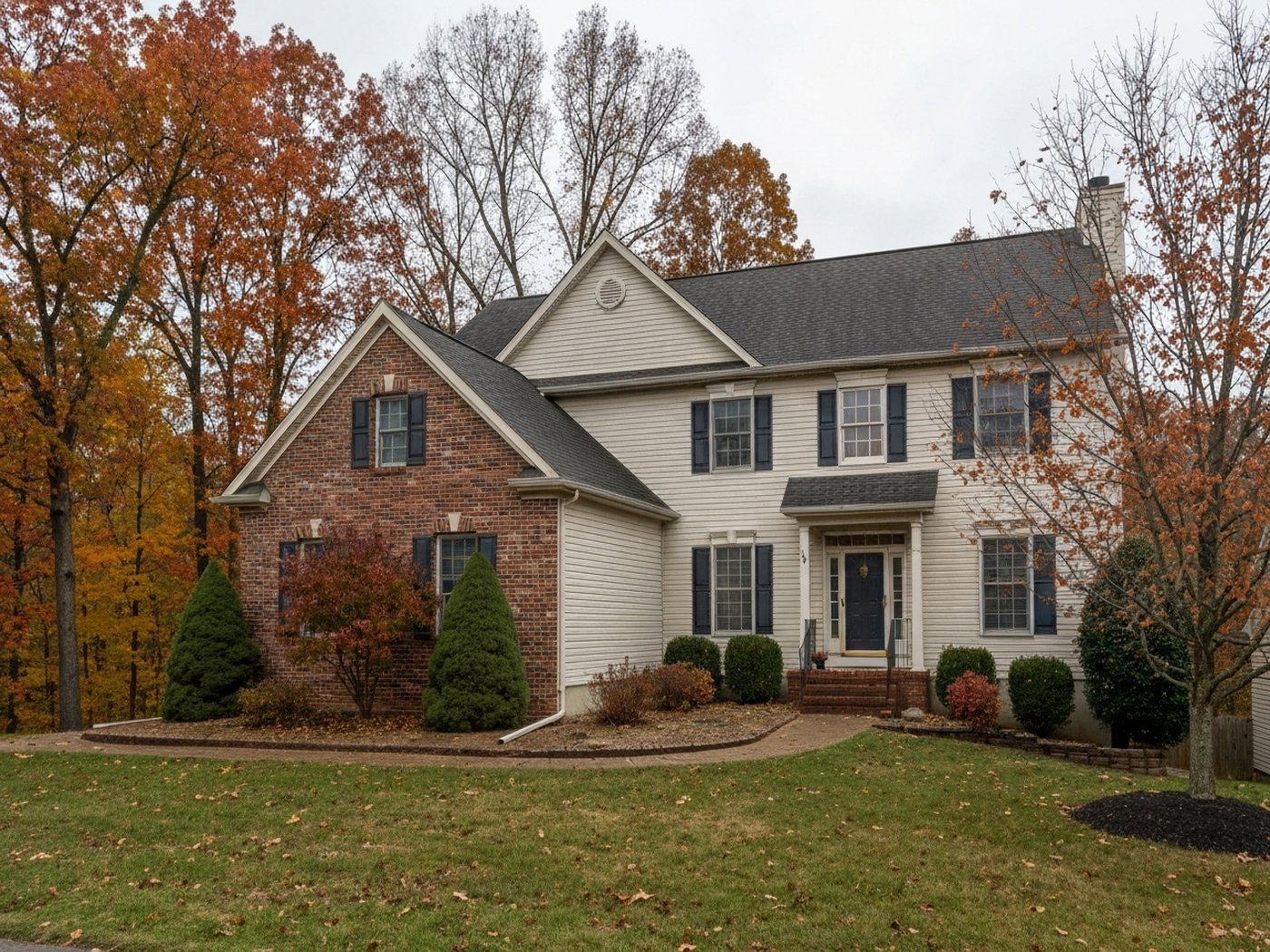
Pennsylvania doesn’t carry the wildfire reputation of California or Colorado, and that’s part of the problem. The state’s Bureau of Forestry under DCNR reports hundreds of wildfires most years, concentrated in a spring fire season that runs roughly late February through early May. By then, the previous fall’s leaves are fully cured, the trees haven’t leafed out yet to create a humidity buffer, and a northwest wind event can push a fire across a ridge fast. Along the Pocono ridges, through the northcentral state forest counties, and across the Appalachian terrain in between, some private carriers have quietly stopped writing homes they once covered without a second thought. If you’ve gotten a non-renewal notice or a refusal, the FAIR Plan is what you turn to.
What the Pennsylvania FAIR Plan covers
The PFPA is the residual market pool for property insurance in Pennsylvania. Every company licensed to write property coverage in the state participates in the pool, so when the admitted market won’t take your property, coverage is provided collectively. The Pennsylvania Insurance Department oversees the plan and handles consumer complaints; PFPA administers policies and processes claims.
The core product is the Basic Form policy, which covers fire and lightning. An Extended Coverage endorsement adds windstorm, hail, riot, aircraft damage, and vehicle damage. For a home in a wildfire-risk area, fire and lightning are the perils that matter most, and a Basic plus Extended policy covers them.
Coverage limits on PFPA policies are capped by plan rules that the Pennsylvania Insurance Department reviews and can revise. Get the current maximum dwelling limit directly from PFPA or a licensed agent, not from a source that may be out of date. Whatever the cap is, set your dwelling coverage to what it would actually cost to rebuild your specific home today. Not the market value. Not the number that’s been auto-renewing for years without review. After a major fire in any region, demand surge pushes rebuild costs above pre-event estimates: contractors book out, materials compete with other disaster zones, and local labor rates climb. The gap between your policy limit and the real rebuild cost is yours to absorb if you haven’t thought about this.
What it doesn’t cover
Personal liability is absent. If someone is injured on your property, a tree from your yard falls on a neighbor’s car, or a premises-liability lawsuit lands on you while your home is in ruins, the FAIR Plan does not defend you or pay a judgment. If you carry a mortgage, your lender almost certainly requires liability coverage, and a PFPA policy alone does not satisfy that requirement.
Theft is not covered. Water damage from internal causes, including burst pipes, sewer backup, or appliance failure, is not covered. Additional living expenses, the coverage that pays your rent and meals above your normal food budget while your home is being rebuilt, are not covered by default.
That last one catches people. After a total loss in Pennsylvania, a rebuild can take six months to well over a year. The living costs during that stretch add up to serious money, and a FAIR Plan policy leaves all of that gap open.
The practical fix is a companion policy from a private insurer held alongside your PFPA policy. These are sometimes structured as Difference in Conditions (DIC) policies or Homeowners Companion Policies. The companion fills the liability, theft, water, and loss-of-use gaps; the FAIR Plan covers fire and the extended perils. The two together get you closer to what a standard HO-3 would have provided, but the combined cost is almost always higher, and the coverage is still not identical. For the full mechanics of how named-perils policies work and how companion pairing is structured, the hub explainer on what a FAIR plan is walks through it.

A PFPA policy alone leaves you without personal liability coverage. If you have a mortgage, your lender will almost certainly require a companion policy that includes liability before your loan's insurance requirements are satisfied.
Who qualifies and how to apply
The FAIR Plan is a last resort by design. PFPA requires you to demonstrate that the standard market wasn’t available to you, which typically means documenting a declination from at least one admitted carrier. The Pennsylvania Insurance Department sets the current eligibility rules, and those rules are subject to revision, so verify the current threshold with PID or a licensed agent rather than relying on older sources.
The property also needs to meet basic insurability standards. Serious deferred maintenance, structural problems, or obvious fire hazards can make a property ineligible until those issues are corrected. PFPA is a backstop for homeowners trying to insure a home in reasonable condition, not a fallback for properties that private carriers declined because of documented safety problems.
Applications go through a licensed Pennsylvania insurance agent. You cannot apply directly through PFPA. A good agent will confirm that you’ve genuinely exhausted standard-market options, help you set a realistic dwelling limit based on current rebuild costs in your county, and structure a companion policy at the same time. The Pennsylvania Insurance Department publishes consumer resources and is the right contact if you have a dispute or need the current eligibility rules.
What Pennsylvania FAIR Plan coverage costs
More than a comparable standard policy, in almost every case.
PFPA premiums are regulated by the Pennsylvania Insurance Department. They’re not set through competitive pricing the way admitted-market policies are, and shopping among multiple PFPA competitors isn’t an option: there is one pool. What your actual premium depends on: the property location and fire risk classification, construction type, dwelling limit, and deductible.
For rough context: standard homeowners policies in lower-risk Pennsylvania areas commonly run $900 to $2,000 per year. In higher-fire-risk rural counties, FAIR Plan fire coverage alone often runs $1,500 to $4,000 or more annually. Adding a companion policy for liability and the other gaps pushes the total higher. These are illustrative ranges, not quotes. Your real numbers depend on your specific property and current PFPA rate filings. Get actual figures from a licensed agent before making any decisions.
Before accepting the FAIR Plan as your answer, it’s worth confirming that no admitted or surplus-lines carrier will take your property. Surplus lines carriers operate outside the standard admitted market and have more flexible underwriting than admitted insurers, though their premiums typically run higher too. An independent agent who works with high-risk Pennsylvania properties can run that search before defaulting to the FAIR Plan.
Where Pennsylvania wildfire risk concentrates
The FAIR Plan is available statewide, but demand for it clusters in specific parts of Pennsylvania.
The Pocono Mountains in the northeast, across Carbon, Monroe, and Pike counties, carry mixed oak and conifer fuel on sandy, well-drained soils that dry out quickly. Spring fire season here peaks in April, when the previous fall’s leaf litter has fully cured and northwest wind events push fire across ridgelines. The terrain is interrupted enough that a fire can run several hundred acres before natural breaks slow it.
The northcentral tier, roughly Clinton, Centre, Clearfield, Lycoming, Potter, and Tioga counties, is state forest country with large acreages and road access that makes suppression difficult. Many homes at the rural-forest interface in this region sit at the end of long travel distances from the nearest fire station, and that affects both risk and insurer appetite.
The Appalachian ridges through Blair, Huntingdon, Bedford, and Fulton counties in south-central Pennsylvania have their own fire history. Ridge-and-valley terrain channels wind, dries vegetation, and creates fire runs in early spring. Homes in hollow-and-ridge settings can find themselves in the path of a fire that crested a ridge and came down the other side faster than anyone expected.
The spring timing is worth noting for homeowners moving from other states. Pennsylvania’s primary wildfire risk window is March and April, not August. By the time summer fire season in the West makes the news, Pennsylvania’s worst weeks are typically over for the year.
Getting back to the standard market
PFPA is a bridge. The goal is to show that your specific home is a better risk than its location suggests, and to get back to an admitted carrier. That’s become more achievable in recent years because more underwriters are now evaluating homes at the property level rather than drawing a line around a zip code and declining everything inside it.
The mitigation steps that matter most are consistent across every credible source. Firewise USA, the NFPA community program that Pennsylvania Bureau of Forestry fire staff actively support, and IBHS both point at the same places: a fire-resistant Class A roof (covered in the wildfire home hardening guide), ember-resistant vent covers, and clearing the first five feet around the foundation of any combustible material. Standard attic vents with metal mesh let through the fine embers that travel miles ahead of a fire front. Ember-resistant covers with smaller openings stop them. That detail alone keeps embers out of the attic insulation, where a smoldering fire can go undetected.
The gutters are where I put most of my professional attention. I do in-home exterior assessments as a gutter and water-management consultant, and in a Pennsylvania spring fire season, what I find in gutters is two seasons of oak leaves, white pine needles, and decomposed debris that is bone dry by March. That material runs the full perimeter of your house along the eave, sitting against the fascia and the bottom edge of the roof sheathing. An ember coming down from above, or riding along the ground and catching lift at the foundation, finds that channel and has everything it wants: dry fuel, airflow through the gutter cross section, and a path straight to the structural wood of the house. The Bureau of Forestry’s home fire safety guidance calls out debris accumulation around and on the home as one of the primary controllable risk factors. Cleaning gutters in late February before the dry spring season, or installing a noncombustible stainless micro-mesh guard that keeps debris out year-round, removes that exposure cleanly.

Pennsylvania's fire season peaks in March and April, not August. Clean your gutters in late February while it's still cold, before the leaf litter dries completely and wind events start. That's the window that matters.
Pennsylvania doesn’t have a state-mandated mitigation discount framework like California’s “Safer from Wildfires” program, but individual admitted carriers may still offer discounts for documented hardening work. Ask any carrier directly what they consider and what documentation they want. The answer varies by insurer, so this is a question worth asking of every option you’re shopping. What’s consistent: documenting the work matters regardless of whether a discount follows immediately. Dated photos of your roof condition, vent covers, cleared foundation zone, and clean gutters, plus receipts for any upgrades, give you something concrete to bring back to a standard-market carrier when you’re ready to try again. That file also speeds up any claim settlement you may eventually need.
For the full picture on keeping coverage in a high-risk market, including how to respond to a non-renewal and what the standard policy covers before you reach FAIR Plan territory, the wildfire home insurance guide covers both questions in depth.
FAQ
Is the Pennsylvania FAIR Plan the same as regular homeowners insurance? No. A PFPA policy is a named-perils contract: the Basic Form covers fire and lightning, and Extended Coverage adds windstorm, hail, and a few related perils. Personal liability, theft, water damage from internal causes, and additional living expenses are not included by default. A standard HO-3 homeowners policy covers all of those. Most homeowners pair the FAIR Plan with a companion or DIC policy from a private insurer to fill the gaps, and the combined cost still usually exceeds what a standard policy would have run, with narrower coverage even after pairing.
How do I apply for the Pennsylvania FAIR Plan? Through a licensed Pennsylvania insurance agent. You cannot apply directly through PFPA. A good agent will confirm your eligibility (which typically requires documented inability to obtain standard-market coverage), set your dwelling coverage to a realistic current replacement cost, and pair a companion policy for the liability and other gaps at the same time. The Pennsylvania Insurance Department publishes current consumer information and eligibility rules and is the right contact for disputes or denials.
Does the Pennsylvania FAIR Plan cover wildfire smoke damage? Generally yes, when the smoke damage traces to fire, which is a covered peril. Damage from a covered cause is typically covered under that same peril. Smoke claims tend to get more scrutiny than total losses, because the line between smoke damage and ordinary wear can be contested. Photograph any soot, keep remediation invoices, and don’t discard damaged contents before an adjuster has reviewed them.
Can hardening my home lower my Pennsylvania FAIR Plan premium? Not directly in most cases. PFPA rates go through the Pennsylvania Insurance Department and aren’t built around the competitive discount structure that admitted carriers use. The real return on mitigation work is what it does for your options: documented hardening makes your home a better risk to admitted carriers and improves your chances of getting back to the standard market, where mitigation discounts may be available. Ask any carrier what documentation they want to see. The FAIR Plan is the bridge; the goal is to cross it.
Related guides
Indiana FAIR Plan Insurance: Coverage of Last Resort
What Indiana homeowners need to know about the Indiana FAIR Plan: what it covers, what it leaves out, and how to fill the gaps if the standard market won't write you.
Read the guide →Wildfire Insurance Coverage: What a Standard Policy Includes
A standard HO-3 policy covers wildfire, but the four coverage types, your limits, and key endorsements determine how much protection you actually have.
Read the guide →Minnesota FAIR Plan Insurance: A Homeowner's Guide
How Minnesota's FAIR Plan works for homeowners in fire-risk areas: coverage specifics, typical costs, and the gaps you need to fill with a separate policy.
Read the guide →Keep ignitable debris out of your roofline
Get a free, no-obligation LeafFilter gutter-protection assessment. Fine micro-mesh keeps leaves and pine needles out of the gutters, the spot where wind-blown embers love to land. Booking through us supports this site.
Get a free LeafFilter assessment →