Class A Roofing Shingles: The Fire-Rated Choice for Asphalt Roofs
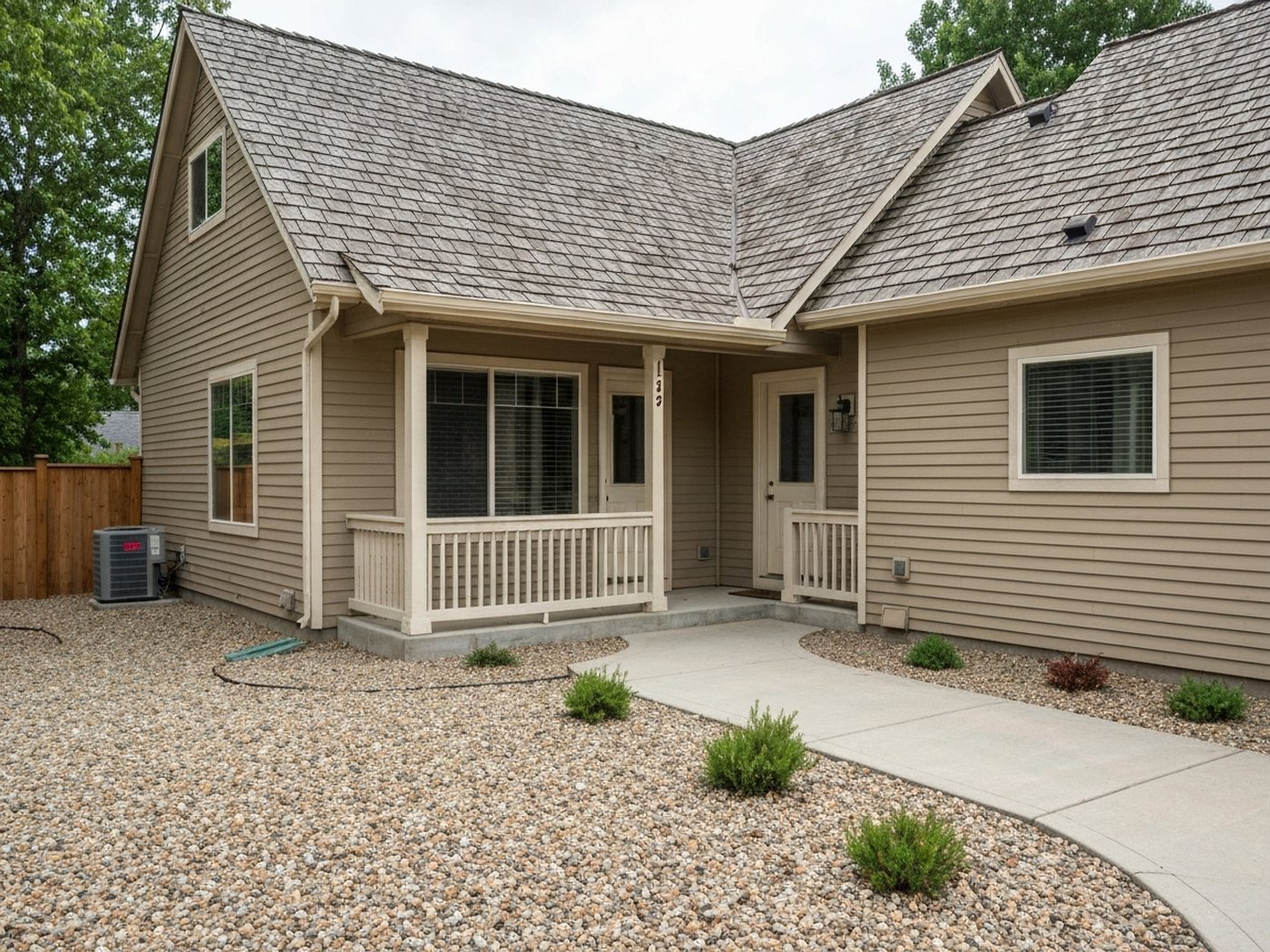
Class A comes up in almost every assessment I do in fire-prone areas. Homeowners hear it from their insurer or from a roofing contractor, and they want to know what it actually means and whether their current roof has it. The label itself is a short answer. The practical questions behind it are worth a real explanation.
What the Class A rating actually tests
The two primary standards are UL 790 (Underwriters Laboratories) and ASTM E108, and they evaluate the same three things through slightly different procedures. Both are accepted by the International Building Code and adopted by fire-prone states.
Intermittent flame. A gas flame is applied to the roofing material fifteen times, each application lasting two minutes, with two-minute breaks between. The material must self-extinguish when the flame is removed and must not allow flame to spread significantly across the surface. This simulates what a roof faces when a burning structure nearby radiates heat in waves.
Spread of flame. A flame is applied continuously for ten minutes. The test measures how far fire travels across the surface. Class A limits spread to 6 feet (1.8 meters). Class B allows up to 8 feet. Class C allows up to 13 feet.
Burning brand. A burning wood brand of a specific size is placed on the sloped test assembly and allowed to burn until consumed. This test maps most directly to wildfire behavior: embers drifting ahead of a fire are, functionally, small burning brands landing on your roof. For Class C, the brand is roughly a 3-inch square piece of burning wood. The Class A brand is considerably larger, closer to 12 by 12 inches, and it burns for several minutes. Passing that test without sustained ignition or flame spread is what separates the top rating from the others.
In jurisdictions with WUI codes (California, Colorado, Oregon, and many local fire-hazard severity zone designations), Class B and C are typically not acceptable for new construction or roof replacement. Class A is the floor.
Why the mat material changes everything
Asphalt shingles come in two generations, and the difference matters for fire.
From roughly the 1970s back, most asphalt shingles used a cellulose (organic) mat as the structural base: compressed paper or felt, saturated with asphalt, mineral granules pressed into the surface. Organic-mat shingles were heavier and held more asphalt, which contributed to their durability. But cellulose burns. Many older organic-mat shingles did not carry a Class A rating, and the ones that did earned it through specific formulations that may not be intact after thirty or forty years of weathering and UV exposure.
Since the 1980s and 1990s, fiberglass mat has taken over the market. The structural core is now woven glass fibers, which don’t sustain combustion. You can hold a flame to exposed fiberglass mat and it won’t burn through. That core difference is why most asphalt shingles sold today earn a Class A rating without any special formulation effort. It’s the baseline for a modern shingle, not a premium feature.
If your home was built before 1990 with the original roof still on it, there is a reasonable chance you have organic-mat shingles. They are worth identifying before assuming you have a Class A roof. A roofing contractor can usually tell from a visual inspection, and the manufacturer’s product data sheet, searchable through UL’s Product iQ database at iq.ul.com, will list the fire classification explicitly.
Class A covering vs. Class A roof assembly
This distinction matters more than most homeowners realize, both for code compliance and for insurance documentation.
A Class A roof covering refers to the surface material alone. When a shingle manufacturer publishes that their product is “Class A rated,” they mean the shingle, installed per their specifications on a defined substrate, passed UL 790 or ASTM E108. The tested installation typically specifies a plywood or OSB deck at a minimum slope, and sometimes a particular underlayment type.
A Class A roof assembly means the complete system, shingle, underlayment, deck, and fastening method, meets the fire standard as an integrated unit. Building codes in California, Colorado, Oregon, and other states require the assembly to qualify, not just the shingle in isolation.
For most standard installations, that is not complicated. A modern fiberglass shingle properly installed over a code-compliant plywood or OSB deck with a fire-rated underlayment will meet Class A assembly requirements. Where it gets more nuanced is reroofing over an existing layer (which can change the test parameters the manufacturer originally tested against), installing over skip sheathing common in older homes, or substituting an underlayment that was not part of the listed system. For the assembly details, the Class A roof assembly post covers it in depth.
Which asphalt shingles actually carry Class A
Most of what you will find at a roofing supply house today qualifies. GAF’s Timberline HDZ and most of their architectural line carry Class A ratings. Owens Corning Duration, TruDefinition Duration, and Duration Storm are Class A. CertainTeed Landmark and Landmark Premium are Class A. TAMKO Heritage, IKO Cambridge, and Atlas Pinnacle Plus also qualify. The list is long because the fiberglass mat baseline makes the rating achievable for most modern products.
What to look for: the shingle manufacturer’s product data sheet will list the fire classification directly, alongside the wind and impact ratings. The UL Product iQ database at iq.ul.com lets you search by brand and product name and verify the published UL listing. If a contractor is quoting you a shingle and cannot tell you the fire class, ask for the product data sheet before signing anything.

Ask for the product data sheet on any shingle in a roof bid, not just the brand name. The fire classification is listed there, and that is the document your building inspector and insurer may want to see.
What Class A asphalt shingles cost
Prices shift by region and demand (post-fire replacement surges push costs up fast), but some ranges hold. As of mid-2026, standard Class A architectural asphalt shingles typically run $100 to $200 per roofing square (100 square feet) at contractor pricing for material alone. Premium lines, designer profiles, and impact-resistant variants run $200 to $400 per square or more.
Fully installed, a standard residential reroof runs roughly $4 to $8 per square foot in most markets, so a 2,000-square-foot roof footprint can cost $8,000 to $20,000 or higher. Pitch, complexity, number of existing layers being removed, and your regional labor market all move that number.
If you are already replacing the roof, the cost difference between a standard Class A shingle and an impact-resistant Class 4 variant (rated under UL 2218 for hail) is usually modest, often $30 to $80 more per square for the material. Some carriers discount premiums for Class 4 shingles separately from any fire-rating consideration, which can shift the math on the upgrade. See the Class 4 impact-resistant roof post for the full comparison.
How a Class A roof affects your insurance
This is the part I have to hedge carefully, because the specifics vary by carrier, state, and your individual policy.
A Class A roof is what most underwriters expect for any home in a high-risk area. In many WUI zones it is not an upgrade that earns a discount. It is a prerequisite to getting standard market coverage at all. Non-renewals and carrier pullbacks in wildfire-prone states have made the baseline requirements clearer: if the roof does not meet Class A, some carriers will not write the policy.
On the discount side: California’s “Safer from Wildfires” framework, developed by Cal Fire and the California Department of Insurance, includes roofing condition among the qualifying hardening measures that admitted insurers must consider when evaluating premiums. Oregon has moved carriers toward factoring in mitigation steps in their underwriting as well. The specific dollar value of any Class A roofing discount, if there is one, varies by carrier and the rest of your home’s risk profile. Some bundle roofing into a broader home-hardening premium adjustment. Others evaluate it separately or not at all.
The IBHS “Wildfire Prepared Home” designation includes roofing as a rated element. Earning that designation can support your documentation story with a carrier. NFPA’s Firewise USA program lists a fire-rated roof covering as a foundational hardening step alongside defensible space management.
Practically: call your insurer, describe the roof work or verification, and ask whether they offer a discount for Class A roofing, what documentation they require (product data sheet, permit, contractor invoice), and whether a Class 4 impact-resistant shingle gets separate consideration. Keep that documentation in a file. This is not professional insurance advice; your state Department of Insurance is the right resource for disputes about coverage or discount eligibility.

A Class A shingle alone does not guarantee any specific insurance discount. Confirm what your insurer needs and get it in writing before assuming the savings will follow.
Installation: where the rating gets protected or lost
A Class A shingle installed incorrectly is no longer the tested product. Several things matter here.
Fastening. Manufacturers specify nail placement zones, fastener count, and nail type. Too few nails or nails in the wrong zone lets shingles lift in wind. That exposes the deck, defeats the fire rating, and typically voids the manufacturer’s warranty all at once.
Underlayment match. If the tested assembly specified a fire-rated ice-and-water shield at eaves and a particular synthetic underlayment above that, substituting something different may affect the assembly classification. For WUI zone work, confirm that your contractor is installing what the listed system requires.
Deck condition. A Class A shingle over rotted or delaminated decking is not the tested installation. Deck condition affects fire performance and structural integrity.
Reroofing over existing layers. Some manufacturers allow their shingle to be installed over one existing layer within their tested parameters. Others do not. Get that confirmed before proceeding, especially in states where the building department will inspect.
Penetration flashing. Chimneys, skylights, and pipe penetrations that aren’t properly flashed become ember entry points regardless of the shingle rating. They also break the continuous Class A covering surface.
The roofline as a system
A Class A roof covering is the right baseline. In WUI zones it is the legal minimum and the first item any wildfire retrofit should address. But it is one layer of protection, not the whole story.
Embers do not only land on the shingle surface. They blow into box vents and ridge vents, collect in open soffits and eave gaps, and pile into gutters packed with dry needles, sitting at the seam where the roof edge meets the fascia. IBHS and Cal Fire research consistently shows that homes surviving wildfires tend to have a combination: a fire-rated roof covering, ember-resistant vents, and a clear Zone 0 (the five feet immediately around the foundation). No single feature carries the whole load.
The gutter line is the piece most homeowners overlook after they have invested in the roof. A Class A roof sheds embers off its surface reasonably well. But if the gutter running the perimeter of that roof is loaded with dry pine needles, one ember finding that trough can ignite the debris and begin heating the fascia and roof sheathing from below, well below where the Class A shingle sits. Keeping that gutter empty through regular cleaning or a quality gutter-protection system is the companion work the shingle rating cannot do on its own.
The wildfire home hardening guide pulls all these layers together: Class A roofing, ember-resistant vents, Zone 0 clearance, siding, and glazing. That is the right place to work through the full system if you are doing a comprehensive retrofit.
FAQ
Does a Class A shingle mean my roof won’t catch fire in a wildfire? Not exactly. A Class A roof covering removes one of the more vulnerable ignition points on the home and reduces the risk of embers igniting the shingle surface directly. It does not seal the roof against embers entering through vents or eave gaps, and it does not protect against prolonged direct flame exposure in a worst-case scenario. Fire-resistant is the accurate term for what these products are. They perform at the highest level the standard tests measure; no residential roofing product is fire-immune.
How do I know if my current shingles are Class A? Look up the brand and product name in the UL Product iQ database at iq.ul.com, or search for the manufacturer’s product data sheet. If you cannot identify the shingle, a roofing contractor can usually read the product from a visual inspection and check the listing. Homes built before 1990 with original roofing may have organic-mat shingles that carry a lower rating or no rating at all.
Do insurance companies give discounts for Class A shingles? Some do, and some states require admitted insurers to consider it. California’s “Safer from Wildfires” framework is one example. The specific discount, if any, varies by carrier and policy. The practical step is to contact your insurer directly, ask whether they offer a roofing-related discount, and confirm what documentation they need. Your state Department of Insurance can tell you what carriers in your state are required to factor in.
Should I upgrade to impact-resistant Class A shingles? If you are replacing the roof anyway, price the difference. Class 4 impact-resistant shingles (rated under UL 2218) carry the same Class A fire rating and resist hail damage better than standard shingles. Some carriers offer additional premium discounts for Class 4 products, sometimes on top of any fire-rating consideration. The material premium for the upgrade is typically modest relative to the total job cost. The Class 4 impact-resistant roof post covers the full breakdown.
Related guides
What Is a Class 4 Roof? Impact Resistance and Insurance Savings
A Class 4 impact-resistant roof can earn meaningful insurance discounts and adds roofline durability, but it is not the same as a fire rating. Here is what to know.
Read the guide →Class A Roof Assembly: How the Whole System Earns Its Rating
A Class A fire rating applies to the whole roof assembly, not just the shingles, and understanding the difference changes how you approach re-roofing in fire country.
Read the guide →Defensible Space Inspections: What Inspectors Look For
A straight explanation of what fire inspectors check during a defensible space inspection, zone by zone, so you can prepare before they arrive.
Read the guide →Keep ignitable debris out of your roofline
Get a free, no-obligation LeafFilter gutter-protection assessment. Fine micro-mesh keeps leaves and pine needles out of the gutters, the spot where wind-blown embers love to land. Booking through us supports this site.
Get a free LeafFilter assessment →