Kansas FAIR Plan Insurance: How to Get Covered
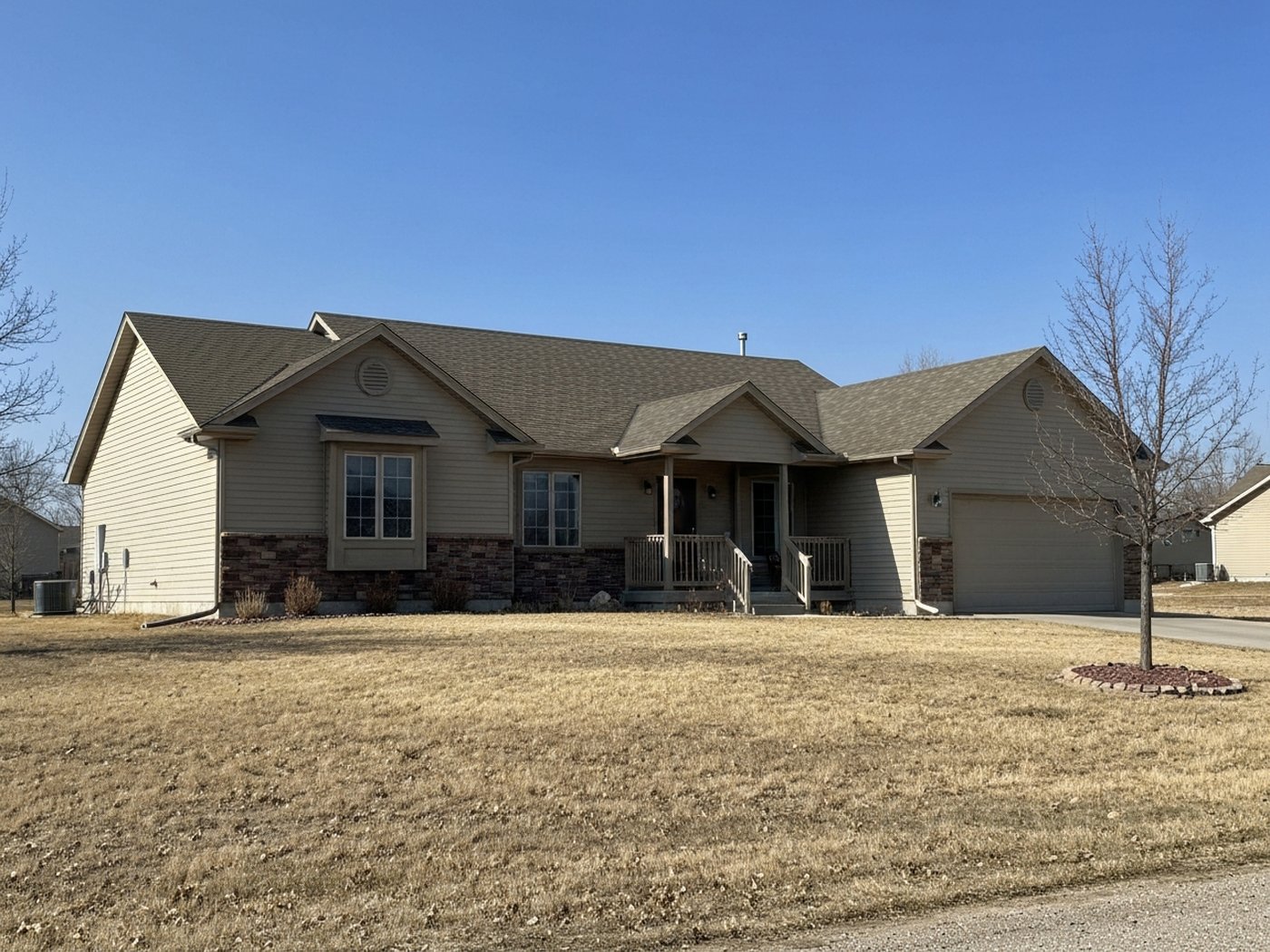
Kansas gets lumped in with tornado country in most insurance conversations, and that’s fair enough. But there’s a second hazard that’s put real pressure on the homeowners insurance market across a wide swath of the state: grassland fire. Not the slow-creep forest fire people picture when they hear “wildfire.” Grass fires move fast, sometimes as fast as a running pace in the right wind, and the Flint Hills, the south-central plains, and the drier southwest corner of Kansas carry the fuel conditions to turn a dry March into a serious loss event. In 2016, the Anderson Creek Fire burned roughly 400,000 acres across Barber and Comanche counties in south-central Kansas, one of the largest wildfires in Kansas history at the time. In 2017, the Starbuck fire complex tore through Clark County and adjacent areas. After losses like those, some carriers repriced or pulled back from fire-prone zones, and homeowners in those areas started running into the same wall that high-fire states like California and Colorado dealt with years earlier. The Kansas FAIR Plan is the backstop when that happens.
What is the Kansas FAIR Plan?
The Kansas FAIR Plan is a residual market mechanism: a structured pool that provides property insurance to homeowners who have been declined by the voluntary market. Every insurer licensed to write property coverage in Kansas is required to participate and share the exposure of hard-to-insure properties. The Kansas Insurance Department and the Kansas Insurance Commissioner regulate the program, set the rules, and serve as the relevant authority if you have a coverage dispute, a billing problem, or a denial you want to challenge. The KID’s consumer services division handles policyholder complaints, and contacting them is the right first step when things go sideways.
Like other state FAIR plans, the Kansas plan is not a state agency. It receives no general tax funding. It’s a private pooling arrangement operating under a statutory mandate, and the premiums policyholders pay fund the claims. The plan exists because some homes, particularly those in fire-risk locations the private market has decided to avoid, would otherwise go uninsured. Fire-risk location is a common reason for FAIR Plan eligibility, and one the program was designed to accommodate.
You cannot apply directly. Applications go through a licensed Kansas property insurance agent. A good agent does more than submit the paperwork: they document that the standard market was attempted and declined, set your dwelling limit to a real current rebuild cost, and structure a companion policy for the gaps at the same time.
What it covers
The core of a Kansas FAIR Plan policy is fire and lightning. That’s the base form, and for homeowners in wildfire-risk areas, it addresses the main peril driving non-renewals.
An extended coverage endorsement is available and typically purchased alongside the base policy. It broadens covered perils to include windstorm, hail, riot, aircraft damage, and vehicle impact. For Kansas properties where both fire and storm exposure are real concerns, fire and extended coverage together is the standard starting point.
One detail worth knowing before you sign: the loss settlement basis. A FAIR Plan dwelling fire policy may default to actual cash value rather than replacement cost. If your roof is settled at actual cash value after a wildfire, depreciation comes out of the payout before the check arrives. A fifteen-year-old roof that costs $25,000 to replace might settle for considerably less. Ask your agent specifically whether your policy settles at replacement cost, and what a replacement cost endorsement adds to the annual premium. It’s almost always worth the additional cost.
Coverage limits on the Kansas FAIR Plan are subject to caps set by the plan and reviewed by KID. Do not assume a limit from an older policy reflects current maximums or current rebuild costs in your area. Verify both with your agent at every renewal.
What it doesn’t cover: the DIC gap
The gap between a Kansas FAIR Plan fire policy and a full homeowners policy is wide, and it matters in practice.
Personal liability is not included. If a visitor is hurt on your property, or a tree from your yard lands on your neighbor’s car, the FAIR Plan does not defend you and does not pay damages. Standard homeowners policies carry $100,000 to $300,000 or more in personal liability coverage by default. The FAIR Plan’s base form includes none.
Theft is excluded. Additional living expenses, the coverage that pays your incremental housing costs while your home is rebuilt after a total loss, are generally not part of the base contract either. After a wildfire total loss, a Kansas rebuild can take six months to a year or longer depending on contractor availability in the area. Those temporary housing costs add up fast, and most homeowners don’t have that kind of reserve sitting idle. Internal water damage from a burst pipe, appliance leak, or sewer backup is typically excluded as well.

A FAIR Plan policy without a companion DIC leaves you with no personal liability coverage. Most mortgage lenders require liability coverage as a loan condition, and the FAIR Plan policy alone will not satisfy it.
The standard solution is a Difference in Conditions (DIC) policy purchased from a separate admitted or surplus-lines carrier. The DIC wraps around the FAIR Plan fire policy and fills in what it doesn’t cover: liability, theft, loss of use, and often internal water damage. The two policies run simultaneously and are billed separately.
The seam between them is where the work is. Coverage gaps, mismatched effective dates, or a DIC with its own exclusions can leave you holding a loss that nobody owns. Work with an agent who handles FAIR Plan accounts regularly, because not every agent manages that pairing cleanly, and the seam between the two policies is where experience shows. Get quotes on both together, from the same agent if possible, so you understand the real combined annual cost before binding either.
Who qualifies and how to apply
The FAIR Plan is a last resort by design. Eligibility requires that you’ve been declined or non-renewed by the voluntary market and cannot secure standard-market coverage. In practice, a licensed agent documents your prior attempts at voluntary-market placement and submits the application on your behalf.
The property itself has to meet basic insurability conditions. A home in a fire-risk area that is otherwise well-maintained is a typical FAIR Plan candidate. A home with serious structural problems, significant deferred maintenance, or active safety hazards is a different situation; those issues need to be resolved before coverage can be written anywhere, including the last-resort plan.
If you receive a non-renewal from your current carrier, move quickly. A coverage lapse affects mortgage escrow arrangements and can work against you when you later try to return to the voluntary market. File a FAIR Plan application through a licensed agent promptly, and simultaneously ask your current carrier for the reason for non-renewal in writing. The Kansas Insurance Department has consumer protections around non-renewal notices, and knowing the stated reason helps you either challenge the decision or take the right corrective steps before the lapse hits. Contact the KID directly for current eligibility rules; plan rules are subject to revision and anything you read in an article may lag behind current requirements.
What it costs in Kansas
More than a comparable standard policy, and more than some homeowners expect when they first contact the plan. That’s the consistent experience with FAIR plans across the country, and Kansas is not an exception.
FAIR Plan rates are not competitively underwritten the way voluntary-market rates are. There is one rate schedule regulated by KID, and the competitive pressure that brings standard-market rates down does not apply. What you control is the dwelling limit and the deductible.
For rough orientation: standard Kansas homeowners coverage typically runs $1,200 to $2,800 per year depending on location, construction type, and limits. FAIR Plan policies in elevated-risk areas tend to run higher, sometimes by 40% to 100% above what a comparable home in the voluntary market would cost in a lower-risk area. Add the DIC companion policy and the combined annual cost climbs further. These are illustrative ranges, not quotes. Your actual premium comes from your agent with the current KID-approved rate schedule applied to your specific property.
Before treating the FAIR Plan as your only option, ask your agent to run a surplus-lines search. Surplus-lines carriers operate outside the admitted market with more flexible underwriting, and some Kansas fire-risk properties may find surplus-lines coverage at competitive terms. It isn’t a universal solution, but comparing both options before committing is worth the step.
Kansas wildfire risk: where this matters most
Wildfire risk in Kansas is real but unevenly distributed. The FAIR Plan serves the entire state, but demand for it concentrates in specific regions.
The Flint Hills stretch from Riley and Geary counties in the north down through Chase, Lyon, Butler, Greenwood, and Elk counties into the Osage Hills, and they carry the largest remaining block of tallgrass prairie in North America. Prescribed burning is a routine and ecologically important practice throughout the Flint Hills, which makes this region’s relationship with fire different from a California situation: fire is expected and managed here. But a burn that escapes control, or an ignition in a dry spring when planned burns haven’t run yet, can move fast through standing grass and dormant brush. Homes at the prairie edge in these counties carry the risk that comes with adjacency to a fire-maintained landscape.
South-central Kansas presents a more direct wildfire exposure. Barber, Comanche, Clark, and adjacent counties carry a mix of native grass, cedar encroachment, and eroded rangeland that can support intense wildfire in dry years. Both the 2016 Anderson Creek Fire and the 2017 Starbuck complex ran through this corridor. Homes in these counties, particularly those at the rural edge with long driveways and limited road access for fire apparatus, are the ones most likely to face underwriting difficulty in the voluntary market.
Southwest Kansas, from Morton and Stevens counties east toward Seward and Grant, sits in the driest corner of the state. Sparse grass cover, low relative humidity, and persistent southwest winds are the conditions that drive extreme fire behavior here. The Cimarron National Grassland in Morton County adds a significant block of fire-managed public land directly adjacent to private property in that area.
The Kansas State Forest Service (KSFS) is the primary state agency tracking wildfires and providing landowner assistance. KSFS resources, alongside materials from the Kansas State University Extension program on fire and range management, are useful starting points if you’re assessing your specific situation.
Getting back to the standard market
The FAIR Plan is a bridge. Standard-market coverage is broader, more competitively priced, and easier to manage over time. The path back to it runs through making your specific home more underwritable at the property level, not just by changing the zip code on an application.
The factors that shift an underwriter’s view of an individual property are consistent across IBHS research, Firewise USA (an NFPA program), and KSFS wildfire preparedness materials: a fire-rated Class A roof, ember-resistant vents, and a cleared Zone 0 (the five-foot perimeter immediately around the foundation, kept free of ignitable material). On a grassland-adjacent property in Kansas, the ground-to-structure transition is a real ignition pathway. Maintaining a noncombustible surface right at the foundation removes one of the first fuels an ember or creeping fire would encounter.
The roofline is where I pay close professional attention. As a gutter and water-management consultant doing in-home exterior assessments, the gutter is one of the first things I check on any fire-zone property. Grass fires generate embers that travel ahead of the flame front in the wind. Those embers come down like a fine snow, and they’re looking for somewhere dry and fine to catch. What they find, on a home that’s been sitting through a Kansas winter and spring, is often a gutter packed with grass seed heads, cottonwood fluff, and whatever else the wind carried in. That material sits at the seam of the roof deck and the fascia, which is exactly the high-priority ignition point that IBHS research keeps identifying. One ember landing in a loaded gutter doesn’t need a wall of flame anywhere near the house.
Keeping that fuel out is simple and specific: clean gutters before fire season on a set schedule, or install a noncombustible stainless micro-mesh guard that keeps debris from accumulating between cleanings. On a prairie-edge property in Kansas, this is not a small detail.

On Kansas prairie-edge homes, gutters fill with fine grass and cottonwood debris that dries out completely by June. Clean them in early spring before fire season peaks, or put a stainless micro-mesh guard on and take the chore off your list entirely.
Kansas has not adopted a statewide mandatory wildfire-mitigation discount comparable to California’s Safer from Wildfires framework. Individual admitted carriers may factor documented hardening into renewal or underwriting decisions, but this varies by insurer and is not guaranteed. The approach is the same regardless: ask every carrier you shop whether they offer a mitigation discount and what documentation they require. IBHS’s Wildfire Prepared Home evaluation and Firewise USA community recognition through NFPA both produce documentation in a form carriers can evaluate. Neither guarantees a specific outcome, but both give you something concrete to hand an underwriter instead of just a high-risk address.
Document everything you do. Dated photos of a cleared Zone 0, clean gutters, a Class A roof, and any ember-resistant vents you’ve installed. Receipts for the work. A current home inventory of your contents. That file does double duty: it helps you argue for voluntary-market placement, and it speeds up any claim you eventually need to file.
For a broader look at keeping coverage in a challenging fire-risk market, including how to respond to a non-renewal and when to shop surplus lines, the wildfire home insurance guide covers the full picture. If you’re sorting out what a standard policy actually covers before you get to the FAIR Plan question, what homeowners insurance covers for wildfire is the right starting point. For the full priority list of home-hardening steps that affect how underwriters evaluate an individual property, the wildfire home hardening guide covers them in order.
FAQ
Does the Kansas FAIR Plan cover grassland fire damage?
Yes. Fire is the core covered peril in a Kansas FAIR Plan policy. A wildfire, including a grassland or prairie fire, that damages or destroys your home is covered up to your policy’s dwelling limit. The key questions are whether your policy settles at replacement cost or actual cash value, and whether your dwelling limit reflects what a rebuild would actually cost in your area today. Both of those numbers should be reviewed with your agent at every renewal, not left at whatever figures the policy carried when you first enrolled.
Do I need a separate policy alongside the Kansas FAIR Plan?
Almost certainly. The base fire policy does not include personal liability, theft, or additional living expenses. Most homeowners pair it with a Difference in Conditions (DIC) policy from a private carrier to fill those gaps. If you carry a mortgage, your lender almost certainly requires liability coverage as a loan condition, and the FAIR Plan policy alone will not satisfy it. Get quotes on both policies together, from the same agent if possible, so you understand the real combined annual cost before binding either one.
Can the FAIR Plan cancel or non-renew my policy?
Yes. The FAIR Plan is required to accept eligible applicants under state rules, but non-renewal is possible if the property no longer meets eligibility standards, including maintenance problems flagged at an inspection that were not corrected. If you receive a non-renewal, contact the Kansas Insurance Department and a licensed agent promptly to understand your rights and options. A coverage lapse can affect your mortgage escrow and complicate any future return to the standard market.
Will home hardening improve my chances of returning to the standard market?
It can, though no specific outcome is guaranteed. Documented improvements, a Class A fire-rated roof, ember-resistant vent covers, a cleared Zone 0, and a roofline free of ignitable debris give a voluntary-market carrier something concrete to evaluate rather than just a fire-risk location. IBHS’s Wildfire Prepared Home evaluation and Firewise USA recognition through NFPA both produce paperwork in a form underwriters can work with. Work with an independent agent who regularly places high-risk Kansas properties; they know which admitted carriers are currently writing in your area and what documentation those carriers want to see before they’ll write a policy.
Related guides
Indiana FAIR Plan Insurance: Coverage of Last Resort
What Indiana homeowners need to know about the Indiana FAIR Plan: what it covers, what it leaves out, and how to fill the gaps if the standard market won't write you.
Read the guide →Wildfire Insurance Coverage: What a Standard Policy Includes
A standard HO-3 policy covers wildfire, but the four coverage types, your limits, and key endorsements determine how much protection you actually have.
Read the guide →Minnesota FAIR Plan Insurance: A Homeowner's Guide
How Minnesota's FAIR Plan works for homeowners in fire-risk areas: coverage specifics, typical costs, and the gaps you need to fill with a separate policy.
Read the guide →Keep ignitable debris out of your roofline
Get a free, no-obligation LeafFilter gutter-protection assessment. Fine micro-mesh keeps leaves and pine needles out of the gutters, the spot where wind-blown embers love to land. Booking through us supports this site.
Get a free LeafFilter assessment →