Colorado Wildfire Mitigation: A Homeowner's Guide
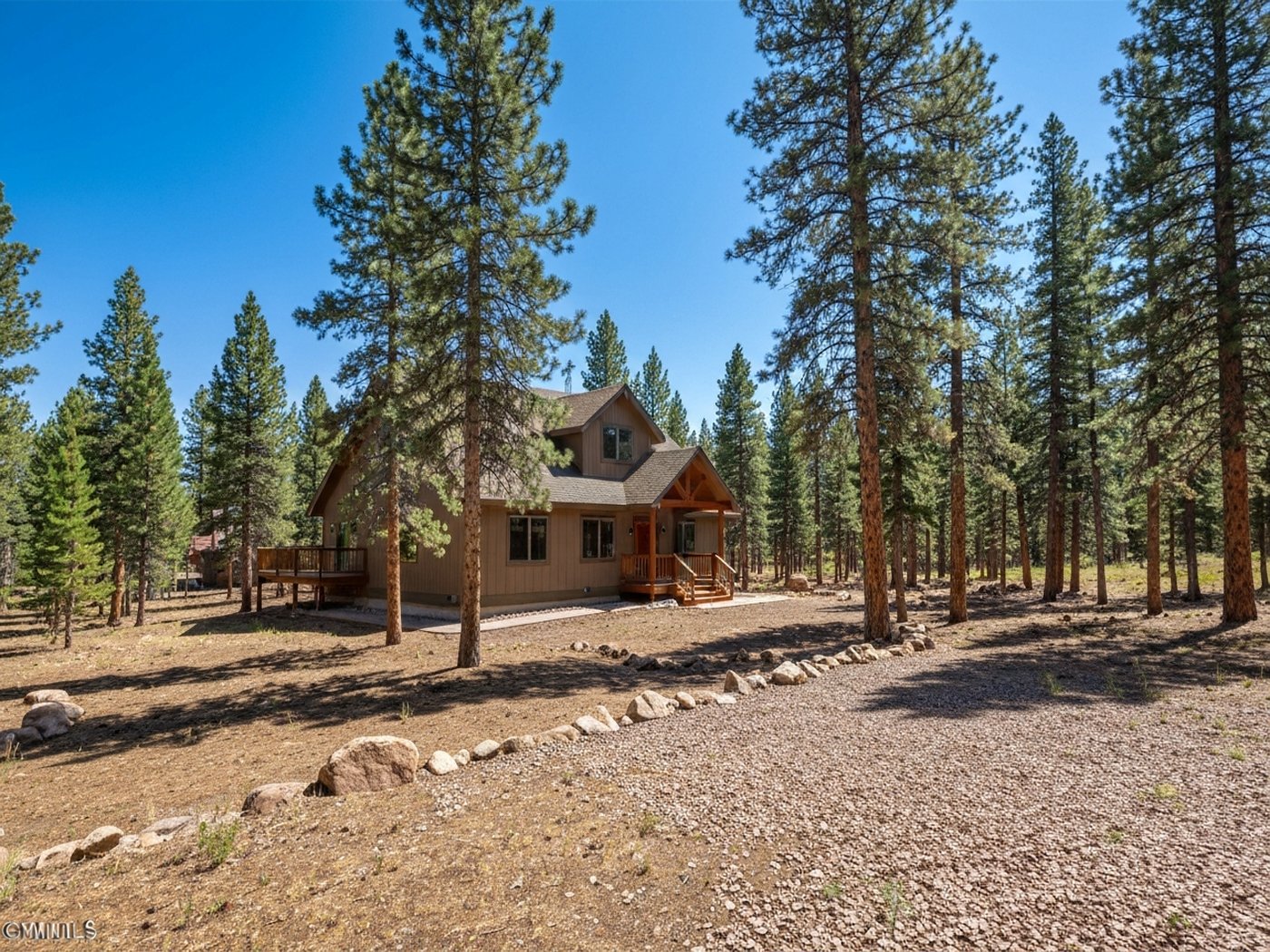
I do exterior assessments as a gutter and water-management consultant, and every couple of years I end up in front of a homeowner at the mountain-urban interface who has done everything inside the house and nothing outside it. That’s the gap. The most expensive house on the block is also the most exposed when the roofline and the first few feet of ground around it are loaded with dry debris and wood. Colorado’s climate makes this worse: drought years, which have become more frequent, produce vegetation that’s ready to burn well before fire season officially arrives.
Colorado’s wildfire landscape
The state has burned more acreage in recent years than at any point in recorded history. The Cameron Peak Fire (2020), the East Troublesome Fire (2020), and the Marshall Fire (2021) between them destroyed or damaged thousands of homes in areas that don’t look like classic “fire country” to people who picture distant mountain ridges. The Marshall Fire burned in December, in Boulder County suburbs, driven by wind and drought, with no summer heat and no forest canopy overhead. That fire is a useful data point: wildfire in Colorado is not only a mountain problem, and it is not only a summer problem.
The Colorado State Forest Service (CSFS) publishes wildfire risk maps by county and parcel. If you haven’t looked yours up, that’s worth doing before anything else. Your county emergency management office may also have local risk assessments that are more granular than the state maps.
Defensible space: what Colorado requires
Colorado has statutory defensible space requirements for homes in the wildland-urban interface. Under state law (CRS 38-45-101 and related statutes), homeowners in WUI zones are required to maintain reduced vegetation and fire-resistant landscaping within a defined perimeter. The baseline is state law, but many counties and municipalities have adopted stricter local codes. Check with your county before you assume the state minimums are enough.
The CSFS breaks defensible space into zones that align closely with NFPA Firewise USA guidance:
Zone 1 (0 to 30 feet from the structure). This is your tight-control zone. Remove ladder fuels: the low branches, dense shrubs, and accumulated dead wood that let a ground fire climb into tree canopy. Crown separation between trees should be at least 10 feet on flat ground; increase that spacing as slope increases, because fire moves uphill fast. On a 30-percent slope, fire moves roughly twice as quickly as it does on flat terrain. Keep grass short and irrigated through dry months, or replace it with gravel or other noncombustible material in the inner 10 feet directly against the foundation. IBHS research and Cal Fire both call this innermost ring the highest-priority spot on the entire property.
Zone 2 (30 to 100 feet, or to your property line). The goal here shifts from tight control to reducing fuel continuity. You are not stripping the landscape, you are spacing it so fire cannot run through it. Trees can stay if they are healthy and well-spaced (10-plus feet of crown separation). Remove dead wood, cut out dense understory brush, and clear downed limbs. On steep slopes, extend both zones outward.
A few things catch homeowners off guard. Cord wood stacked against the house is kindling; move it to Zone 2 or further. Combustible deck furniture, synthetic lattice, and propane tanks in Zone 1 all add ignition risk. Bark mulch against the foundation holds moisture in the soil, which is good for plants, but it also holds heat from an ember and can smolder. Rock or gravel within the first three to five feet of the foundation is a better choice in fire country.

The Colorado State Forest Service offers no-cost on-site assessments through local CSFS offices. Schedule one before spending money on any mitigation work. They will walk your specific parcel and hand you a written priority list.
For a detailed breakdown of how zone spacing works and what the research actually says about clearance distances, see our defensible space zones guide.
Hardening the structure itself
Defensible space slows a fire’s approach to the house. Home hardening is what determines whether the structure ignites when embers arrive. IBHS has documented this in post-fire inspections across multiple western states: the primary ignition pathway is embers landing on or against the structure, not the fire front rolling in. A home that resists ignition at the structure level can often survive even when neighboring homes burn.
Roof. The roof is the largest surface on the house and the most exposed to ember fall. A Class A roof assembly (the highest fire-resistance rating, established by ASTM E108 and UL 790 testing) is the single most consequential structural upgrade. Asphalt shingles with a Class A rating are the most common and most affordable option; concrete and clay tile and metal roofing also achieve Class A and have long service lives. Costs for a full replacement run roughly $10,000 to $25,000 or more depending on size, pitch, and material. If the roof is aging anyway, this is the right time to choose a fire-rated product.
Vents. Vents are holes in your house, and embers use them. Soffit vents, gable vents, and foundation vents have all been documented as ember entry points in post-fire inspections. Retrofit with 1/16-inch mesh screening (the California WUI code standard, now widely available nationally) or purpose-built ember-resistant vent covers. This is one of the lower-cost upgrades on the whole list, often $500 to $2,500 depending on how many vents need treatment, and it’s realistic as a DIY or handyperson job.
Eaves. Open eaves, where the rafter ends are exposed under the roofline, create a horizontal surface that embers can collect on and a vulnerable seam where fire can enter. Enclosing eaves with a noncombustible soffit material is meaningfully protective. This is not usually a DIY project and can run $3,000 to $10,000 or more depending on how much of the roofline is open.
Windows. Single-pane glass can crack under radiant heat from a burning structure nearby, which then opens the house to embers. Dual-pane tempered glass is significantly more resistant. Full window replacement is expensive, but at minimum, a plan for external shutters or temporary covers when a fire is threatening nearby gives you an option.
For a full breakdown of siding materials, fire-rated fencing, and the structural details that matter most, the wildfire home hardening guide covers the specifics.
The roofline and gutters
This is where my work intersects with fire safety most directly, and it’s one of the most consistently overlooked spots in a home mitigation checklist.
IBHS data from post-fire home inspections shows that embers collecting in gutters and at the roofline are a significant ignition pathway. A gutter packed with dry pine needles, leaf litter, or ponderosa duff is a trough of ready fuel running the full perimeter of the house. It sits directly against the fascia and the edge of the roof deck, the most vulnerable seam on the building. One ember landing in a loaded gutter in August has everything it needs: fine dry fuel, airflow, and immediate contact with structural wood.
Colorado’s ponderosa pine forests shed needles constantly. In a drought year that debris dries out within weeks. Cleaning gutters at least twice a year (late fall and again in spring before dry season) removes the fuel load. A gutter-protection system made of fine stainless-steel micro-mesh keeps needles out without the same cleaning frequency. Either approach works; the critical thing is that the gutter is empty when fire season arrives.

Foam and brush gutter inserts trap debris inside the gutter instead of excluding it, and open-cell foam versions are combustible. In a fire-risk area, use noncombustible metal mesh or keep gutters on a regular manual cleaning schedule.
Insurance in Colorado: what to know
Colorado’s insurance market has tightened. Several carriers reduced or ended new policies in high-risk ZIP codes following major loss years, and some homeowners have received non-renewals despite no claims history. The Colorado Division of Insurance monitors this and publishes consumer guidance; it’s the right call when you’re navigating a non-renewal or can’t find coverage.
A standard HO-3 policy treats wildfire as fire, which is a named peril. If you have a current policy, wildfire damage to your home is almost certainly covered. The practical problems are: keeping coverage, setting an adequate dwelling limit, and whether your insurer offers mitigation-based discounts.
Colorado does not yet have a mandatory mitigation-discount framework like California’s “Safer from Wildfires” program. Individual carriers may or may not offer premium reductions for hardened homes. Ask your insurer directly: do you offer a wildfire-mitigation discount, and what documentation do I need to qualify? An IBHS “Wildfire Prepared Home” designation is one third-party evaluation some carriers recognize. Confirm this with your own insurer; discounts and eligibility vary by carrier and policy.
The dwelling coverage limit is where people most often get hurt. Construction costs in Colorado mountain communities have climbed sharply, and demand surge after a regional fire pushes rebuild costs further when many homes need contractors at the same time. Review your dwelling limit each year. Ask about extended or guaranteed replacement cost endorsements, which pay some percentage above the stated limit. Coverages, terms, and premiums vary by carrier, so compare specifics directly.
Colorado’s FAIR plan exists as a last resort for homeowners the standard market won’t cover. It is a backstop, not a long-term solution: coverage is typically narrower than a standard policy, and pricing reflects the residual-market nature of the product. For a full breakdown of how wildfire coverage works, how to document mitigation to your insurer, and what FAIR plans actually provide, see the wildfire home insurance guide.
A practical sequence
Not every homeowner can do everything at once. Here’s a realistic order based on impact and cost:
- Schedule a free CSFS assessment. Do this first. They’ll tell you where your property’s actual vulnerabilities are so you’re not guessing.
- Address Zone 1, especially the first five feet against the foundation. Gravel, cleared debris, no combustible materials directly against the house. Low cost, high impact.
- Clean or protect the gutters before dry season. This is maintenance-level work, not a major expense, and it removes real ember fuel from the roofline.
- Retrofit vents with ember-resistant screens. Low cost, and this can be done incrementally.
- If the roof is aging, plan for a Class A replacement. The most expensive single item but also the most consequential.
- Document every step: dated photos, receipts, contractor invoices. Share that file with your insurer.
Firewise USA (an NFPA program) offers neighborhood-level recognition for communities that do coordinated mitigation work. A Firewise designation gives your work external validation and can matter when you’re talking to insurers.
FAQ
Is Colorado wildfire risk limited to the mountains? No. The Marshall Fire in December 2021 burned Boulder County suburbs driven by wind and drought with no forest fire front. Wildfire in Colorado can occur in flatland and suburban settings when conditions are right. The Front Range corridor, eastern foothills, and southern high plains all carry real risk. Check the CSFS wildfire risk map and your county emergency management resources for your specific area.
Does Colorado law require defensible space? Yes, for homes in the wildland-urban interface. Colorado statute (CRS 38-45-101 and related sections) establishes the framework, and many counties and municipalities have adopted stricter local codes. Even if your parcel is not formally classified as WUI, the CSFS recommends these practices for any home near flammable vegetation.
Will mitigation lower my homeowners insurance premium in Colorado? It depends on the carrier. Colorado does not currently mandate wildfire-mitigation discounts the way California does under the “Safer from Wildfires” framework. Individual insurers may offer premium reductions or more favorable underwriting terms for documented, hardened homes. Ask your insurer specifically: what documentation do you need, and does a third-party evaluation like an IBHS designation factor into your pricing? Do not assume discounts apply without confirming with your own carrier.
How much does whole-home wildfire mitigation typically cost? Costs vary widely, which is why prioritizing matters. Gutter cleaning runs roughly $150 to $400 per visit. Ember-resistant vent retrofits cost a few hundred to $2,500 or so depending on the number of vents. Defensible space clearance is often DIY for small lots or $1,000 to $5,000 and up for larger parcels with heavy vegetation. A Class A roof replacement runs $10,000 to $30,000 or more depending on size, pitch, and material. Enclosing open eaves, $3,000 to $10,000 or more. The free CSFS assessment helps you rank these against your actual risk, so your first dollars go where they matter most.
Related guides
Florida Home Hardening: The Hurricane-Debris-to-Wildfire Connection
Florida ranks top-five for wildfire starts, and post-hurricane debris is the fuel most homeowners never see coming.
Read the guide →California Wildfire Home Hardening: Zone 0 Law and What It Means
California's Zone 0 law clears the 5-foot band around your home of combustible material, and it is the foundation of every effective hardening plan.
Read the guide →Oregon Defensible Space Rules: What Homeowners Need to Know
Oregon law requires defensible space around homes on forestland; here's what the two zones require, who enforces them, and what it means for your insurance.
Read the guide →Keep ignitable debris out of your roofline
Get a free, no-obligation LeafFilter gutter-protection assessment. Fine micro-mesh keeps leaves and pine needles out of the gutters, the spot where wind-blown embers love to land. Booking through us supports this site.
Get a free LeafFilter assessment →