Florida Home Hardening: The Hurricane-Debris-to-Wildfire Connection
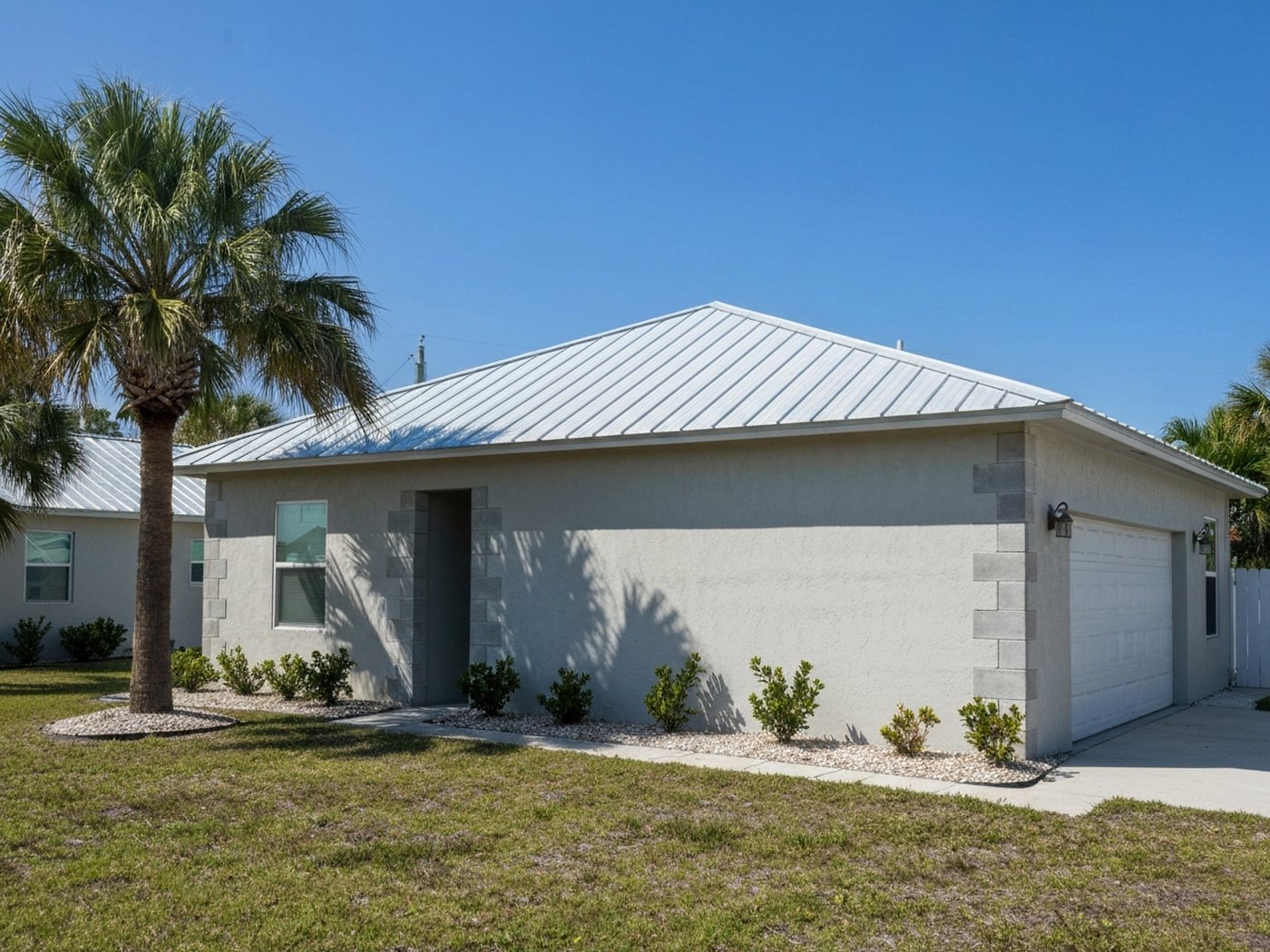
People look at Florida and think hurricanes. They’re right to. But fire is part of the landscape here in a way that rarely makes the news until something bad happens close to a neighborhood.
Florida burns more than people think
The Florida Forest Service (a division of the Florida Department of Agriculture and Consumer Services) manages wildfire response across the state, and the numbers aren’t small. Florida typically sees somewhere between 3,000 and 5,000 wildfire ignitions per year, which puts it consistently near the top of any national frequency count. The acreage burned varies year to year depending on drought and wind, but the ignition frequency is constant.
Two things drive this. First, Florida’s native ecosystems burn by design. Longleaf pine flatwoods, saw palmetto scrub, dry prairie, and wiregrass habitats evolved with regular fire. They’re not just susceptible to burning; they need it. That means communities in Florida’s wildland-urban interface sit right against landscapes with fire adaptation woven into the biology.
Second, the seasonality catches people off guard. Florida’s primary fire season runs roughly February through June, before the summer rainy season reliably dampens things down. A dry winter followed by spring winds with low humidity is textbook Florida fire weather. There’s a secondary uptick in fall and early winter in years when the rains end early. Homeowners who assume “Florida gets summer rain so wildfire isn’t my problem” are thinking about the wrong months.
The communities with the most consistent exposure include the Panhandle, the Central Florida ridge, and coastal scrub zones. But in recent years, following major hurricanes that tracked up the peninsula, fire risk has extended well beyond those traditional zones, and the reason comes down to debris.
The hurricane-debris-to-wildfire pipeline
This is the piece most Florida homeowners genuinely haven’t worked through. A major hurricane doesn’t just damage buildings. It physically dismantles the vegetation around them. Hundreds of downed trees. Stripped leaves, broken branches, uprooted palmettos stacked against fences and houses. Massive volumes of organic material distributed across properties in ways that would never happen through normal accumulation.
Then the storm passes. The rains stop. All that debris dries.
By the following spring, a neighborhood that took a serious hurricane hit the previous fall can carry years’ worth of fire fuel spread across it. Fine, dry, well-distributed. Often sitting right up against structures: against the foundation, packed into gutters, blown into window wells and screen enclosures. A wind-blown ember from a fire starting in adjacent scrub, a power line spark, or a yard fire that gets away from someone finds exactly the fuel it needs.
Emergency managers have flagged this pattern specifically in the months after major Florida storms: elevated wildfire risk in affected counties as debris dries into the dry season. IBHS (Insurance Institute for Business and Home Safety) has spent years documenting the ember-ignition pathway as the primary driver of home loss in wildfire. The post-hurricane debris field is essentially a worst-case version of that scenario. Embers don’t need a wall of flame nearby. They just need something dry to land in.

The months following a major hurricane are among the highest-risk windows for wildfire on your property. Debris that dried through fall is at its worst in February and March, right as Florida's fire season starts.
The roofline and gutter problem
From a gutter-and-exterior perspective, post-hurricane debris creates a very specific problem. Storms load gutters in a single event in ways that years of normal leaf fall don’t. Shredded leaves, pine needles stripped from branches, small sticks, and grit from bark all go in at once, then compact as the water drains and the sun bakes them through the fall.
By spring, what’s sitting in those gutters is dense, dry, and fine-grained. It runs the full perimeter of your roofline, at the exact seam where the roof edge meets the fascia board. An ember landing in a loaded gutter has fuel, airflow, and direct contact with wood structural members. That’s the ignition scenario IBHS and Cal Fire have documented repeatedly across western fires, and the geometry is identical in Florida when fire danger is up.
Cleaning gutters after a hurricane is unglamorous. But it’s one of the highest-value things you can do heading into fire season. If you have significant tree cover and the idea of cleaning gutters after every storm sounds exhausting, a fine stainless micro-mesh guard keeps organic material out of the trough entirely. I covered what to look for in a fire zone in detail in the gutter guards for pine needles and fire debris guide. The short version: fine stainless mesh only. Not foam, not coarse screen. Foam inserts are combustible and trap debris inside the gutter instead of keeping it out. That’s the opposite of what you want.
Core hardening priorities for Florida homes
The structure of wildfire home hardening is the same in Florida as anywhere. NFPA’s Firewise USA program and IBHS research both point to the same vulnerabilities: the roof, the vents, and the zone immediately surrounding the house. What’s local is the specific vegetation and what a Florida storm does to distribute it.
Roof. A Class A fire-rated roof is the most important single structural upgrade for ember resistance. Class A is the highest rating under UL 790 and ASTM E108 testing, and it applies to the roof assembly as a system, not just the shingles alone. Concrete tile, metal, and properly rated asphalt shingles are common in Florida and can all achieve Class A. If your roof is due for replacement, confirm the Class A rating before signing off rather than assuming the contractor chose it.
Vents. An attic vent is an opening, and in a wildfire embers are looking for openings. Standard vents are unscreened or have coarse mesh that embers slip right through. Ember-resistant vents use fine mesh or intumescent materials that swell closed under heat, closing that ignition pathway. IBHS has documented vent penetration as a major home-loss mechanism. The Florida Building Code hasn’t broadly required ember-resistant vents in fire-risk areas, but installing them in a wildland-adjacent home is a straightforward and meaningful hardening step.
Zone 0. The first five feet around your foundation is what IBHS calls Zone 0. The research is clear: embers landing there and finding fuel can ignite siding, crawl space vents, or decking before any flame from the main fire ever reaches the structure. In Florida, the Zone 0 fuel is specific: dead palmetto fronds, pine straw, wood mulch piled against the foundation, and after a hurricane, downed branches and stripped vegetation that have settled there. Clear it to rock, gravel, pavers, or bare soil. No wood mulch, no dead fronds touching the house.
Siding and openings. Florida homes with wood siding or vinyl are more vulnerable at their wall surfaces than stucco or masonry construction. For homes in higher fire-risk zones, fiber-cement or stucco siding adds meaningful fire resistance that vinyl doesn’t provide. Large windows and sliding glass doors are also weak points; tempered glass handles radiant heat better than single-pane.

Zone 0 clearance and gutter cleaning are the two things you can do right after a hurricane that directly cut your wildfire exposure before the following dry season. Neither one costs much.
My Safe Florida Home: where it helps
Florida’s “My Safe Florida Home” program, run through the Florida Division of Emergency Management, is aimed at hurricane mitigation. It provides free home inspections and matching grants for homeowners who complete approved wind-mitigation upgrades. The emphasis is on the roof: deck attachment, covering material, roof-to-wall connections, and opening protection.
The overlap with wildfire hardening is real, even if the program doesn’t advertise it that way. A properly attached, sealed roof deck doesn’t just resist uplift in a hurricane; it creates a more continuous barrier against ember intrusion at roof edges and penetrations. A Class A roof covering addresses both fire and wind. Florida has also been a leader in IBHS’s FORTIFIED Home certification program, which focuses on wind and hail resilience but shares significant territory with wildfire hardening on the roof and vent side.
Check the current program terms and eligibility directly on the Florida Division of Emergency Management website. Grant amounts and availability change, and this is educational context, not a guarantee of any specific funding. An approved inspector under the program can walk your specific home’s vulnerabilities in detail.
The insurance picture in Florida
Florida’s property insurance market is under serious stress, driven primarily by hurricane and flood exposure. Multiple private carriers have reduced their Florida footprint or exited entirely. Citizens Property Insurance, the state’s insurer of last resort, holds millions of policyholders who couldn’t find or keep coverage in the standard market.
For wildfire specifically: fire is a standard covered peril under an HO-3 homeowners policy, and wildfire is treated as fire. If a wildfire damages your home, a standard policy typically covers the dwelling, personal property, and loss of use. The issues facing Florida homeowners are the same ones affecting all perils: getting and keeping coverage at all, making sure rebuild limits reflect current construction costs, and understanding what your policy actually says. The broader wildfire home insurance guide walks through those questions in detail, and does homeowners insurance cover wildfire explains what a standard policy actually pays for and where the gaps show up.
Every insurer and policy is different. Confirm coverage specifics with your own insurer and check in with the Florida Office of Insurance Regulation if you have availability concerns. None of what’s here is professional insurance advice.
A few things worth knowing regardless of policy: IBHS’s “Wildfire Prepared Home” designation offers third-party documentation of your hardening work that some insurers recognize. Discounts and recognition vary by company and state, so ask yours directly what mitigation documentation they want to see. Either way, document your work: dated photos, contractor receipts, inspection reports. That file helps if you need to argue for a discount, fight a non-renewal, or file a claim.
FAQ
Does Florida actually have significant wildfire risk? Yes, more than most residents realize. The Florida Forest Service typically responds to thousands of wildfire ignitions per year, and Florida ranks consistently near the top of national frequency counts. The risk is highest in the Panhandle, Central Florida ridge, and coastal scrub zones, but post-hurricane debris has extended fire exposure to communities that wouldn’t otherwise show up on a risk map.
How long after a hurricane does wildfire risk peak? The worst window is typically three to six months out, when downed vegetation and stripped debris has fully dried. A fall hurricane puts that peak right in Florida’s February to June fire season. Clearing debris from Zone 0 and cleaning or protecting your gutters in the weeks after the storm is the most direct action you can take. You’re removing fuel before fire season arrives, not scrambling during it.
Will wildfire home hardening help with Florida insurance? Possibly, at the margins. Florida’s insurance problems are driven mostly by hurricane risk, and the standard wildfire-mitigation discount frameworks common in California don’t have direct equivalents here. That said, IBHS FORTIFIED certification and “Wildfire Prepared Home” designations can factor into some carriers’ underwriting conversations. Fire is a standard covered peril on most Florida HO-3 policies, so availability rather than coverage is usually the issue. Confirm with your insurer and the Florida Office of Insurance Regulation. Nothing here is professional insurance advice.
What is the single most important thing to do after a hurricane if you live near wildland? Get the debris away from your house before it dries. Zone 0 first: the five feet around the foundation, because that’s where embers go to work. Then the gutters. Then anything piled against walls or under decking. You’re removing the fuel load before fire season. Roof and vent upgrades matter too, but those are longer projects. The debris clearance is something you can do yourself, in the weeks right after the storm, and it makes a real difference.
Related guides
California Wildfire Home Hardening: Zone 0 Law and What It Means
California's Zone 0 law clears the 5-foot band around your home of combustible material, and it is the foundation of every effective hardening plan.
Read the guide →Colorado Wildfire Mitigation: A Homeowner's Guide
Practical wildfire mitigation steps for Colorado homeowners: defensible space rules, home hardening priorities, roofline ember defense, and the insurance landscape.
Read the guide →Oregon Defensible Space Rules: What Homeowners Need to Know
Oregon law requires defensible space around homes on forestland; here's what the two zones require, who enforces them, and what it means for your insurance.
Read the guide →Keep ignitable debris out of your roofline
Get a free, no-obligation LeafFilter gutter-protection assessment. Fine micro-mesh keeps leaves and pine needles out of the gutters, the spot where wind-blown embers love to land. Booking through us supports this site.
Get a free LeafFilter assessment →