Do You Need a Defensible Space Inspection?
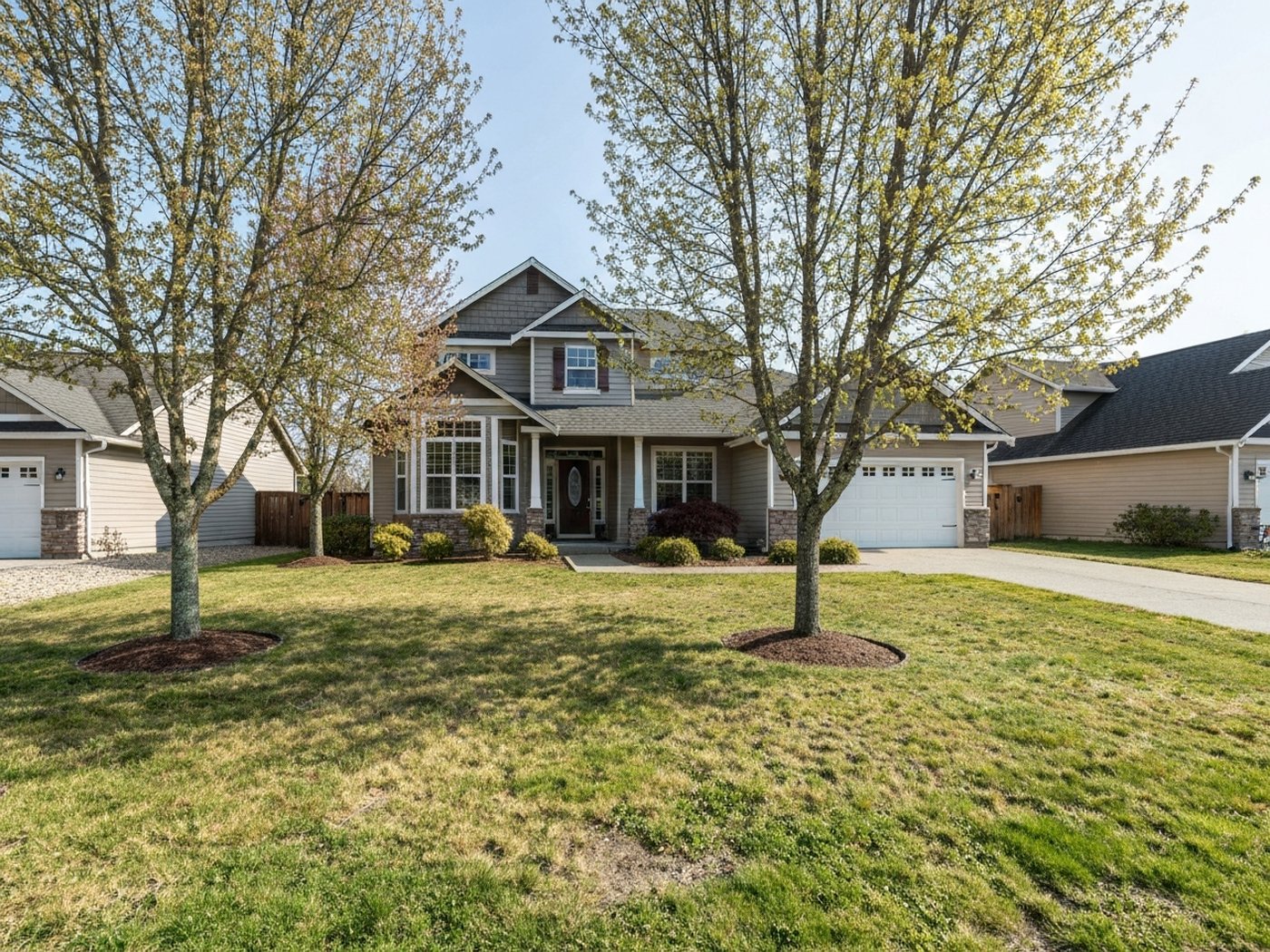
I bring this up because every exterior assessment I do on a wooded or fire-adjacent property covers the same territory a defensible space inspector covers, just from the water-management angle. The roofline, the gutters, what’s sitting up against the foundation. It’s the same 0-to-30-foot zone. I’ve had these conversations plenty of times: “the fire department came by last year and said we were fine,” and also “nobody has ever looked at our place.” The gap between those two situations is wider than most people realize.
What a defensible space inspection actually covers
The inspection is a structured walk of your property through concentric zones measured outward from the house. The zone framework comes from Cal Fire guidance and NFPA Firewise USA standards, and most state programs follow the same basic structure.
Zone 0: The noncombustible zone (0 to 5 feet). This is the most recently codified zone, and it carries the most weight in current fire science. IBHS and Cal Fire both treat this inner ring as its own category. The principle is that anything touching or nearly touching the structure is a direct ember pathway into the building. Inspectors look for combustible mulch (bark chips against the foundation are the most common violation), dead plant material, woodpiles stored against the wall, and the condition of foundation vents and weep holes. Noncombustible groundcover within this ring (gravel, decomposed granite, crushed stone) is the standard answer.
Zone 1: Lean, clean, and green (0 to 30 feet). This is the band most homeowners picture when they think about defensible space. The goal is breaking the continuous fuel path from the ground into the structure. Inspectors check for ladder fuels (low-hanging tree limbs or shrubs that would let a ground fire climb into the canopy), spacing between plants and shrubs, dead material mixed into live growth, and anything stored in this zone such as firewood, propane tanks, or patio furniture in the wrong spot. The specific clearance thresholds vary by state, and on slopes greater than 10 to 20 percent the zone expands because fire spreads uphill much faster than it does on flat ground.
Zone 2: Reduced fuel (30 to 100 feet, sometimes to 200 feet on steep slopes). Less aggressive management here, but the inspector still wants adequate spacing between tree canopies to prevent crown fire travel, standing dead trees removed, and grass kept mowed or grazed short rather than left to stand dry through late summer. On properties where the terrain drops away steeply, some state programs extend Zone 2 requirements significantly.
Beyond the vegetation, the inspection looks at the structure itself. Roof material (Class A fire-rated shingles, tile, or metal preferred), eave and soffit condition, vent screens (metal, with small openings, not plastic), deck and balcony construction, and what’s stored underneath decks.
The gutters come up in nearly every inspection I hear about in fire country. A gutter loaded with dry pine needles and shingle grit is a band of fine kindling running the full perimeter of the roofline, sitting at the exact seam where roof deck, fascia, and eave meet. That’s not a peripheral concern. Embers can land directly in that material, and then the roofline becomes the ignition point rather than a barrier. Our article on defensible space zones goes into the zone framework in detail if you want the full breakdown.
Who does inspections and what they cost
State and local fire agencies. These are the free ones. In California, Cal Fire inspects properties in State Responsibility Areas at no charge. County and local fire departments handle other parts of their jurisdictions the same way. Oregon’s State Forestry Division, Colorado’s Division of Fire Prevention and Control, and the Texas A&M Forest Service all have similar programs at the state level, with local fire districts picking up coverage in many communities. The most direct path: call your local fire station and ask whether they do defensible space inspections and how to schedule one.
Firewise USA community programs. If your neighborhood is a recognized Firewise USA community (a certification program administered by NFPA), trained local volunteers often conduct neighborhood-scale assessments that include individual home visits. These are typically free and part of the community’s annual work plan.
Private wildfire mitigation consultants. For a more detailed written report, or when you need formal documentation for an insurance conversation, private consultants are available. Costs run roughly $200 to $600 for a standard residential property, more for larger sites. This is rarely necessary for a first inspection, but it can be useful when a carrier requires specific, credentialed documentation.

Not sure whether your address falls in a Cal Fire State Responsibility Area or a local responsibility area? Cal Fire's website has a map tool that answers it in seconds. For other states, your county's fire or planning department can tell you which program covers your property.
Does your state require one?
Mandatory programs with real enforcement exist most prominently in California. Public Resources Code Section 4291 requires property owners in State Responsibility Areas to maintain defensible space, and fire agencies have authority to inspect and issue compliance orders. Several other states (Oregon and Colorado among them) have areas or districts with mandatory programs, and some counties have added their own ordinances on top of state requirements. Ready.gov and your state’s department of forestry or fire prevention are the right places to look up what applies where you live.
Most of the US still operates on a voluntary basis. Treating “voluntary” as a reason to skip it misses the point. A trained inspector walking your specific property and telling you exactly what to fix is more useful than any generic checklist, and it costs you nothing but time.

In California, ignoring a compliance order isn't just a risk to your home. The fire agency can contract the required work out and bill you directly, including administrative costs. The invoice can be significant.
What happens after the inspection
The result is usually a written checklist or report with items marked pass, fail, or prioritized by urgency. Common findings on properties I’ve seen or heard about from homeowners:
- Combustible mulch or debris in the noncombustible zone
- Shrubs or tree branches overhanging or contacting the roofline
- Gutter debris, often specifically flagged as an ember-fuel hazard
- Vent screens that are plastic, missing, or have openings too large to stop embers
- Firewood stacked against the foundation or inside Zone 1
- Standing dead trees or heavy unmaintained fuel in Zone 2
Most items on a typical report are DIY-addressable in a weekend. Some, like replacing soffit vent screens throughout a large house, are worth handing to a contractor. If the report flags your gutters, clearing them before fire season is the minimum step. If you’re not going to stay on top of that manually every summer, a gutter-protection system that excludes ignitable debris rather than just slowing its accumulation is the durable answer. The wildfire home hardening guide covers how to sequence these projects and where to put your money if the list is long.
Once the work is done, document it. Dated before-and-after photos, receipts if you hired anything out, and a copy of the original inspection report. That file has a second purpose beyond fire safety, and that’s the next section.
Timing matters too. The best window to schedule an inspection is late winter or early spring, March to May in most of the West. Agencies have more capacity before the season peaks, and you’ll have time to finish the required work while conditions are still mild.
How a defensible space inspection connects to your insurance
Getting inspected doesn’t automatically lower your premium. What the inspection gives you is a concrete, prioritized list of improvements, and completing that work is what can affect your coverage situation.
In California, admitted insurers are required under the state’s “Safer from Wildfires” regulation to offer wildfire-mitigation discounts to homes meeting specific hardening standards. Other states have varying programs, and the rules differ by insurer on top of state requirements. The right move is to ask your carrier directly: do you offer a wildfire-mitigation discount, and what documentation does a property need to qualify? The IBHS “Wildfire Prepared Home” designation is one credentialed third-party verification that some carriers accept. Firewise USA community recognition is another. Neither is universal, so confirm the specific requirements with your own insurer. Coverage specifics, discount eligibility, and what counts as qualifying documentation vary significantly by insurer, state, and policy. This is educational context, not professional insurance advice; confirm your situation with your carrier and your state Department of Insurance.
For homeowners who’ve received a non-renewal or can’t find coverage on the standard market, demonstrated and documented hardening work is often part of the path back. Carriers can’t credit work you haven’t documented. The wildfire home insurance guide covers the coverage landscape in detail, including FAIR plan options and how to present hardening documentation to a carrier. Treat the defensible space inspection as the fire-safety baseline and have a separate, specific conversation with your insurer about what they need. The two don’t always align exactly.
One clarification worth making: an inspection checks your property against defensible space standards, not against your specific policy’s requirements. Knowing both is how you close the gap between being physically safer and being insurable.
FAQ
Are defensible space inspections free? In most cases, yes. Cal Fire offers free inspections in State Responsibility Areas. County and local fire departments do the same in their jurisdictions. State programs in Oregon, Colorado, Texas, and other wildfire-prone states operate similarly at no charge. Private consultants charge (roughly $200 to $600 depending on scope), but a private inspection is optional unless you have a specific need for formal documentation that a standard agency report doesn’t provide.
What happens if I fail a defensible space inspection? In states or counties with mandatory programs, notably California, you receive a written compliance order with a deadline to complete the required work. If the work is not finished in time, the agency can contract it out and bill you directly, including administrative costs. In states where inspections are voluntary, there is no enforcement mechanism, but the inspector’s report still identifies real fire risk and is worth acting on.
Will completing defensible space work lower my homeowners insurance? Not automatically, and not everywhere. In California, admitted insurers must offer mitigation discounts to homes meeting specific hardening standards under the “Safer from Wildfires” framework. In other states, programs and discounts vary by carrier and by state regulation, and some carriers offer nothing formal. Ask your insurer directly what mitigation steps qualify for a discount and what documentation they need. Don’t assume the inspection report transfers automatically to a discount; ask what form of evidence they accept.
Do I need a private consultant, or is the fire agency inspection enough? For most homeowners, the free fire agency inspection covers everything that matters. It walks the same zones, checks the same structural details, and produces a written report. A private consultant is worth considering if you need a more detailed or formalized report, have a large or complex property, or need specific credentialed documentation for a carrier that won’t accept a standard agency inspection as evidence. For a typical residential property in a fire-risk area, start with the free inspection, complete the work, document it, and go from there.
Related guides
Class A Roofing Shingles: The Fire-Rated Choice for Asphalt Roofs
Class A asphalt shingles carry the highest fire rating for roofing in the US and are the baseline for any wildfire-resilient roof in a fire-prone state.
Read the guide →What Is a Class 4 Roof? Impact Resistance and Insurance Savings
A Class 4 impact-resistant roof can earn meaningful insurance discounts and adds roofline durability, but it is not the same as a fire rating. Here is what to know.
Read the guide →Class A Roof Assembly: How the Whole System Earns Its Rating
A Class A fire rating applies to the whole roof assembly, not just the shingles, and understanding the difference changes how you approach re-roofing in fire country.
Read the guide →Keep ignitable debris out of your roofline
Get a free, no-obligation LeafFilter gutter-protection assessment. Fine micro-mesh keeps leaves and pine needles out of the gutters, the spot where wind-blown embers love to land. Booking through us supports this site.
Get a free LeafFilter assessment →