Wildfire Evacuation Levels Explained (Ready, Set, Go)
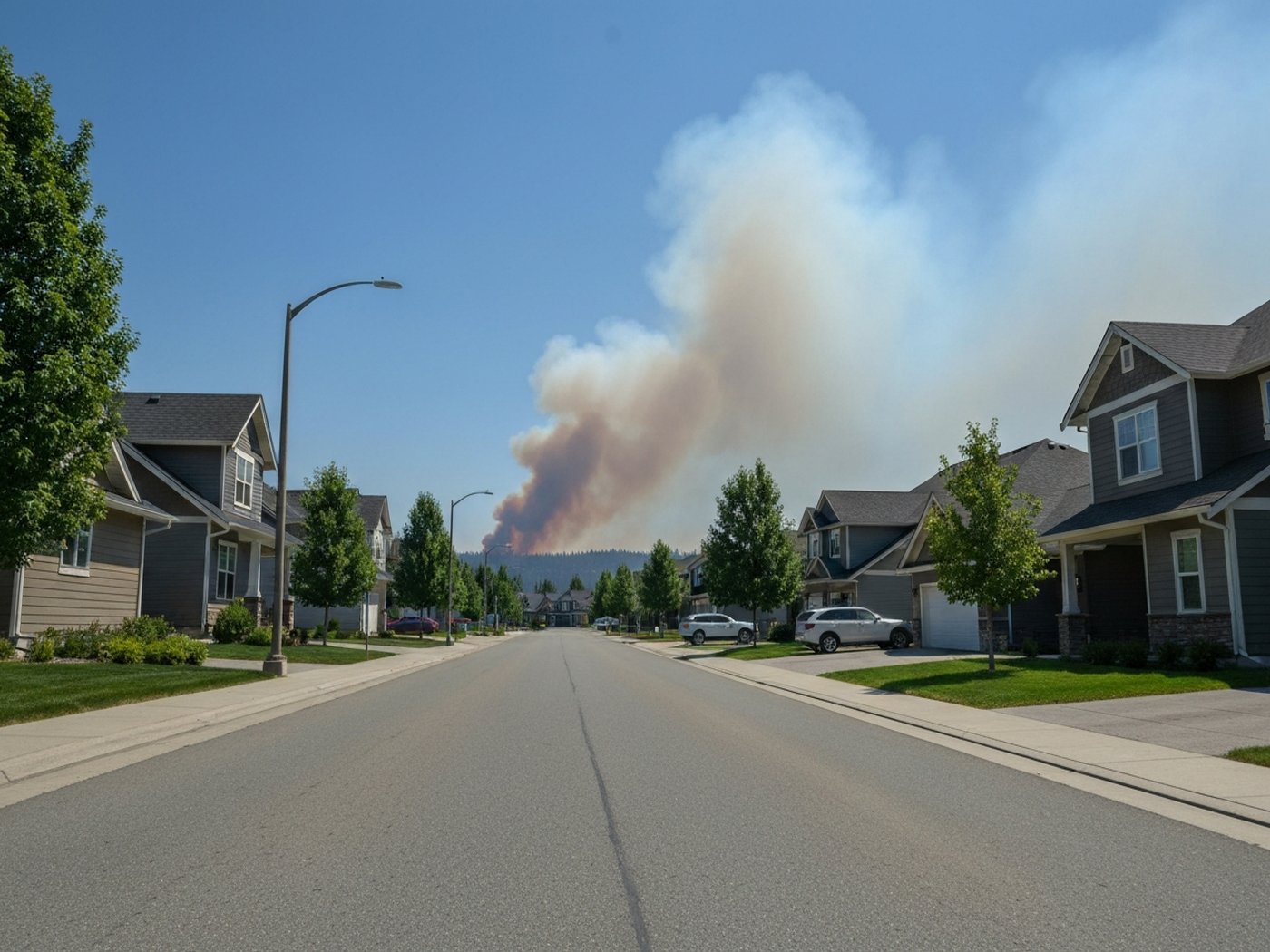
Part of my work as a gutter and water-management consultant is assessing how homes are set up to survive a wildfire, not in the abstract but in the specific, practical sense of what a homeowner can actually do about it. The fire preparedness question I hear most often isn’t about Zone 0 clearance or vents or roofing. It’s simpler than all of that: “When the alert comes, what am I supposed to do?”
The answer depends on which level of alert it is. A lot of people don’t know the levels until they’re staring at one.
The three levels in plain terms
The Ready, Set, Go! framework was developed and launched as a national program by the International Association of Fire Chiefs (IAFC) around 2010, in partnership with FEMA and state fire agencies across the western US. The idea is to sort the escalating threat of a wildfire into three clear action stages so there’s no ambiguity about what you’re expected to do.
Level 1: Ready. A wildfire is active in your general area. There’s no immediate threat to your specific home right now, but conditions in a wildfire can shift without warning. At Level 1, your action is preparation: gather your pets, move prescription medications and irreplaceable documents to one location or load them into the car, check your go-bag, and confirm your evacuation route and your backup route. You don’t leave yet. You get ready to leave on short notice.
Level 2: Set. Fire is threatening your area. In many counties this is called an Evacuation Warning. At this level, anyone who needs extra time to move should leave immediately: people with mobility challenges, those with pets or large animals, families with young children, anyone relying on multiple vehicles or stops. Everyone else should be finishing their loading. This isn’t “watch and wait.” It’s “I will be in the car within ten minutes if this escalates.” Medications, chargers, pets, critical documents: in the car now.
Level 3: Go! This is an Evacuation Order in most jurisdictions. Leave immediately and without hesitation. Don’t water the yard, don’t run one more load of laundry, don’t spend three minutes finding the laptop. The fire is at or near your neighborhood. Roads fill fast under a mass evacuation. Smoke reduces visibility. Emergency services are stretched. The only correct action at Level 3 is to go, and the record from post-fire analyses is grim about what happens to people who treat this as negotiable.
Why your alert might not say “Ready, Set, Go”
The RSG! framework describes what action to take at each stage. It doesn’t determine the formal legal designation your county or state issues. Counties issue Evacuation Warnings and Evacuation Orders as legal categories with specific implications for re-entry, enforcement, and insurance. The rough mapping:
- Level 1 corresponds to an Advisory or “Be Ready” notice in some jurisdictions, sometimes no formal alert at all.
- Level 2 corresponds to an Evacuation Warning.
- Level 3 corresponds to an Evacuation Order, sometimes called “mandatory evacuation” in older systems (though fire researchers have argued for years that this term is counterproductive, because “voluntary” at Level 2 implies it’s optional when it is not).
Oregon has officially adopted Level 1, 2, and 3 language statewide, mapped directly to Ready, Set, Go. California counties vary: some use IAFC language, others use Warning and Order only. Colorado, Arizona, and the Pacific Northwest states each have their own terminology. The name on the alert matters less than what that level demands of you, but you need to know your county’s specific system before a fire is active.
Spend ten minutes on your county Office of Emergency Management website before fire season. Find out what alert designations they use and sign up for their notification system. Wireless Emergency Alerts (WEA) push to your phone automatically through the cell network, but they’re slow to issue and broad in coverage area. County-level systems like Nixle, AlertSense, and Everbridge push faster, zone-specific notifications tied to your registered address. If your county offers a text or email alert option, use it. Cal OES and Ready.gov both publish state-by-state alert resource guides.

Sign up for your county's emergency notification system before fire season, not during one. County-level alerts are faster and more specific than the federal Wireless Emergency Alert broadcasts.
Why people get hurt at Level 3
The thing that actually worries fire safety researchers isn’t the homeowner who evacuates at Level 1 and turns out to have been overcautious. It’s the one who sits through Level 1 and Level 2 doing nothing, then panics when Level 3 lands.
Fire behavior is fast and non-linear. A fire that’s three miles away with light winds can be one mile away 20 minutes later if the winds shift. The Camp Fire in Butte County, California in November 2018 spread at a rate that trapped people in their cars on evacuation routes; dozens of victims were found in or near their vehicles. The Lahaina fire on Maui in August 2023 overwhelmed the town in hours, partly because alerts were delayed and partly because many residents had no plan in place. These aren’t rare exceptions. They’re what happens when fire moves fast and people haven’t prepared.
IBHS (Insurance Institute for Business and Home Safety) has documented in post-fire research that the homes most likely to survive are ones where owners made hardening decisions long before the fire arrived: a Class A fire-rated roof, ember-resistant vents, a cleared Zone 0, gutters free of dry debris. The homeowners most likely to get out safely made their evacuation decisions long before the Level 3 alert arrived: a packed go-bag, a confirmed route, animals loaded. At Level 3, you want the preparation already done. There is no time for it at that moment.
What to have ready before the first alert
The go-bag is the entry-level answer, and it’s the right one. Most people don’t have one. The few who do haven’t touched it in years.
A real go-bag for wildfire evacuation: prescription medications (the item left behind most often in post-disaster surveys), copies of key documents or a thumb drive with digital scans of passports and deeds, insurance policy numbers and your insurer’s claims line, phone and medical device chargers, a change of clothing per person for two to three days, cash in small bills, and a portable water filter if you have one. FEMA and Ready.gov both publish detailed checklists. The critical part is that the bag is actually assembled and refreshed at the start of each fire season, not just mentally planned.
Beyond the bag:
Know two routes out of your neighborhood and have both on a paper map. Cell service and GPS apps are often overwhelmed during a major evacuation. Have a family meeting point outside the neighborhood and an out-of-area contact everyone can reach independently.
For cats and dogs, carriers should be accessible and animals should be used to them before an emergency. For horses and large animals, identify a destination that can accept them and have a trailer arrangement confirmed well before fire season. The American Red Cross generally does not shelter pets, though many county emergency plans now include co-located animal shelters during wildfire evacuations.
The broader home hardening side is its own project, and the first five feet around your foundation is where to start. Cal Fire’s defensible space zones guide breaks down each zone from that immediate perimeter outward to 100 feet. Keeping the Zone 0 perimeter clear of combustible mulch, stored wood, and dense plantings reduces your home’s ignition risk more than almost anything else at that price point. The full wildfire home hardening guide covers the priority order and which specific changes make the most difference.
Documenting your home before you leave
If you’re at Level 1 or Level 2 and have time, walk through your home with your phone camera before you go. Open closets, pull out drawers, capture serial numbers on electronics, document every room. Step outside and photograph the roof, siding, gutters, and exterior in their current condition. Back those photos up to cloud storage immediately so they’re accessible from anywhere regardless of what happens to the house.
This is not busywork. A total-loss claim with no documentation puts the full burden of reconstruction on you. Your insurer wants to pay a legitimate claim, but they also need evidence of what existed and what it was worth. A video walkthrough and a photo archive change the adjustment process significantly and reduce the chance of disputes over specific items.
Keep your policy number, agent contact information, and your insurer’s claims line in your go-bag alongside your ID and medications. Re-entry after a Level 3 Evacuation Order is often restricted for days to weeks while utilities are restored and structural safety is assessed. You will need those numbers from wherever you are sheltering.
For how wildfire claims actually work, what common coverage gaps look like, and how hardening your home affects your ability to stay in the standard insurance market, the wildfire home insurance guide covers it in full.

Re-entry after a Level 3 Evacuation Order can be restricted for days or weeks. Keep your insurance policy number and agent's contact in your go-bag, not just saved on your phone.
FAQ
What is the difference between an Evacuation Warning and an Evacuation Order? An Evacuation Warning (Level 2) means fire is threatening your area and you should prepare to leave immediately. You’re not legally required to go in most jurisdictions, but vulnerable residents, those with animals, and anyone who moves slowly should leave now. An Evacuation Order (Level 3) is a directive to leave immediately, full stop. Legal enforcement varies by state and county, but many jurisdictions restrict re-entry during an active Order and emergency services may compel departure. The practical distinction is what matters: a Warning means pack and be ready to go in minutes; an Order means you should already be gone.
Will staying through an Evacuation Order affect my insurance claim? In most cases, refusing to evacuate does not void your dwelling coverage for the fire itself. But specifics vary by insurer and by state, and this is educational guidance, not professional insurance or legal advice. The practical concern is that staying and attempting to retrieve or save items during an active Order can complicate your claim and your legal position. Confirm specifics with your own insurer and your state Department of Insurance before assuming coverage behavior.
Does the Ready, Set, Go system apply everywhere in the US? No. The RSG! framework is most established in the western US, particularly California, Oregon, Colorado, Washington, and neighboring states with active wildfire seasons. Eastern states and the South use different evacuation frameworks, often organized around hurricane or flood risk zones. Even within the western US, county terminology varies considerably. Check with your county’s Office of Emergency Management for the specific alert designations and notification systems used in your area before fire season starts.
How do I get wildfire evacuation alerts fast enough to matter? Register with your county’s emergency notification system. Wireless Emergency Alerts push automatically to all phones in a cell coverage area, but they’re often delayed and geographically broad. County-level systems like Nixle, AlertSense, Everbridge, or a county-specific app push faster, zone-specific alerts tied to your registered address. Find your county’s system through the Office of Emergency Management website. FEMA’s Ready.gov and your state emergency management office also maintain alert resource guides by state. Register when conditions are calm, not when you see smoke on the horizon.
Related guides
After the Wildfire: Filing Your Insurance Claim
A step-by-step guide to filing a wildfire insurance claim: what to document, how the adjuster process works, and when to push back on a low estimate.
Read the guide →Best Air Purifiers for Wildfire Smoke
How to choose an air purifier for wildfire smoke: why you need true HEPA plus activated carbon, how to size it right, and what else to do when AQI spikes.
Read the guide →Wildfire Preparedness Checklist for Homeowners
A practical wildfire preparedness checklist covering defensible space, home hardening, evacuation planning, and insurance documentation.
Read the guide →Keep ignitable debris out of your roofline
Get a free, no-obligation LeafFilter gutter-protection assessment. Fine micro-mesh keeps leaves and pine needles out of the gutters, the spot where wind-blown embers love to land. Booking through us supports this site.
Get a free LeafFilter assessment →