Wildfire Insurance in California: Keeping Coverage and Getting Discounts
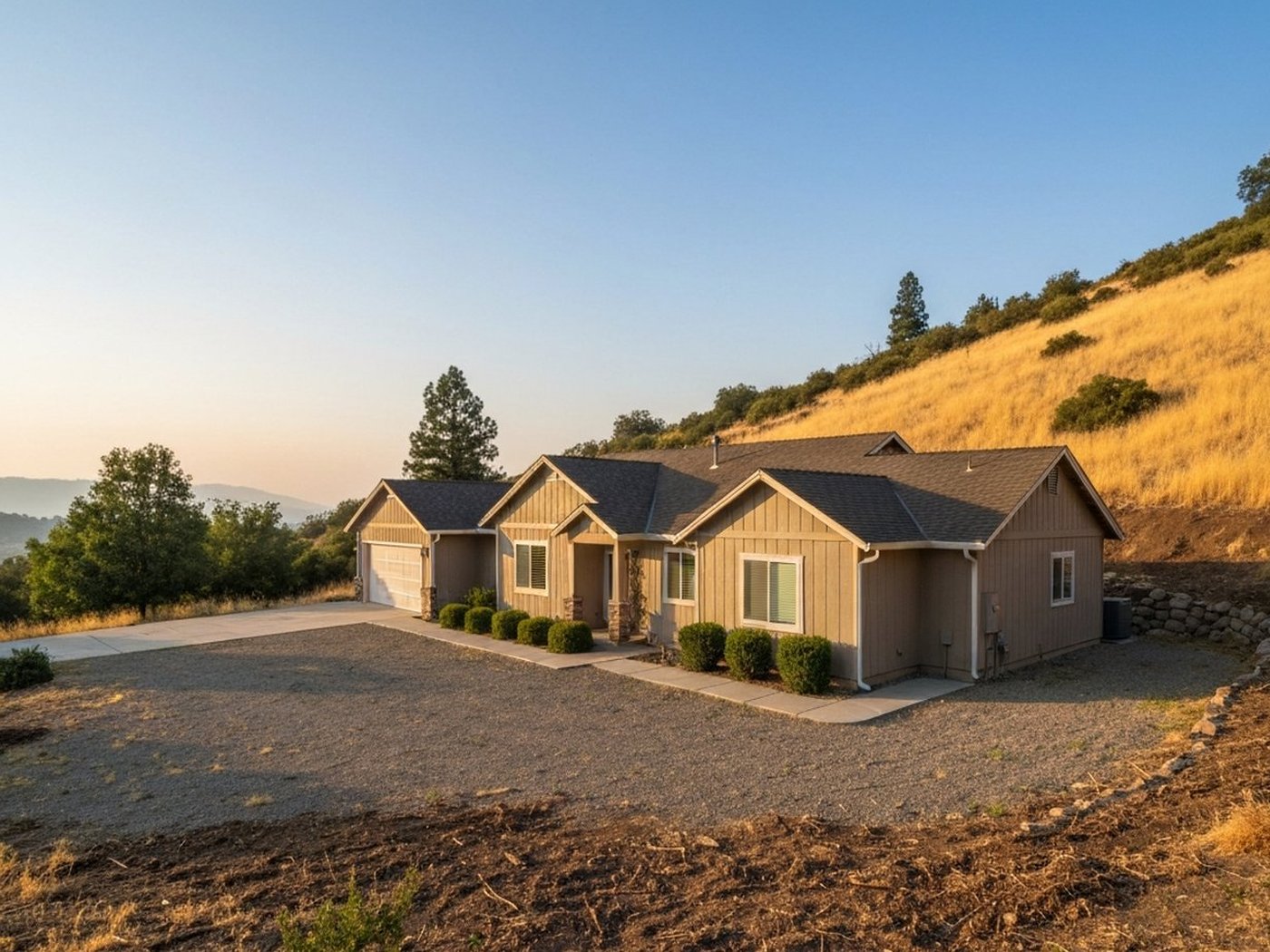
California is not just a bad example of a problem. It’s the front edge of a problem spreading to every wildfire state, just faster and louder because of the loss scale. The good news is that California also has more regulatory structure around this than most states, including required mitigation discounts that many homeowners never ask for. There is more to work with here if you know where to look.
Why California’s insurance market looks the way it does
From 2017 through 2021, California wildfires caused roughly $50 billion in insured losses. That math eventually stopped working for carriers limited by state regulation on what they could charge. State Farm, Allstate, and Farmers each paused or curtailed new homeowners policies in high-risk ZIP codes. Non-renewals of existing policies followed.
None of this means wildfire is suddenly an excluded peril. What it means is that a growing number of California homeowners can’t find a carrier willing to write them at all, or can’t afford the policies that remain. The availability crisis is real, and separate from the question of what a policy actually covers once you have one.
What a standard California policy covers in a wildfire
If you have a standard HO-3 homeowners policy and a wildfire damages or destroys your home, the coverage structure works the same as a fire claim anywhere. The Insurance Information Institute (III) and California Department of Insurance (CDI) describe it in four buckets:
- Dwelling (Coverage A). The house itself: walls, roof, attached garage, built-ins. If a wildfire burns it to the slab, this is what rebuilds it, up to your limit.
- Other structures (Coverage B). Detached buildings, fences, sheds. Usually set at a percentage of your dwelling limit.
- Personal property (Coverage C). Furniture, electronics, clothing, and contents. Some categories carry sub-limits. Know whether your policy pays replacement cost or actual cash value, because depreciation on a 12-year-old roof or aging appliances matters.
- Additional living expenses (Coverage D). If you can’t live in the home while it’s repaired or rebuilt, this pays the extra cost: a rental, restaurant meals, hotel stays. After a major wildfire that displaces you for months, this coverage gets used more than people expect.
Smoke and ash damage is generally covered too, since it originates from a covered peril. Document it thoroughly. Carriers tend to look more closely at smoke claims than at total losses, so keep remediation invoices and photograph the soot before any cleanup.
The most common gotcha isn’t an exclusion. It’s the dwelling limit. Reconstruction costs after a regional fire spike because everyone rebuilds at once, pushing labor and material prices up sharply. If your Coverage A limit was set years ago and never updated, it may fall short of what rebuilding actually costs today. Ask your insurer about extended replacement cost or guaranteed replacement cost endorsements, and review that number every renewal, not just when you first buy the policy.

Post-wildfire reconstruction costs in California consistently run past pre-fire dwelling limits. Check your Coverage A figure every year and ask your insurer about extended or guaranteed replacement cost endorsements.
Non-renewals and what California law says
California passed SB 824 in 2018, prohibiting insurers from non-renewing or canceling homeowners policies in ZIP codes within or adjacent to a proclaimed state of emergency for one year following the declaration. If your county was included in a wildfire disaster declaration, that moratorium applies to your policy during the covered period. The CDI at insurance.ca.gov publishes the current list of active moratorium areas.
Beyond that moratorium, CDI Commissioner Ricardo Lara has pushed insurers to write more policies in high-risk areas in exchange for regulatory flexibility on rates. The specifics of that arrangement are still developing and outcomes vary by carrier. But the overall direction is toward more accountability on availability.
If you receive a non-renewal notice, three calls matter. First, contact your insurer and ask directly whether completed hardening work (updated roof, cleared Zone 0, new vents) could change the underwriting decision. Second, work with an independent insurance agent who can shop multiple carriers, since underwriting appetites differ and some carriers remain active in areas where others have pulled back. Third, call CDI if you believe the non-renewal was improper or if you want guidance on your options. They are the consumer resource here.
The FAIR Plan: the backstop when no carrier will write you
If you’ve been non-renewed and the standard market won’t write you at any price, California’s FAIR Plan is the backstop. It’s the insurer of last resort: narrower coverage than a standard HO-3 and usually pricier, but it keeps a fire policy on your house when nothing else will. Most people use it as a bridge, not a permanent home, and keep hardening so they can shop back to the standard market later.
The mechanics get involved fast: what the FAIR Plan does and doesn’t cover, the limit, and how people pair it with a separate policy to fill the gaps. I’ve put all of that in one place. See the California FAIR Plan homeowners insurance guide for how the plan works and how to make it function more like a full policy.
Safer from Wildfires: the discount framework
This is the part most California homeowners don’t know about. California requires admitted insurers to offer wildfire-mitigation discounts to policyholders who meet defined standards under the Safer from Wildfires regulatory framework, introduced by CDI in 2022. The discounts are tied to specific physical features of your home, not a general “hardening” credit.
The framework covers categories including roof fire rating, ember-resistant venting, windows, clearance at the base of exterior walls, deck materials, and vegetation management in the immediate zone around the house. Meeting individual features can qualify for partial discounts; meeting the full set typically qualifies for the maximum available. The exact discount schedule and the documentation each insurer requires varies, which is why you need to ask your own carrier directly. Carriers admitted in California are required to offer the program, but they are not required to proactively tell you that you qualify.
The specific technical standards for each feature, and how to document them, are published by CDI at insurance.ca.gov. Before asking your insurer for the discount, look up the current list there so you know which features your home already meets and which ones would be worth completing.
An IBHS (Insurance Institute for Business and Home Safety) Wildfire Prepared Home assessment is a credible third-party option for documenting your mitigation work in a format carriers recognize. The program has Bronze, Silver, and Gold tiers based on how thoroughly your home meets IBHS standards. Some carriers specifically ask for or recognize this designation. For the physical work itself, the wildfire home hardening guide covers what each upgrade involves and how to prioritize it.

Ask your insurer in writing whether they offer Safer from Wildfires discounts and what documentation they need. Many homeowners who have already done qualifying work never claim the discount because they didn't ask.
The roofline detail most people overlook
I work on exteriors as a gutter and water-management consultant, and the pattern that keeps coming up is this: a homeowner puts real money into a Class A rated roof, gets credit for it, and then leaves a full gutter of dry pine needles sitting right along its edge all fire season.
Embers blow ahead of a wildfire, sometimes miles ahead. They’re looking for something dry to land in. A packed gutter is one of the best ember-landing zones on a house: fine dry fuel, concentrated, sitting at the seam between the roof deck and the fascia, right where a small ignition can get inside the structure. IBHS and Cal Fire research consistently shows that embers, not direct flame contact, are the primary reason homes burn in wildfire. Clearing that gutter fuel is real fire work, not a housekeeping chore.
Cal Fire’s defensible space guidance addresses the ground-level zones around the house, but the roofline deserves the same attention. Keeping gutters clear, either through regular cleaning during the dry months (not in September when you’re already smelling smoke) or with a quality stainless-steel micro-mesh gutter-protection system, removes that fuel from the most vulnerable seam of the building. It’s also documentable, which matters. Dated photos of a clean, protected gutter line go in the same file as your roof receipts and vent upgrade records. That file is what turns home hardening into an insurance argument.
For the full coverage picture, the wildfire home insurance guide covers how to keep and recover standard-market coverage when carriers are pulling back across the US, not just in California.
Where to start right now
In order of most immediate impact:
- Review Coverage A. Compare your dwelling limit to a current local rebuild cost estimate. If they don’t match, talk to your insurer about extended or guaranteed replacement cost before the next renewal.
- Ask about Safer from Wildfires discounts. Contact your insurer in writing. Tell them which qualifying features your home already has and ask for the discount schedule and documentation requirements.
- Build a documentation file. Dated photos of your roof, vents, cleared Zone 0, clean gutters, and any receipts for the work. This serves claims, non-renewal appeals, and discount applications.
- If non-renewed: Call CDI, shop independent agents, and look at the California FAIR Plan as a bridge while you keep working on hardening.
- Pursue an IBHS Wildfire Prepared Home assessment if you want a third-party score that carriers recognize.
California’s insurance situation is genuinely hard in some areas, and that’s not going to reverse overnight. But the regulatory structure here gives documented hardening real leverage, more than in most other states. The work matters both for your home’s physical resilience and for your ability to keep a policy worth having.
For a broader look at how fire coverage works before you get into California specifics, does homeowners insurance cover wildfire is the place to start.
FAQ
Can a California insurer non-renew my homeowners policy because of wildfire risk? Yes, in general, but California has specific protections. SB 824 prohibits non-renewals for one year in ZIP codes within or adjacent to a proclaimed state of emergency. Outside that moratorium, insurers can non-renew with proper notice and stated reasons. Contact the CDI at insurance.ca.gov if you believe a non-renewal was improper, and ask your insurer whether completed hardening work could change the decision.
Is the California FAIR Plan enough by itself? Usually not. It covers fire and certain other perils but leaves out a lot of what a standard policy includes, so most people have to pair it with additional coverage. Treat it as a bridge while you work on getting back to the standard market. The full breakdown of what it covers, the limit, and how to fill the gaps is in the California FAIR Plan homeowners insurance guide.
Do I need to meet every Safer from Wildfires standard to get a discount? No. Individual qualifying features can each earn a partial discount; meeting the full set typically qualifies for the maximum available credit. Discount amounts and structures vary by carrier, so confirm with your insurer what their schedule looks like and what documentation they need for each feature. The CDI publishes the current technical standards at insurance.ca.gov.
What documentation does an insurer actually want for a mitigation discount? Dated photos of each completed upgrade (roof materials, ember-resistant vents, cleared Zone 0 vegetation, gutter condition), invoices or receipts for the work, and any inspection reports. An IBHS Wildfire Prepared Home assessment provides a third-party, tiered score that some carriers specifically recognize. Ask your insurer what form they prefer before you assemble the file, since requirements vary. The consistent thing across carriers is that you need proof of dates, not just a description of what you did.
Related guides
Indiana FAIR Plan Insurance: Coverage of Last Resort
What Indiana homeowners need to know about the Indiana FAIR Plan: what it covers, what it leaves out, and how to fill the gaps if the standard market won't write you.
Read the guide →Wildfire Insurance Coverage: What a Standard Policy Includes
A standard HO-3 policy covers wildfire, but the four coverage types, your limits, and key endorsements determine how much protection you actually have.
Read the guide →Minnesota FAIR Plan Insurance: A Homeowner's Guide
How Minnesota's FAIR Plan works for homeowners in fire-risk areas: coverage specifics, typical costs, and the gaps you need to fill with a separate policy.
Read the guide →Keep ignitable debris out of your roofline
Get a free, no-obligation LeafFilter gutter-protection assessment. Fine micro-mesh keeps leaves and pine needles out of the gutters, the spot where wind-blown embers love to land. Booking through us supports this site.
Get a free LeafFilter assessment →