Cal Fire Defensible Space Rules: What California Homeowners Must Do
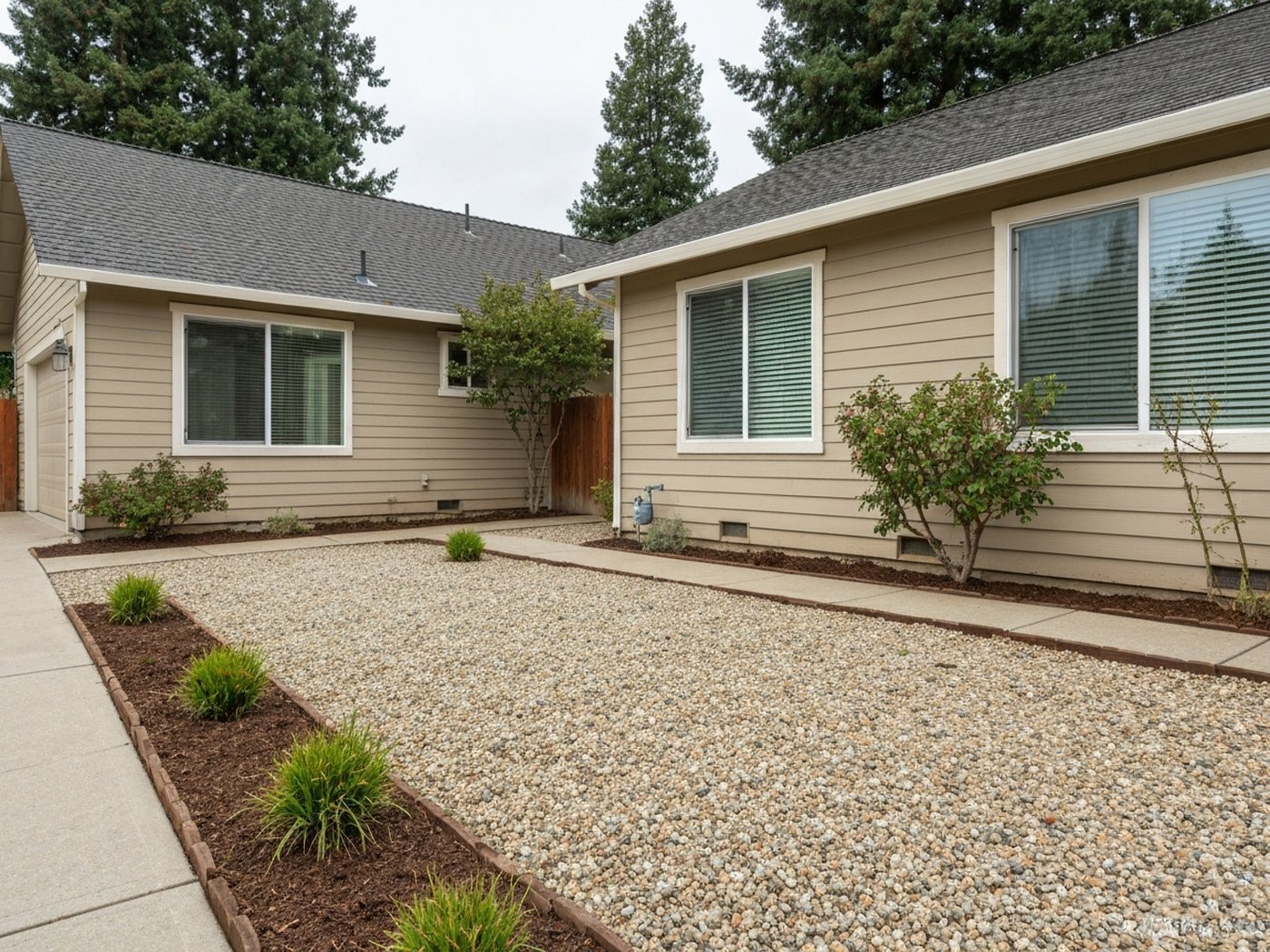
California has required defensible space since 1994, and the law has sharpened considerably since then. The most significant recent update took effect January 1, 2021, when Senate Bill 332 added Zone 0 as a distinct innermost zone and tightened what counts as compliant. If you set up your property to the old standard and haven’t revisited it, you may not be meeting current requirements.
Why defensible space actually slows a fire
Most California homes that burn in a wildfire don’t go up because a wall of flame rolled over them. The research is consistent on this: IBHS, Cal Fire, and the NFPA Firewise USA program document the same finding across events. Embers blown ahead of the fire front, sometimes miles ahead, are responsible for the majority of home ignitions. They land on roofs, collect in gutters, blow under decks and into vents, and settle against fences and wood piles. One ember finding dry fuel near the house is how the loss starts.
Defensible space changes what an ember finds when it lands. Zone 0 makes the immediate perimeter of the house hostile to ignition. Zones 1 and 2 slow an approaching ground fire, reduce flame height, and give firefighters a workable position. The zones buy time and reduce fire intensity at the point where it meets the structure. Distance plus reduced fuel density is what IBHS’s “Wildfire Prepared Home” program and Cal Fire’s own guidance both point to as the mechanism.
Zone 0: The ember-resistant zone (0 to 5 feet)
This is the newest zone and the one most homeowners don’t realize exists. Within the first five feet of any structure, California now requires:
- No combustible mulch. Wood chips, bark, and rubber mulch are all combustible. Zone 0 allows only noncombustible material: gravel, decomposed granite, or stone. This catches a lot of people because wood chip mulch is common and people lay it right against the house without thinking about it.
- No dead or dying vegetation. Dry grass, leaf litter, dropped bark, dead branches, and accumulated plant debris all need to come out.
- No combustible debris under or around structures. Under decks, under stairs, inside attached lattice: any space that traps debris needs to be enclosed in noncombustible material or kept clear.
- Gutters cleared of debris. Zone 0 calls out gutters by name. Cal Fire treats a packed gutter as a Zone 0 issue because the gutter sits on the structure itself, at the roofline.
- Firewood relocated. Wood stacked against the house violates Zone 0. Move it to Zone 1 at minimum, and keep it off the ground if possible.
Zone 0 does not require a bare yard. Low-water, low-growing, fire-resistant plants can stay as long as they’re healthy, cleared of dead material, and not contacting the house. What Zone 0 removes is the combustible material that gives an ember an easy path from landing to structure.

Swap wood-chip mulch in Zone 0 for decomposed granite or river rock. It suppresses weeds and retains moisture the same way, and it gives an ember nothing to work with.
Zone 1: Lean, Clean, and Green (5 to 30 feet)
Zone 1 is the classic defensible space most people picture. The goal is a maintained zone where plants are healthy, separated, and cleared of dead material. Cal Fire’s specific requirements:
- Remove dead and dying plants, including dead sections of otherwise live plants.
- Remove dry grass and weeds. Mow or weed-eat regularly during fire season. Cal Fire’s target height for dry grasses is under 4 inches.
- Create horizontal spacing between plants and shrubs. Fuel continuity is what lets fire travel. On flat ground, Cal Fire guidance puts that at roughly 2 feet between plants. On a 40-plus percent slope it expands to 4 feet or more, because fire moves faster uphill and flame lengths are longer.
- Create vertical spacing. Remove low branches so fire can’t climb from ground fuel into tree canopies. Cal Fire recommends trimming branches up to 6 to 10 feet from the ground, or up to one-third of the tree’s height for smaller trees, whichever is lower.
- Prune trees overhanging the structure. Branches within 10 feet of a chimney need to go, and branches shouldn’t be less than 10 feet from chimney openings.
- Remove vegetation from under and around decks.
Live, irrigated, low-growing plants are acceptable in Zone 1. The problem is dead material and fuel continuity, not vegetation itself. “Green” in “lean, clean, and green” is doing real work.
Zone 2: Reduce Fuel (30 to 100 feet)
Zone 2 is about reducing fire intensity rather than eliminating fuel. A continuous fuel load from Zone 2 into Zone 1 is what lets a ground fire build speed and flame height before it reaches the structure. Requirements here:
- Mow or cut dried grasses to the same 4-inch target as Zone 1.
- Remove dead plant material from live plants.
- Create horizontal spacing between shrubs and plants, with wider separation on slopes.
- Remove branches to 6 to 10 feet from the ground.
- Space tree canopies at least 10 feet apart on flat ground, more on slope, to prevent crown-to-crown fire travel.
Zone 2 is where professional land clearing pays off if you have a larger property. It’s also where neighbors matter. Fire doesn’t stop at property lines, and Zone 2 that butts against a neighbor’s unmaintained brush is a real problem. Firewise USA, which is NFPA’s community fire-resilience program, has resources for neighborhood-level planning and some counties have community wildfire protection plans that address shared boundaries.
The roofline and gutters: Zone 0’s most overlooked item
I come back to gutters in almost every conversation about Zone 0 because this is where I see some of the worst-maintained details on otherwise careful homes.
Your gutters are a long trough of whatever fell from your trees, running the entire perimeter of your roof and sitting at the exact seam where roofing meets fascia. A gutter packed with dry pine needles and leaf litter in late September is a strip of fine, dry ember fuel around the most vulnerable part of your house. An ember drifting into a loaded gutter finds ideal ignition conditions: fine dry fuel, airflow along the roofline gap, and wooden structural members right below. Cal Fire Zone 0 guidance addresses this specifically, and so does the “Safer from Wildfires” framework that informs insurance underwriting in California.
Clean your gutters before fire season, not after a warning comes. If your property is surrounded by conifers, once a year probably isn’t enough. A stainless micro-mesh gutter protection system that excludes debris entirely removes this as a recurring task and as a fire-season variable. For what to look for in a fire zone, see best gutter guards for pine needles and fire debris.

Zone 0 calls out gutters by name. A packed gutter at the roofline is ember fuel on the structure itself. Clean them before fire season, or put a noncombustible metal mesh cover on them so the task handles itself.
Cal Fire inspections: what they check and what gets you cited
Cal Fire and local fire agencies have authority to inspect properties in State Responsibility Areas (SRAs) and in Local Responsibility Areas (LRAs) that adopt the same standards. What triggers an inspection varies by agency: some run proactive neighborhood sweeps before fire season, some respond to complaints, some prioritize certain zones. Assuming you won’t be inspected is not a plan.
An inspector walking your property is essentially going through the zone checklist. What commonly generates a notice of violation:
- Combustible mulch or debris within 5 feet of the house
- Dry grass over 4 inches in Zones 1 and 2
- Dead plants or branches not removed
- Trees with low branches creating ladder fuels
- Gutters with debris
- Firewood stacked against the structure
A first notice typically gives you a compliance timeline, often 30 days. Repeated noncompliance can result in fines or, in some jurisdictions, forced abatement where the agency clears the hazard and bills the property owner. Fines and timelines vary by county and fire agency; confirm with your local Cal Fire unit for current enforcement details in your area.
Practical note: Cal Fire’s website has a parcel lookup tool that shows whether your property is in an SRA and which agency is responsible for enforcement. Worth checking before fire season, not after an inspector knocks.
What defensible space work costs
Depending on your property and how far behind you are, this ranges from a weekend of DIY to a significant contract job.
DIY approach: A gas or battery-powered weed trimmer runs $100 to $350. A pole pruner for limbing trees runs $50 to $250. Debris disposal at a transfer station or green waste facility typically runs $50 to $150 per haul. For a typical suburban lot, expect $200 to $600 in tool costs and disposal, less if you can chip material on-site or schedule a green-waste pickup.
Professional clearing crew: For residential properties, expect $500 to $3,000 or more depending on vegetation density, property size, slope, and region. Labor rates in fire-prone areas have risen with demand. Some counties and nonprofit programs offer subsidized defensible space clearing for income-qualifying homeowners; contact your local Cal Fire unit coordinator or county fire agency to ask what’s available in your area.
Ongoing maintenance: Plan for at least one to two passes per fire season. Professional landscape maintenance in Zones 1 and 2 typically runs $150 to $500 per visit for a standard residential property. These are rough ranges; get local quotes.
On the insurance side, some California admitted insurers offer mitigation discounts under the “Safer from Wildfires” framework, and defensible space compliance is one factor they consider. Ask your carrier specifically what documentation they need and whether they offer a discount for it. Discounts and eligibility vary significantly by insurer and policy; this is educational, not professional insurance advice. Your insurer and the California Department of Insurance are the right resources for your specific policy. The broader picture on how hardening intersects with keeping coverage is covered in the wildfire home hardening guide.
FAQ
Does California law require 100 feet of defensible space for every home? For homes in or adjacent to wildland areas under California Public Resources Code 4291, yes. The requirement is 100 feet or to your property line, whichever comes first. Your parcel’s SRA or LRA designation determines which agency enforces it, not whether the law applies. Cal Fire’s online parcel lookup can show you your status, or contact your local fire agency to confirm.
What is Zone 0 in California’s defensible space rules? Zone 0 is the 0 to 5 foot ember-resistant zone added by Senate Bill 332, effective January 1, 2021. It requires removing all combustible mulch, debris, dead vegetation, and combustible material from the immediate perimeter of the structure, and specifically calls out gutters. It’s more stringent than older defensible space guidance because it targets the ember-ignition problem at the house footprint itself, not just the surrounding landscape.
What happens if you fail a Cal Fire defensible space inspection? You typically receive a notice of violation with a compliance window, often 30 days. Repeated noncompliance can lead to administrative fines or, in some jurisdictions, forced abatement where the agency clears the hazard and sends you the bill. Specifics vary by county and fire agency; confirm with your local Cal Fire unit. Fines aside, an unaddressed violation during fire season leaves real risk on the table.
Does maintaining defensible space affect homeowners insurance in California? Documented compliance can help. California’s “Safer from Wildfires” framework considers defensible space as one factor in a property’s risk profile, and some admitted insurers tie mitigation discounts to it. Dated photos and receipts of your Zone 0 clearance, gutter maintenance, and Zone 1 work give you something to show an underwriter. For how inspections fit into the broader hardening picture, see the defensible space inspection post. Discounts vary by carrier and policy; talk to your insurer directly and don’t rely on assumptions about what they’ll credit.
Related guides
Class A Roofing Shingles: The Fire-Rated Choice for Asphalt Roofs
Class A asphalt shingles carry the highest fire rating for roofing in the US and are the baseline for any wildfire-resilient roof in a fire-prone state.
Read the guide →What Is a Class 4 Roof? Impact Resistance and Insurance Savings
A Class 4 impact-resistant roof can earn meaningful insurance discounts and adds roofline durability, but it is not the same as a fire rating. Here is what to know.
Read the guide →Class A Roof Assembly: How the Whole System Earns Its Rating
A Class A fire rating applies to the whole roof assembly, not just the shingles, and understanding the difference changes how you approach re-roofing in fire country.
Read the guide →Keep ignitable debris out of your roofline
Get a free, no-obligation LeafFilter gutter-protection assessment. Fine micro-mesh keeps leaves and pine needles out of the gutters, the spot where wind-blown embers love to land. Booking through us supports this site.
Get a free LeafFilter assessment →