Class A Fire Rating for Roofs: What It Means and Why It Matters
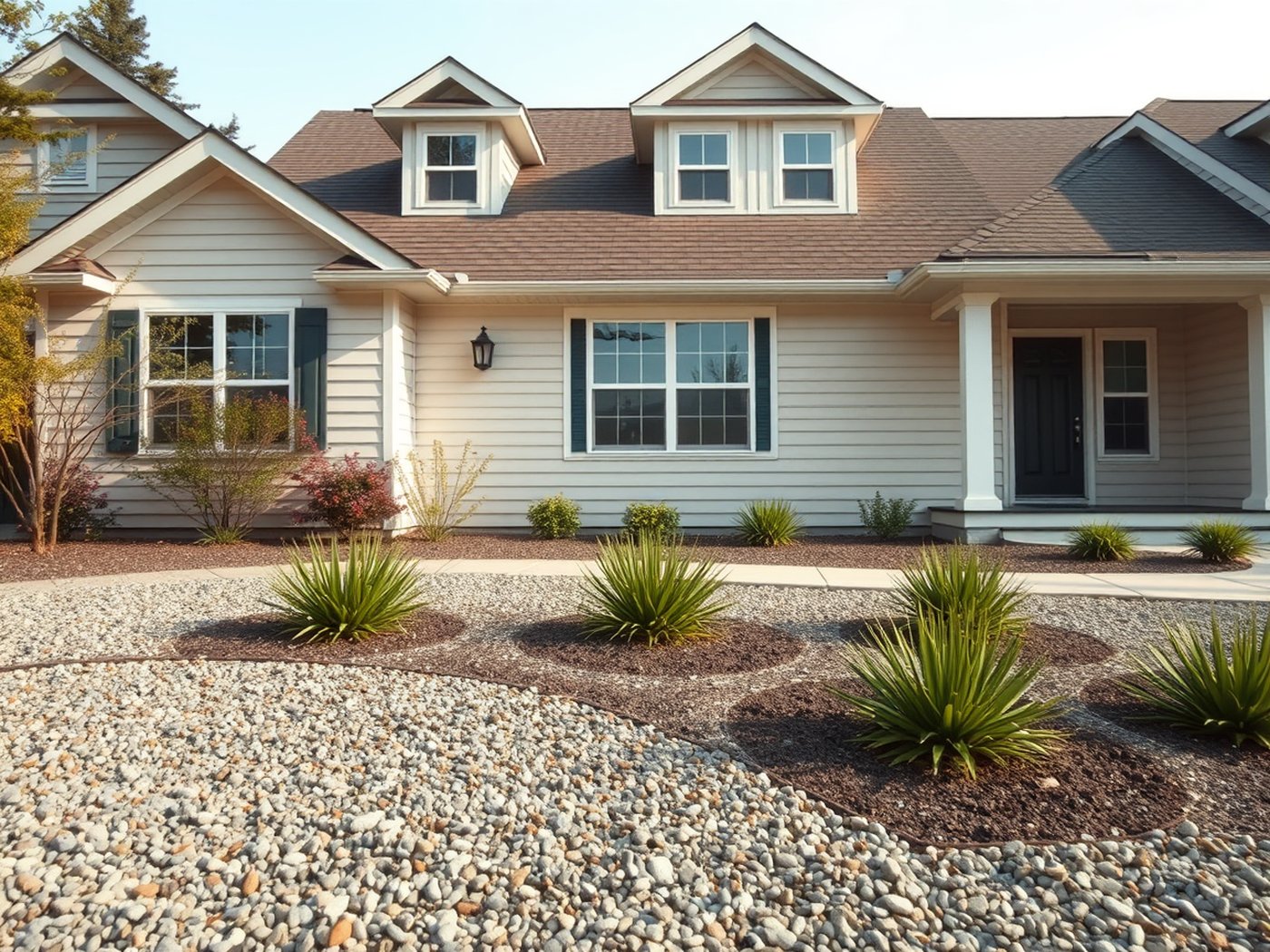
Most conversations about wildfire home hardening start with the roof, and that’s the right call. The roof is both the biggest target surface on your house and the single most expensive thing to replace after the fact. The question I hear most is whether a Class A rating actually makes a difference, or whether it’s just a box insurers want checked. The honest answer: it makes a real difference, with some genuine limits worth understanding before you spend any money.
What the Class A rating actually means
The rating comes from a specific fire test: ASTM E108, published by the American Society for Testing and Materials as the standard for fire tests of roof coverings, and also issued as UL 790 by Underwriters Laboratories. The two are equivalent; manufacturers test to one or both, and you’ll see either designation on product data sheets.
The test runs three scenarios on the roof assembly. First, a burning brand (a block of wood set alight) is placed on the roof surface and left to do its worst. Second, a controlled flame is applied directly to the surface. Third, the test measures how far flame spreads across the surface once ignited. Class A means the assembly passed all three at the severe level: the burning brand doesn’t cause the roof deck below to ignite, flame spread stops within a defined distance, and no flaming brands fly off the surface during the test.
Class B covers moderate fire exposure, Class C covers light exposure. Wood shake without treatment can rarely pass even Class C. That’s why California, Colorado, Oregon, and a growing list of other states with high-risk zones have adopted building codes that require Class A roofing (or Class B at minimum) in Wildland-Urban Interface areas. If you’re replacing a roof in a WUI zone, check your local building department’s requirements before you select a material, because the code may narrow your choices.
Why the roof matters in wildfire
The research on this point is consistent. IBHS (the Insurance Institute for Business and Home Safety) and Cal Fire have both documented that homes in wildfire are typically not engulfed by a wall of flame rolling through the neighborhood. They ignite from embers, burning brands carried by wind far ahead of the fire front, sometimes a mile or more. These embers land on roofs, collect in gutters and valleys, slip into eaves and vents, and pile against fences and decks. If an ember finds dry material and a surface that can ignite, the house can start burning from the outside in while the active fire line is still far away.
The roof is the primary target for two reasons. It’s roughly horizontal, so embers settle on it rather than bouncing off. And it’s large: a typical house presents 2,000 to 3,000 square feet of roof surface, far more than any other exterior element. A single ember landing on a standard three-tab asphalt shingle and finding a gap, a lifted edge, or a cracked surface can work into the roof deck.
A Class A covering reduces the chance that a brand landing on the surface finds an easy path to ignition. That’s what the test is designed to simulate. It isn’t a guarantee, but it’s meaningful exposure reduction on your largest vulnerable surface.
Materials that typically qualify for Class A
Several common roofing categories can carry a Class A rating. Here’s the practical picture:
Asphalt shingles. The most common roofing material in the country, and the good news is that most standard dimensional (architectural) asphalt shingles sold today are rated Class A when installed on solid sheathing with an appropriate underlayment. Look for the fire class designation in the product data sheet, not just on the sales brochure. Installed cost runs roughly $4 to $8 per square foot depending on region, roof complexity, and labor market, though that range can shift considerably.
Concrete and clay tile. Tile roofs are noncombustible. A concrete or clay tile system is a reliable Class A choice when the underlayment is also appropriately rated. The tile itself can’t burn. The practical concern is debris that collects in valleys and under cracked or loose tiles, plus the structural load: tile is heavy, and replacing a wood-shake roof with tile sometimes requires reinforcing the deck. Installed cost is typically $10 to $20 per square foot or more for premium clay.
Slate. Natural stone is noncombustible, and slate roofing typically qualifies as Class A. It’s expensive ($15 to $30 or more per square foot, depending on origin and region) and requires experienced installers. Done right, a slate roof is extremely durable. Done poorly, it’s a very expensive leak.
Standing-seam metal. Steel and aluminum are noncombustible. Standing-seam metal in particular, with its continuous raised seams and no exposed fasteners, gives embers fewer places to collect and wedge. Metal roofing has moved from agricultural use to a serious residential option in fire-prone areas, and I’ve seen significantly more of it in the last couple of years on new builds and re-roofs in WUI zones. Installed cost runs roughly $8 to $15 per square foot for standard steel standing-seam systems.
Fire-retardant-treated (FRT) wood shake. Plain wood shake generally fails Class A and often Class B. FRT shake can be rated Class A or B, but the treatment degrades over time and must be renewed or the material replaced on a schedule. Some jurisdictions with fire-hazard codes won’t accept FRT shake at all, and some insurers won’t write policies on homes with any shake roof. Check both your local code and your insurer before considering it.
I go deeper on how these materials compare on longevity, regional availability, and cost in Class A roofing materials compared.

Always ask for the specific product's fire-class test documentation, not just a verbal "yes it's Class A." The rating applies to a complete tested assembly, and the underlayment and deck type are part of it.
The system, not just the shingle
This is the part that most roofing conversations skip, and it matters. A fire class isn’t a property of a shingle in isolation. It’s a property of the complete roof assembly under specified installation conditions: sheathing type, underlayment, and fastening pattern all factor in.
The same shingle might be listed as Class A over solid plywood or OSB sheathing with a specific underlayment, but fall to Class B on skip-sheathing (spaced boards) or with a thinner underlayment. When you’re replacing a roof, ask the contractor to confirm that the specific materials and installation configuration match a tested and listed Class A assembly. Most reputable manufacturers publish their tested assemblies in product data sheets, and the UL Certifications database (iq.ul.com) lets you look up listed assemblies by product.
Also worth separating: fire rating is one axis of roofing quality. A Class A shingle that fails in high wind or hail is still a problem in wildfire season, because damaged or missing shingles create entry points for embers at the surface. Wind uplift rating and impact resistance are worth asking about alongside the fire class, especially in regions where hailstorms and high-wind events are seasonal.
Does a Class A roof affect your homeowners insurance?
It can, but the specifics vary enough by state, insurer, and policy that I’m not going to quote you a discount percentage and tell you it applies everywhere. Here’s what’s grounded:
In California, admitted insurers are required to offer mitigation discounts under the state’s “Safer from Wildfires” framework, and roof covering type is explicitly among the factors. Colorado, Oregon, and several other states have moved in similar directions, but the rules and discount structures differ. Outside these frameworks, some carriers offer credits for Class A roofs, metal roofs, or recently installed roofs; others don’t. No invented grant programs or universal numbers here, because they don’t exist universally.
The practical step: call your insurer directly. Ask whether your current roof type qualifies for any mitigation discount, and if you’re considering a re-roof, ask what documentation they need to credit it. Get the installer’s invoice, the product spec sheet, and written confirmation from the contractor that the installation is a Class A-listed assembly. That file also becomes useful evidence if you ever have to push back on a non-renewal decision.
On the availability side, some carriers in high-risk ZIP codes have declined to renew policies on homes with aging wood shake or non-Class A roofs. A Class A re-roof can sometimes make a home insurable again in the standard market, which is worth considerably more than a few percent discount. For the full coverage picture, see does homeowners insurance cover wildfire. Confirm your situation with your insurer and your state Department of Insurance. This article is educational; it is not professional insurance advice.

A Class A rating doesn't override an insurer's concerns about roof age or condition. A 25-year-old Class A shingle roof near the end of its service life may still draw a non-renewal. Age and current condition matter alongside the rating type.
What a Class A roof doesn’t protect
Being straight about limits is the point of YMYL content. A Class A roof covering addresses one specific ignition pathway: direct fire and ember exposure to the roof field itself. Several others remain open.
Eaves and soffits. Exposed rafter tails, open eave vents, and vinyl or wood soffit material can ignite even when the main roof field holds. IBHS’s Wildfire Prepared Home criteria and NFPA’s Firewise USA program both call out enclosed eaves with noncombustible soffit as a separate item from the roof covering. A Class A roof and an open wood eave is a partial job.
Vents. An unprotected vent opening into your attic is an ember entry point. The Class A designation on the field of the roof doesn’t address the vent opening at all. NFPA 1 and state fire codes in high-risk areas increasingly require ember-resistant vents, screens fine enough to block brands, as a separate requirement. If you’re upgrading the roof, look at the vents at the same time.
Radiant heat from nearby structures. If a neighbor’s fence, deck, or outbuilding catches fire and burns within a few feet of your wall, the radiant heat from that combustion can ignite your siding or windows regardless of the roof. The Class A rating addresses direct fire and ember exposure to the roof surface. The Zone 0 concept (keeping the first five feet around your foundation clear of combustible material) addresses this adjacent-structure risk. They’re different problems.
Debris at the roofline. This is the one I keep coming back to, because it’s where my field work and the fire-safety research overlap. A rain gutter packed with dry pine needles and leaf litter runs right along the base of your roof field, at the exact seam where the roof covering meets the fascia and soffit. A Class A shingle field is doing its job four feet up the slope while a strip of kindling sits at the eave below it. An ember landing in that loaded gutter can ignite the debris, which then has direct contact with wood structure. The roof material is only as good as the condition of the roofline. Keeping the gutter and eave clear is the maintenance reality behind the product spec.
Where the roof fits in the broader picture
The IBHS, Firewise USA, and Cal Fire research all frame this as a layered problem, not a one-fix problem. A Class A roof is the right starting point because it’s the largest surface, the most expensive single upgrade, and the one with the clearest testing basis. But it works within a system.
The sequence from outside in: Class A roof covering, enclosed noncombustible eaves, ember-resistant vents, fire-resistant siding, fire-resistant window assemblies, a clear Zone 0 (noncombustible surface within five feet of the foundation), and reduced fuel in Zone 1 (out to about 30 feet). Each layer addresses a specific ignition pathway. Skip the middle ones and the Class A roof works harder than it should have to.
That’s why wildfire home hardening treats Class A roofing as step one on a checklist rather than the whole answer. If the roof is your starting question, the answer is yes, start there. Then keep going.
FAQ
What is the difference between Class A, B, and C fire ratings for roofs? The ratings reflect the level of fire exposure the roofing assembly was tested to resist under ASTM E108 or UL 790. Class A is the highest, tested against severe fire exposure, including burning brand contact, direct flame application, and flame spread. Class B covers moderate exposure; Class C covers light exposure. For homes in or near wildfire zones, Class A is the standard recommended by Firewise USA (NFPA’s community resilience program), IBHS, and most state fire agencies.
Do I need a Class A roof to get homeowners insurance in a fire zone? Not universally, but roof type and age increasingly factor into underwriting decisions in high-risk areas. A wood shake or degraded roof without a Class A rating may trigger a non-renewal or a coverage decline in some markets. Whether a Class A upgrade affects your premium or insurability depends on your carrier, state, and specific risk zone. Ask your insurer directly what they need to see. This is educational information, not professional insurance advice.
Can the same shingle be Class A on one roof and not on another? Yes, because the rating applies to the complete tested assembly, not just the top-surface material. The underlayment type and the sheathing below it are part of the classification. A shingle tested and listed as Class A over solid OSB sheathing with a specific underlayment may not carry that rating over skip-sheathing or with a thinner underlayment. Always ask the roofing contractor to confirm the installation matches a listed Class A assembly, and ask for the product data sheet.
How much does it cost to upgrade to a Class A roof? It varies significantly by material, roof size and complexity, and your region. Dimensional asphalt shingles installed typically run $4 to $8 per square foot as a general range. Standing-seam metal is usually $8 to $15 per square foot. Concrete or clay tile is commonly $10 to $20 or more. Slate runs $15 to $30 or higher depending on source. Get at least two or three bids from local contractors, make sure the bid specifies the product and the rated assembly configuration, and treat any single number you read online (including here) as a starting point rather than a quote. Labor markets and material costs shift, and regional variation is real.
Related guides
Class A Roofing Shingles: The Fire-Rated Choice for Asphalt Roofs
Class A asphalt shingles carry the highest fire rating for roofing in the US and are the baseline for any wildfire-resilient roof in a fire-prone state.
Read the guide →What Is a Class 4 Roof? Impact Resistance and Insurance Savings
A Class 4 impact-resistant roof can earn meaningful insurance discounts and adds roofline durability, but it is not the same as a fire rating. Here is what to know.
Read the guide →Class A Roof Assembly: How the Whole System Earns Its Rating
A Class A fire rating applies to the whole roof assembly, not just the shingles, and understanding the difference changes how you approach re-roofing in fire country.
Read the guide →Keep ignitable debris out of your roofline
Get a free, no-obligation LeafFilter gutter-protection assessment. Fine micro-mesh keeps leaves and pine needles out of the gutters, the spot where wind-blown embers love to land. Booking through us supports this site.
Get a free LeafFilter assessment →